Buying Signals Automation: The Ops Playbook for Turning Intent Into Outreach Before Your Competitor Does
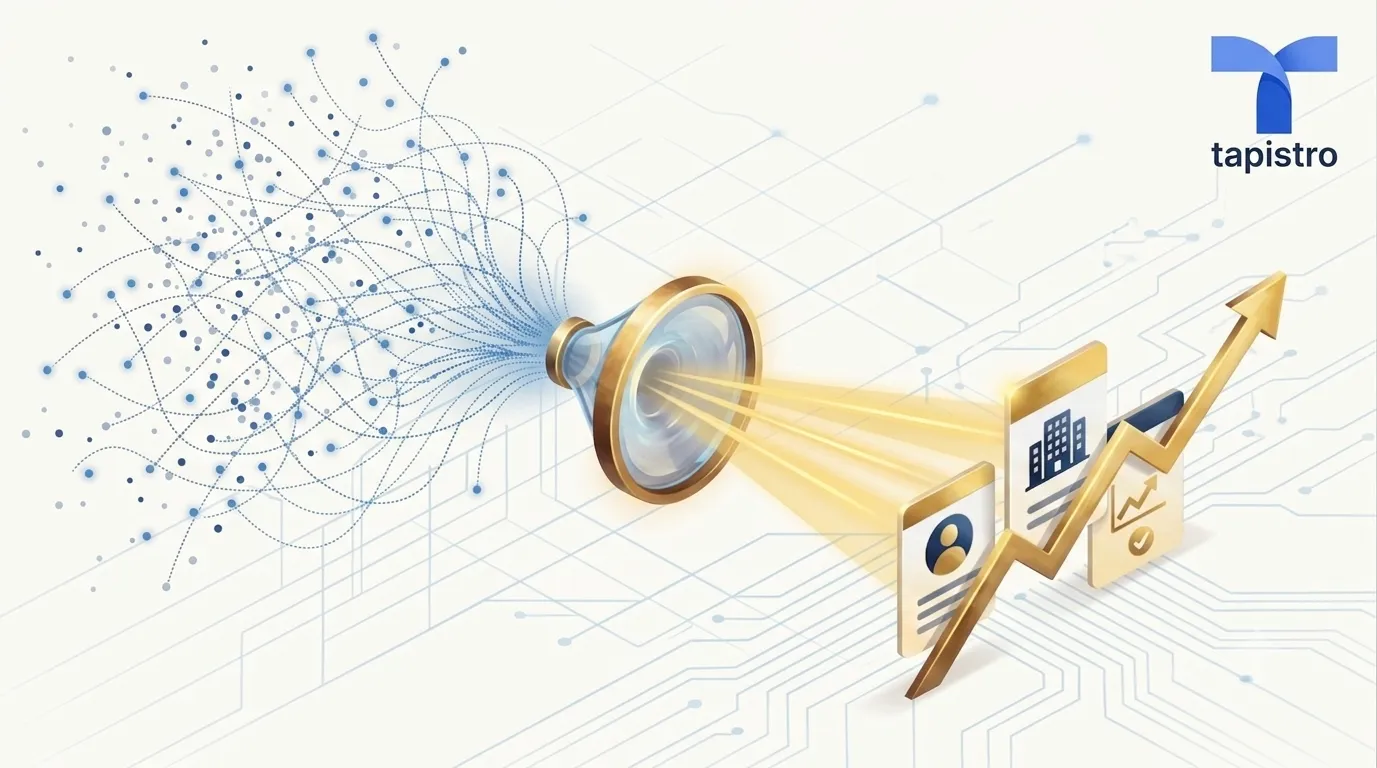
Here is the uncomfortable truth about buying signals in 2026. Almost nobody is missing the signals anymore. The data is off the shelf. Intent vendors, de-anonymization tools, hiring feeds, funding alerts, and review-site activity will all tell you when an account is in-market. Buying more signal sources is the easy part, and most teams have already done it.
What separates the teams winning pipeline from the teams drowning in dashboards is not signal coverage. It is response time. A pricing-page visit from a named contact at a target account is worth a great deal at 11am when it happens and almost nothing by Friday. Third-party intent is sold to everyone in your category at once, which means the surge you are looking at is on three competitors' screens too. The signal is not your advantage. Acting on it first is.
So this playbook is not about finding more signals. It is about building the operational machine that turns a signal into a relevant, personalized touch before the window closes. That machine has a specific shape, a specific set of failure modes, and a specific reason most homegrown versions never make it out of pilot.
Why Speed Is the Entire Game
Think about what actually happens when an intent signal fires in a typical revenue operation.
The signal lands in a tool. Sometime later, a human notices it, or a weekly report surfaces it. Someone decides whether it matters. Someone looks up the right contact. Someone checks the CRM to confirm it is not an existing customer or open deal. Someone writes a message. Someone picks a channel and sends it. Each handoff adds hours or days, and every one of those hours is a window your competitor can step through.
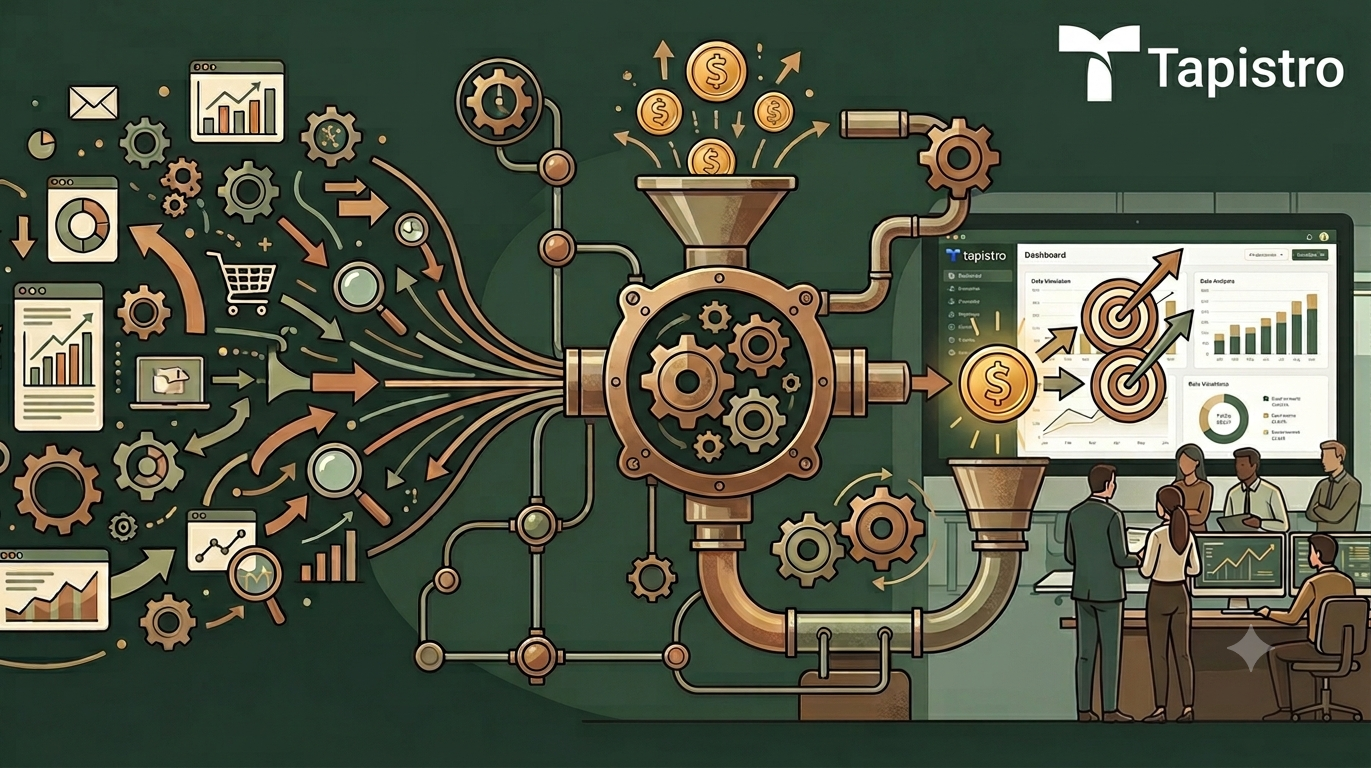
The teams that win compress that full chain into a single automated motion. Not because automation is fashionable, but because the value of a signal decays on a clock, and humans operating across disconnected tools cannot beat that clock. You are not automating to save effort. You are automating to win a race measured in hours.
Tapistro was built around exactly this clock. The TAP AI Agents inside Tapistro do the noticing, the contact lookup, the CRM check, the message drafting, and the channel routing as one continuous motion rather than six sequential handoffs. That is what takes response time from days to minutes, and minutes are the threshold where a signal still has value.
The Pipeline, Station by Station
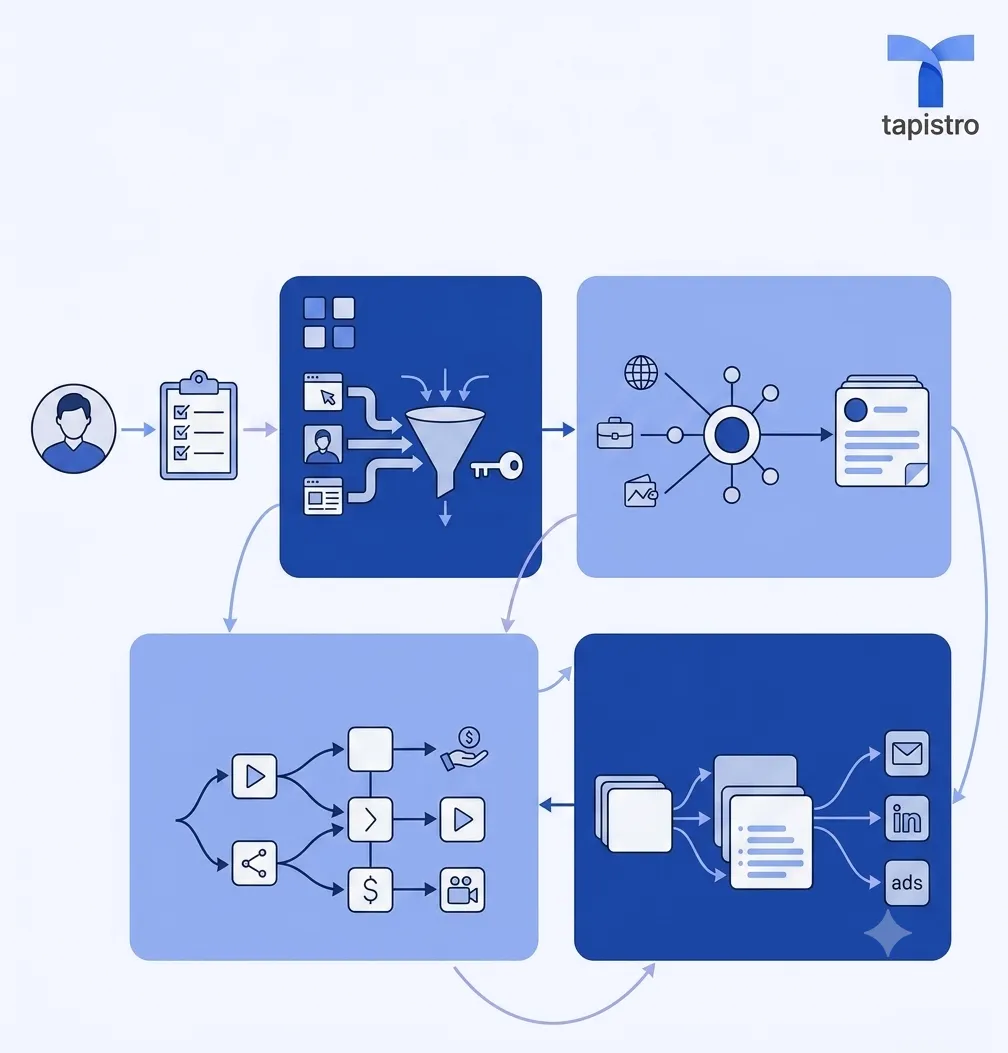
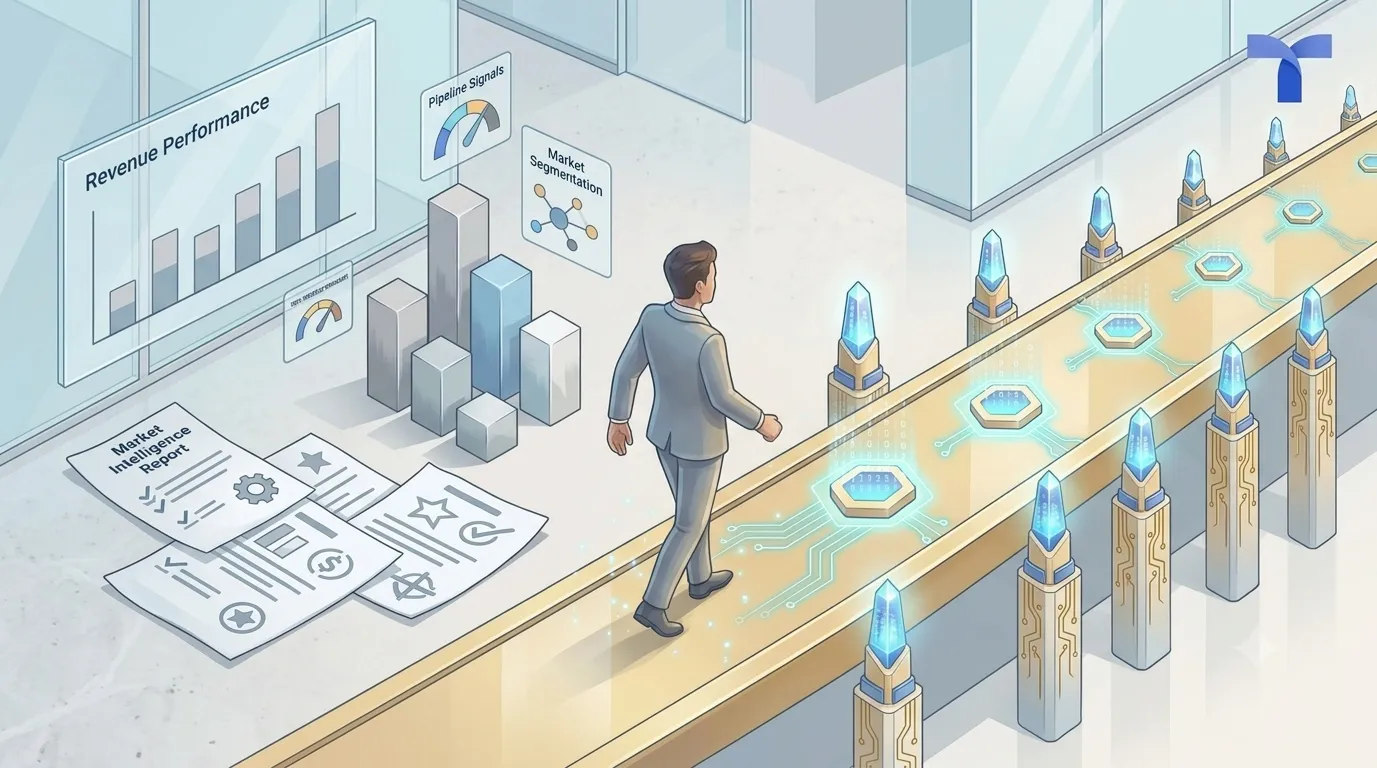
A buying signals automation program is not a sequence you launch. It is a loop that runs the same stations every single day. Build all of them or the engine stalls at the weakest link.
Station One: Ingest
Pull every relevant signal into one place. First-party behavior like website visits and product usage, second-party signals like review-site activity, and third-party intent from the aggregators. The mistake here is leaving signals in their native tools, where each one requires a separate human to monitor it. Tapistro ingests across all these sources into a single account view so no signal sits in a tab nobody opens.
Station Two: Qualify the Signal
This is where most programs should slow down and almost none do. Not every signal deserves the same response, and treating them equally is how you drown in noise. Tier your signals by intent strength and time to action.
Tier one is in-market now: pricing-page visits from named contacts, demo requests, multiple visitors from one account on a review site. These earn a fast, direct response. Tier two is active research: third-party intent surges, repeated anonymous visits, engagement with competitor content. These earn a warm-up motion, not an immediate phone call. Tier three is a context shift: a new executive hire, a funding round, a tech-stack change, a strategic job posting. These are reasons for point-of-view outreach, not a hard pitch.
The single most important rule at this station: a lone tier-two or tier-three signal should rarely trigger direct outreach on its own. Make it stack with at least one other signal or a fit threshold first. Stacking is what separates a real buying signal from noise that looks like one.
Station Three: Enrich the Account and Buying Group
A raw signal is one data point. To act on it well, the system needs the account context, the right contact, and the rest of the buying committee around that contact. When a tier-two signal fires on one persona, the play is to expand to the rest of the committee within a day or two, because B2B deals are rarely decided by the one person who tripped the sensor. Tapistro enriches the account and resolves the buying group automatically off the triggering signal, so the outreach reaches the whole committee rather than a single inbox.
Station Four: Score and Prioritize
Rank every signal by tier and by how that signal type has historically converted for you. This is what stops your team from chasing a noisy source that feels urgent and never closes. Tapistro scores signals against historical conversion and feeds the score into your pipeline system, so reps work a queue ordered by genuine probability rather than recency.
Station Five: Personalize from the Signal
Automation usually betrays itself right here. Generic AI personalization is just a cold email with a longer prompt behind it. The discipline that works is simple and non-negotiable: the message must reference the specific signal in the first sentence. Not the industry. Not a vague compliment. The actual triggering event. Tapistro generates the message from the Unified Prospect Profile and the triggering signal together, which is why the personalization holds up when you are sending hundreds of these rather than collapsing into a template with a swapped first name.
Station Six: Orchestrate Across Channels
Push the message through the right channel for the tier. Tier-one signals earn a direct, human-reviewed touch fast. Tier-two signals earn email and professional-network sequences. Tier-three signals earn content-led nurture. Tapistro orchestrates across email, calling, social, and paid retargeting from one motion, with human review placed where the stakes justify it, so the highest-intent accounts get a person and the long tail still gets a relevant, automated touch.
Station Seven: Learn
Attribute every reply, meeting, and closed-won deal back to the signal that triggered it, and feed that evidence back into scoring. Within a quarter, the sources that produce nothing demote themselves and the ones that produce pipeline rise. A buying signals program without this closed loop stays a pilot forever, because you can never prove which signals are worth the spend. Tapistro closes this loop so the engine tunes itself on real outcomes rather than gut feel.
Where These Programs Go Wrong
Most buying signals automation efforts fail for the same handful of reasons, and every one of them is operational rather than technical.
The first is acting on weak signals. A single tier-three event firing a hard pitch makes you look like you are watching, in the unsettling sense. Require the stack. The second is over-automating to the point of spam: more volume of lower relevance burns your sending domain and your brand at the same time. Higher relevance at lower volume lifts reply rates and protects deliverability, which is the opposite of what teams fear when they hear automation. The third is buying signal sources faster than you can act on them, which leaves you paying for intent you never touch. Match acquisition pace to activation capacity. The fourth is ignoring the buying group and pitching the one contact who tripped the sensor. The fifth, and the most common, is no closed-loop measurement, which leaves the whole program unfalsifiable and therefore unfundable past the pilot.
Notice that none of these failures are about the signals themselves. They are about the operational system wrapped around the signals. That is the whole point. The teams that build buying signals automation as a connected loop, ingest through learn, avoid all five almost automatically, because the failures come from the seams between tools, and a single loop has no seams. This is precisely why Tapistro exists as one system rather than a stack you assemble: the seams are where the response time and the relevance both leak out.
The First 30 Days
If you are starting from scratch, do not try to build all seven stations across every signal source at once. Pick one tier-one source, one tier-two source, and one tier-three source. Wire them into a single account view. Define the stacking rule that says no lone tier-two or tier-three signal acts alone. Build one branching journey for each tier. Turn on measurement before you turn on volume, so you can tune from day one rather than guessing for a quarter. Then add a new source every couple of weeks once the first play is demonstrably closing pipeline. Tapistro is designed to stand this motion up in days rather than the months a hand-built version takes, because the stations are already connected out of the box.
The Bottom Line
Your competitors are looking at the same intent data you are. That is the part nobody can change. What you can change is the time between the signal firing and a relevant message landing in front of the right buying group. Close that gap to minutes and the shared signal becomes your advantage instead of everyone's. Leave it at days and you are paying for intelligence that mostly benefits whoever acts faster. Buying signals automation is not about seeing more. It is about responding first, every time, without a human in the critical path, and that is exactly what Tapistro was built to do.
.webp)