Your inbox is a battlefield. Every decision-maker receives hundreds of emails weekly - most generic, forgettable, and instantly deleted.
In 2026, the teams winning deals run precision-led, account-based lead generation powered by AI orchestration that scales personalization without manual research. The question isn't whether to adopt account-based strategies. It's whether you can personalize fast enough to matter.
The question isn't whether to adopt Account Based Marketing (ABM). It's whether you can personalize fast enough to matter.
What Is Account-Based Lead Generation?
Account-based lead generation identifies high-value accounts first, then pursues them with coordinated, personalized engagement across every channel and stakeholder.
A single enterprise account might be worth 50 SMB deals. Account-based lead gen allocates resources accordingly—focusing on strategic accounts that match your ICP and show active buying signals.
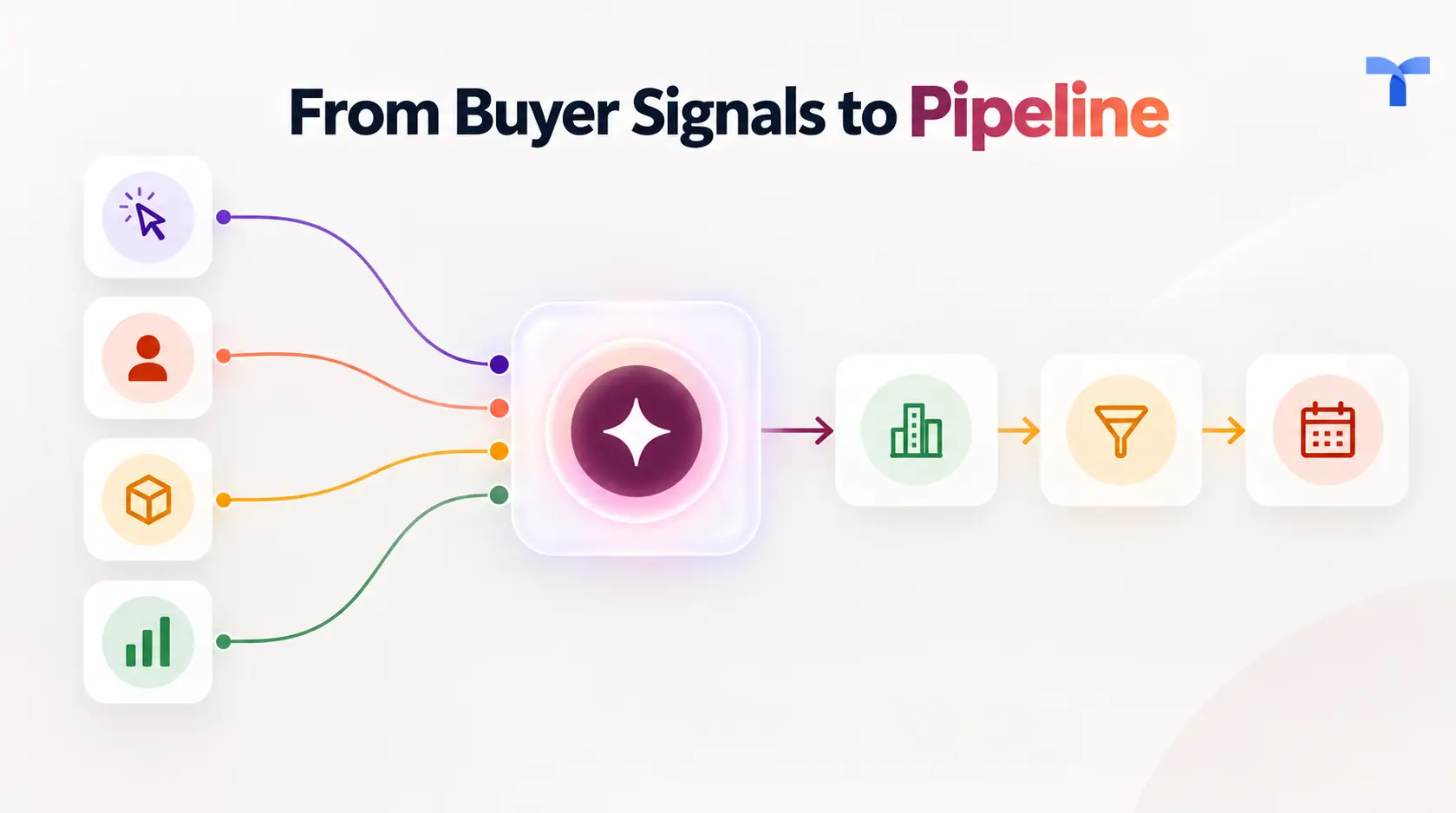
Account-based lead generation activates real-time buying signals- funding rounds, leadership changes, tech stack shifts, competitor research- and converts that intelligence into relevant outreach.
The Personalization Problem: Why Most Teams Can't Scale
Everyone knows personalization works. The data is overwhelming - personalized outreach generates response rates 3-5x higher than generic templates. The challenge is scaling it beyond 50-100 accounts.
The constraint is human bandwidth.
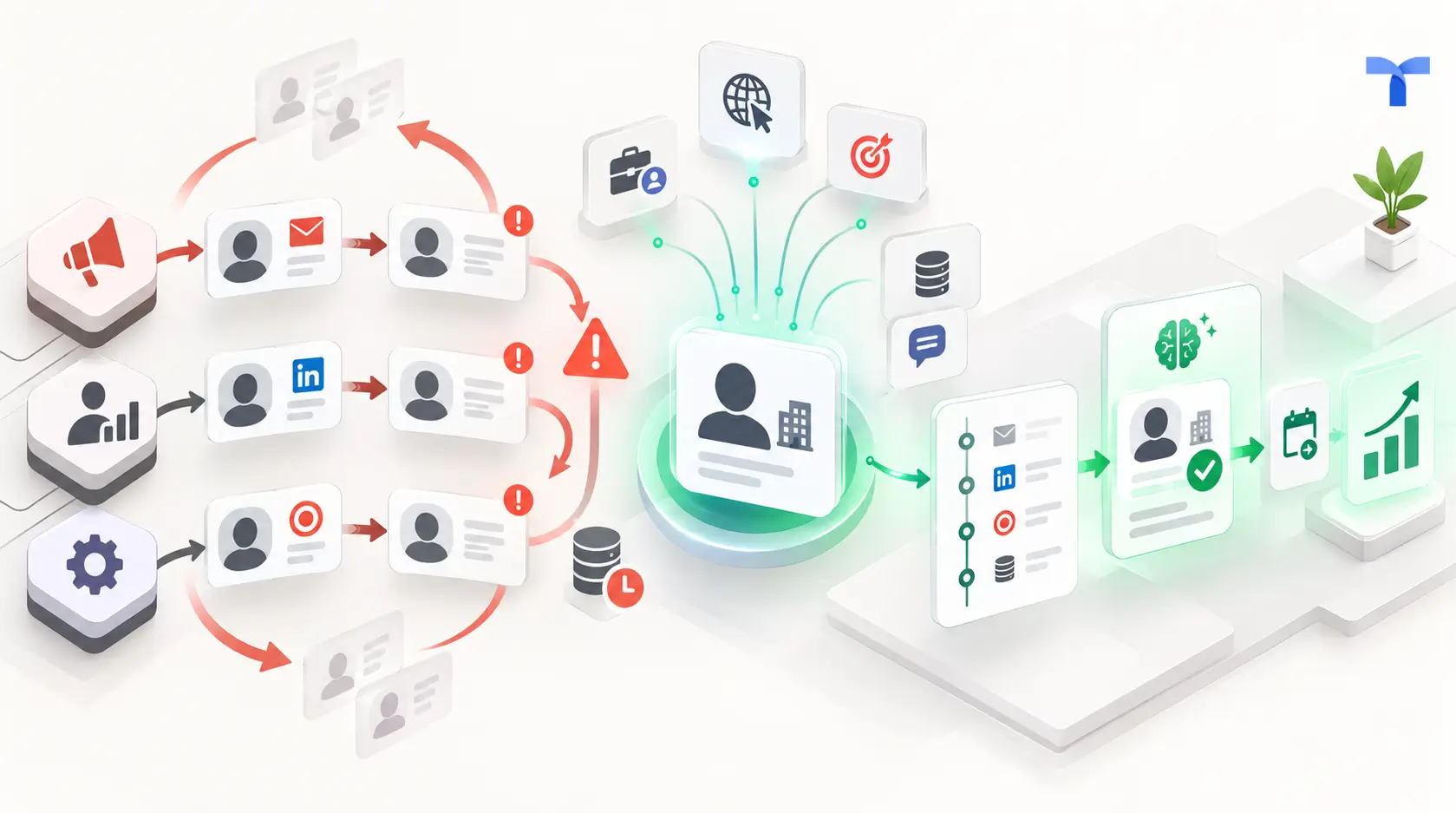
Manual research takes forever. SDRs spend hours digging through LinkedIn, company websites, news articles, and job postings just to craft a single relevant email. Multiply that by hundreds of target accounts and the math breaks down immediately.
CRM data makes it worse. Records are incomplete, outdated, or flat-out wrong. Your reps are personalizing based on job titles that changed six months ago and company descriptions that no longer reflect reality.
And even when research happens, execution fragments across tools. Email lives in one platform, LinkedIn outreach in another, ads somewhere else entirely. The carefully crafted personalization context gets lost between handoffs, and prospects receive disjointed messaging that feels anything but personal.
The solution: automate account research and multi-channel sequencing while preserving the intelligence that makes outreach relevant.
The Core Components of Scalable ABM Personalization
Scaling personalization means building systems that automate account research and orchestration while preserving the intelligence that makes outreach relevant.
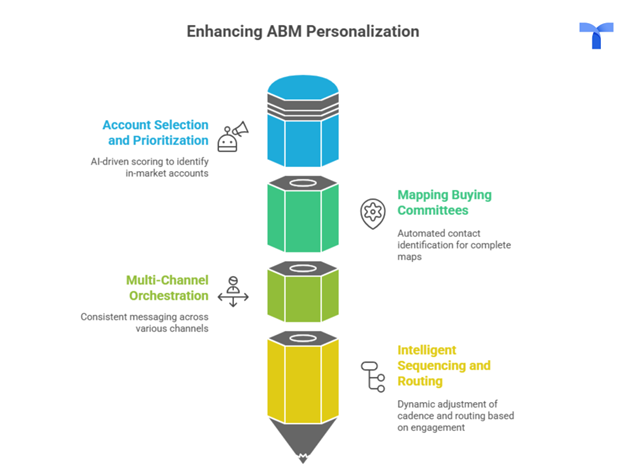
Account Selection and Prioritization
AI-driven scoring combines firmographics, technographics, and real-time intent signals to identify which accounts are actively in-market. Funding announcements, hiring velocity, technology changes, and competitor research patterns all feed into prioritization models.
The focus shifts from static ICP matching to surfacing accounts showing active buying behavior. This means tracking intent signals across multiple sources- web activity, G2 reviews, LinkedIn engagement, news mentions- and scoring accounts based on both fit and timing. Teams can then allocate resources where buying signals are strongest, rather than spreading efforts equally across all target accounts.
Mapping Buying Committees
B2B deals involve multiple stakeholders. Champions, influencers, budget holders, and end users all play roles- and each requires different messaging tailored to their priorities and pain points.
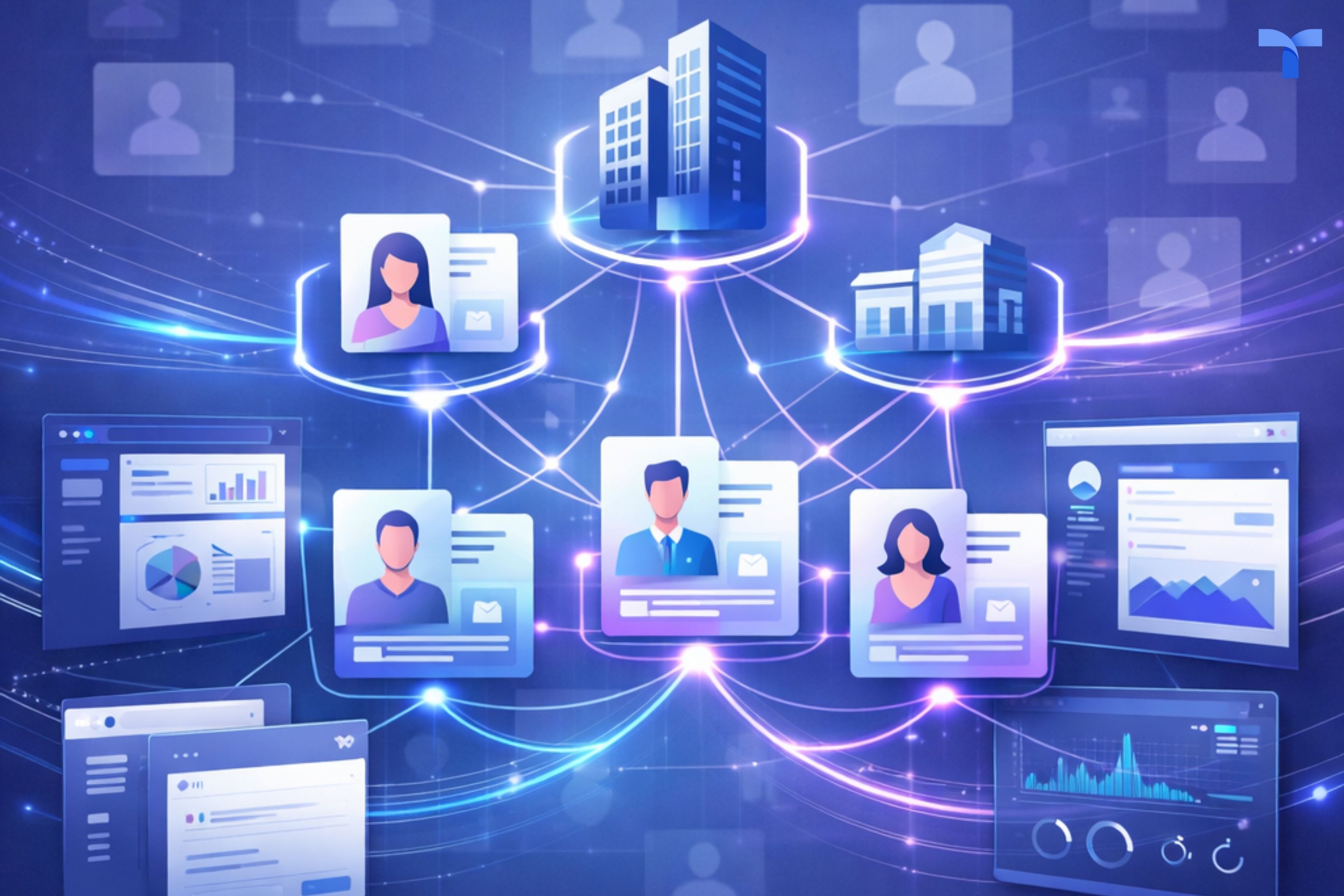
Automated contact identification and enrichment builds complete buying committee maps across your target accounts. The system identifies key decision-makers, validates their current roles and responsibilities, enriches contact data with relevant details, and ensures outreach reaches the right people with role-appropriate value propositions. This eliminates the manual process of piecing together org charts from LinkedIn profiles and outdated CRM records.
Multi-Channel Orchestration
Personalization dies when it's confined to a single channel. True ABM surrounds accounts across email, LinkedIn, targeted ads, and sales calls - with consistent messaging that adapts to each touchpoint.
The key is maintaining personalization context across channels. When a prospect engages with a LinkedIn post, the follow-up email should reference that interaction. When they visit your pricing page, the SDR's call script should acknowledge their research. Disconnected channels create disconnected experiences.
Intelligent Sequencing and Routing
Engagement signals- opens, replies, content downloads, website visits- should dynamically adjust cadence and routing. High-intent accounts showing multiple engagement signals get fast-tracked to sales conversations. Accounts with moderate engagement enter targeted nurture sequences with relevant content. The system coordinates touchpoints to ensure prospects receive timely, relevant outreach without overlapping messages from marketing automation and SDR sequences.
This intelligence layer adapts in real-time, so your outreach rhythm matches each account's buying pace rather than forcing every prospect through the same fixed cadence.
A Step-by-Step Framework for Scaling Personalization
Here's how high-performing teams operationalize account-based lead generation at scale:
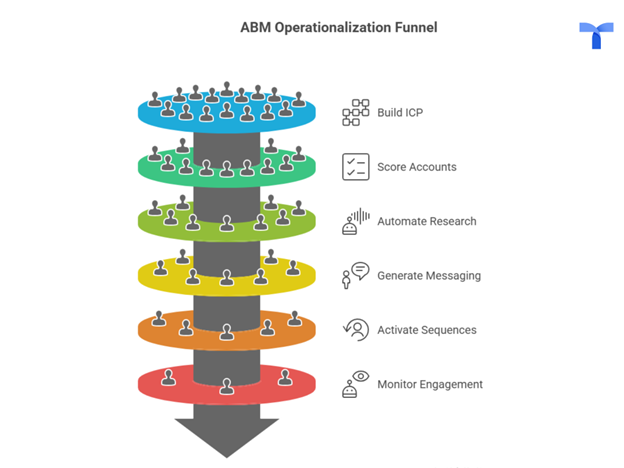
Build your ICP with intent layers. Start with firmographic criteria- industry, company size, revenue, technology stack. Then layer in behavioral signals showing active buying intent: what accounts are researching, which roles they're hiring for, technology investments they're making, and competitive solutions they're evaluating. This dual-layer approach identifies accounts that match your ideal profile and are actively in buying mode. Intent signals might include recent funding announcements, executive leadership changes, job postings for relevant roles, technology adoption patterns, or engagement with competitor content. The combination of fit and timing creates your prioritized target account list.
- Score and select accounts using multi-signal intelligence. Combine fit scores with intent scores to prioritize ruthlessly. Your SDRs should spend zero time on accounts that aren't showing buying behavior.
- Automate account research. AI agents can pull company insights, recent news, tech stack details, open positions, and competitive signals in seconds. What used to take an SDR 30 minutes now happens automatically before outreach begins.
- Generate role-based messaging. Different stakeholders care about different things. Decision-makers want ROI and strategic impact. Champions want features and ease of implementation. Influencers want proof it works in their industry. AI-generated messaging blocks tailored to each persona ensure relevance without manual rewriting.
- Activate multi-channel sequences. Email alone isn't enough. Coordinate LinkedIn touches, targeted ads, and content pushes into unified sequences that surround the account without overwhelming individual contacts.
- Monitor engagement and route dynamically. Track signals across every channel and route accounts to sales when engagement thresholds indicate readiness. Don't wait for form fills - buying behavior tells you everything you need to know.
What Scalable Personalization Actually Looks Like
Consider a team targeting 500 accounts. Without automation, that's impossible to personalize meaningfully. With AI-led orchestration, each account receives:
Custom insight blocks referencing their specific situation - recent funding, leadership changes, or technology investments. Value propositions tailored to their industry vertical and current tech stack. Messaging that differs by stakeholder role - the CFO sees ROI metrics while the VP of Sales sees productivity gains.
Trigger-based outreach adds another layer. When a target account announces a funding round, they enter an expansion-focused sequence within hours. When they post a job for a role your product supports, outreach references that hiring priority directly. When intent data shows competitor research, messaging shifts to comparison angles.
This isn't hypothetical. It's how modern ABM programs generate pipeline from accounts that would otherwise ignore generic outreach entirely.
The Tapistro Approach
This is exactly what Tapistro enables through unified signal orchestration. The platform aggregates buying signals from multiple sources- website activity, CRM data, third-party intent, social engagement, news mentions, and technology changes- into a single unified view. AI agents continuously research and enrich accounts, pulling fresh insights that keep personalization current and relevant.
Journey Canvas orchestrates multi-channel sequences that adapt based on engagement patterns, ensuring coordinated touchpoints across email, LinkedIn, and ads. The system maintains personalization context across every interaction, so each touchpoint builds on previous conversations rather than starting from scratch. Teams running account-based lead generation through Tapistro generate pipeline from accounts that require this level of intelligent, coordinated engagement to move forward.
Metrics That Actually Matter
Account-based lead generation requires account-based metrics that reflect the reality of complex B2B buying processes. Personalization depth measures how tailored outreach actually was, distinguishing genuine customization from cosmetic merge tags.
Account Engagement Score
Track engagement across the entire buying committee, not individual lead activity. Account engagement scores aggregate touchpoint interactions from all stakeholders—email replies, LinkedIn engagement, website visits, content downloads, and event attendance. When multiple stakeholders from the same account engage within a short timeframe, that signals coordinated research and active evaluation.
Multi-Channel Attribution
Track which combination of touches influenced pipeline creation and deal progression. Multi-channel attribution reveals patterns like: accounts engaging with LinkedIn content before opening emails, or pricing page visits combined with case study downloads predicting sales-readiness. This helps optimize sequence design and resource allocation.
Revenue-Connected Metrics
The metrics that matter most connect directly to revenue impact:
Pipeline generated from target accounts measures how much qualified pipeline originates from your prioritized account list. Sales velocity improvements track how quickly deals progress when prospects experience coordinated, personalized engagement. Average contract value (ACV) impact reveals whether your account-based approach closes larger deals. Target account penetration measures what percentage of prioritized accounts have active engagement or open opportunities.
Conclusion
Every automated research cycle makes your targeting smarter. Every engagement signal refines your scoring models. Every successful sequence becomes a template for the next cohort of accounts. The teams investing in AI-orchestrated ABM today aren't just running better campaigns, they're building systems that improve automatically over time.
How Tapistro Enables This
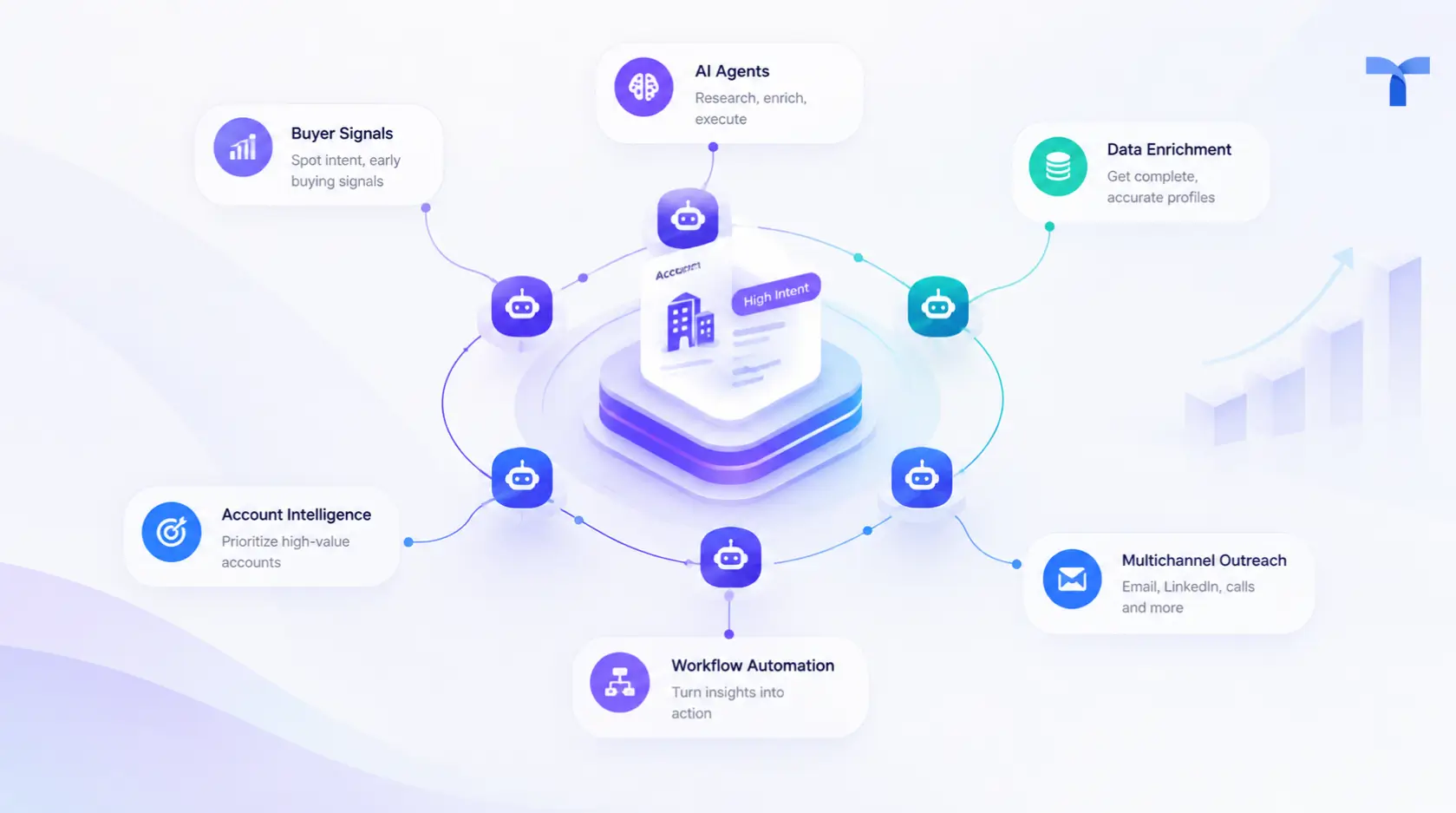
Tapistro turns fragmented outreach into a unified, signal-driven orchestration engine. The platform aggregates buying signals from first-party, second-party, and third-party sources - your website, CRM, LinkedIn, G2, news feeds, technology databases - into a single unified view of each target account.
AI agents work continuously to research and enrich accounts, pulling fresh insights about funding, hiring, tech stack changes, competitive moves, and company priorities. Journey Canvas orchestrates multi-channel sequences that adapt based on real-time engagement, coordinating email, LinkedIn, and targeted ads into cohesive account experiences.
The inbox battlefield isn't getting any less crowded. But the teams running precision-led personalization through AI-powered orchestration aren't fighting for attention anymore. They're earning it one intelligently timed, relevantly crafted message at a time.


.webp)