
Clay builds tables.
Tapistro builds GTM Systems.
The Clay alternative built for GTM teams that need execution not another workflow to maintain. Tapistro turns manual GTM work into self-improving systems your organization can run at scale. Monitor and combine signals, research profiles, personalize outreach, automate nurture, and maintain CRM, all within Tapistro.
Ask AI about Tapistro


A row is not a relationship. Here's the difference.
Clay organizes data into tables and columns, and someone on your team decides what each row means and what to do about it. Tapistro builds a GTM system using every account, person and signal, so your team builds on existing context and doesn't start in tables for each new campaign.
The same account shows up as separate rows in separate tables. Each table knows one thing about Acme. Nothing connects them.
Hiring table · Acme Corp | Hiring: TRUE
This table knows Acme is hiring. It doesn't know Acme also raised, or who visited your site.
Funding table · Acme Corp | Funding: Series B
A second workflow, a second row. The hiring signal lives somewhere else.
Web intent table · Acme Corp | Visits: 3
A third table. Joining all three into one picture of Acme is a workflow someone has to build.
 GTM SYSTEM
Every signal lands on the same profile as a timestamped event from a named source. One look at Acme tells you what happened, why it matters and what to say.
Acme Corp posted 4 SDR roles
Acme Corp raised $40M Series B
Acme Corp VP of Sales visited /enterprise-pricing 3×
Repeat signals triangulated and scored against CRM. Journey launched, 1:1 email drafted for review.
Built to run, not just to build.
Clay was designed as a flexible workbench for GTM engineers. Tapistro was built as an agentic GTM platform where profiles, agents and Journeys come ready to run. The table below maps where they overlap and where Tapistro goes further.
Capability
Clay
Tapistro Advantage
Operating model
Cost model
Pay per action
Credit based
40x more value per credit. Past enrichment is reused, so you don't pay again for what you already know.
No-code platform
Spreadsheets
✓
Drag and drop Journeys the whole revenue team can read and run. No formulas, syntax or prompts to learn.
Runs without manual upkeep
—
✓
Once a Journey is live, TAP AI Agents handle the research, enrichment and outreach. No tables to maintain or prompts to retune.
Guided onboarding
Long ramp
✓
No-code guided onboarding. Teams go live in days, not weeks, without bringing in a consultant.
WYSIWYG orchestration canvas
—
✓
Easy to understand and report on the big picture. Design, test and launch Journeys with drag and drop, no engineering support needed.
AI research agents
✓
✓
TAP AI Agents allow creating fields, deep research, and classification of accounts and profiles. Signal-based AI research and filtering are built in.
Unified account & person profiles
Partial
✓
Understand all activities on each account & person. In Tapistro the profile is the core of the platform, every signal and touch lands on it. In Clay, people and accounts live as rows across tables, and context doesn't travel with them.
Identify & prioritize repeat signals
Partial
✓
Focus on prospects who show up repeatedly. A one-off spike does not carry the same weight as a pattern across sources.
Shared capabilities
Bundled intent signals (e.g. jobs, news, website visitors)
✓
✓
Use Tap credits to access signals. Every signal is tied to the account and person profile.
Combine multiple signals
✓
✓
Prioritize or suppress with CRM & other signals, for example skipping accounts already in an open deal.
Pre-built waterfall enrichment
✓
✓
Query multiple data vendors in sequence using Tap credits or your own API keys, with built-in email validation.
Micro-segmentation & personalization
✓
✓
Profile-based approach enables true personalization. Messaging is generated from the full profile and references the specific trigger.
CRM integration
✓
✓
Bi-directional sync with CRM and MAP, included on every Tapistro plan, pushing enriched, action-ready data with full signal context.
Governance & privacy compliance
✓
✓
Profile-based approach simplifies GDPR-like compliance.
Where Tapistro goes further
Comprehensive account & lead scoring
—
✓
Score fit, signals and engagement together, then route each account or lead to sales, SDR or nurture.
Signal-first campaigns
—
✓
Journeys start from the signal, not a static list. Outreach goes out while the buying window is open.
Signal triangulation
—
✓
Signals from multiple sources are triangulated on one profile. A pattern triggers action, a one-off spike doesn't.
Reuse past enrichment
Partial
✓
Save enrichment costs. Past enrichment is reused across every Journey.
Multi-channel activation from one canvas
Partial
✓
Email, LinkedIn, Google and Meta ad audiences, CRM updates and alerts to Slack, Google Chat and Microsoft Teams, orchestrated in one Journey.
Reporting: step by step + cross-Journey
Partial
✓
Easy to understand the big picture. See how accounts and people enter and exit every step.
Cross-channel attribution
—
✓
Go beyond single-channel conversion measurement to look at multi-channel prospect actions.
A strong toolkit. Someone has to run it.
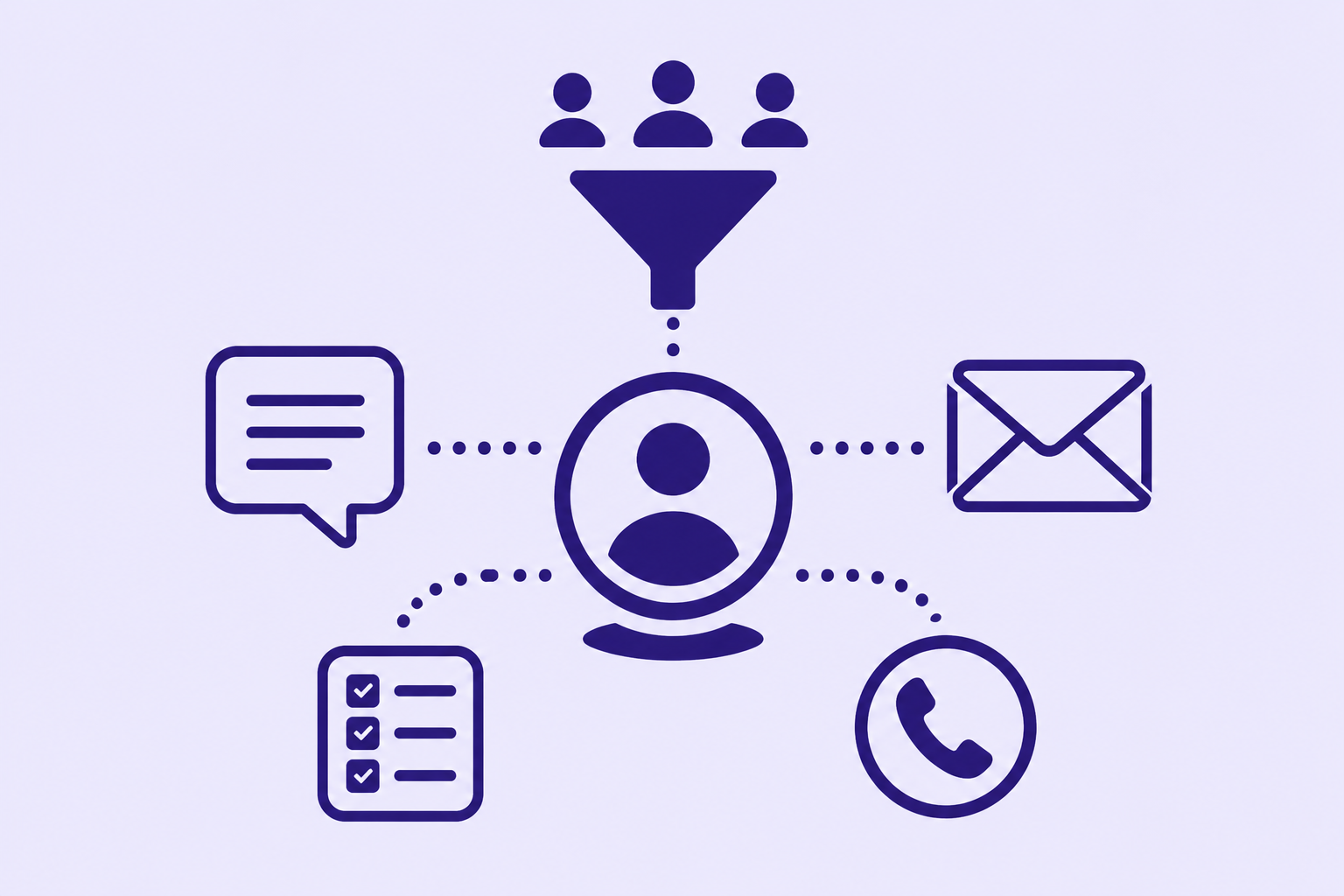
The credit bill nobody can predict
In Clay, every enrichment run, AI step and test consumes Actions and Data Credits, including the mistakes, so spend moves with how workflows are built. Tapistro reuses past enrichment across every Journey, so you don't pay twice to learn the same thing about the same account.

It takes a GTM engineer to run
Clay is built for technical builders: tables, formulas and prompts someone has to own and keep tuning, and many teams bring in a consultant to do it. Tapistro's Journeys are designed once on a no-code canvas the whole revenue team can read and run.

Enrichment ends where execution begins
Clay's native outreach covers basic email. Reaching buyers across channels means wiring in more tools, each with its own contract and upkeep. In Tapistro, signal to activation happens inside one Journey: email, ads, CRM updates and team alerts, with reporting on every step.
What buyers ask when evaluating Tapistro as a Clay alternative
Questions GTM leaders ask when evaluating these two platforms.
Can Tapistro replace Clay?+
Yes, Tapistro can replace Clay. Tapistro runs more use cases than Clay and is an easy visual canvas to build the whole Journey.
How do Tapistro's signals differ from Clay's?+
In Tapistro, signals can be the starting point. A signal can start a campaign on its own, every signal lands on the account and person profile as a timeline, and multiple signals together trigger a score and next action. TAP AI Agents also monitor public signals beyond fixed feeds, so even niche markets get custom signals. Clay is not signal-first: campaigns start from lists and tables, signals are feeds that add rows to them, and your team builds the workflow that acts on each one.
What happens after a signal fires?+
In Tapistro, the signal lands on the account and person profile and the Journey takes it from there. Filters check the signal against your ICP and CRM first, so accounts already in an open deal get suppressed, not messaged. Scoring weighs it against the other signals on that profile, because a pattern means more than a one-off spike. If it qualifies, the Journey runs the next step automatically: enrichment, outreach, an ad audience, or an alert to sales. You build the Journey once, it runs itself.
In Clay, a signal adds rows to a table, and what happens next depends on the workflow your team has built and maintains.
What is an agentic GTM platform?+
An agentic GTM platform is one where AI agents inform the work, not just suggest it. You describe the outcome, and agents handle the research, enrichment, signal monitoring and outreach inside a system you build once. Tapistro is an agentic GTM platform for building self-improving systems: every signal, enrichment and engagement lands back on the account and person profile, so each campaign run starts smarter than the last. The difference from a tool like Clay is who does the work. In Clay, AI helps inside a table, but a person builds, runs and maintains the workflows around it.
Do I need a GTM engineer to run Tapistro?+
No. Journeys are designed on a no-code canvas that sales, marketing and RevOps can read and run themselves. You build a Journey once, test it before go-live, and TAP AI Agents handle the research, enrichment and outreach inside it.
When does Clay make sense?+
Clay is a only a choice for teams with a dedicated GTM engineer or RevOps builder who wants to manually handle every table, data provider and prompt. Clay is expensive and so this should be kept in mind when proceeding with it. Every action costs credits and since it is a spreadsheet based tool, each use case can require multiple builds.
Where teams struggle is upkeep. As workflows multiply, someone has to own prompts, credit spend and integrations. Teams that want signals to turn into pipeline without that ongoing build work are the teams Tapistro was built for.
Who writes the outreach messages?+
In Tapistro, TAP AI Agents write them. Messages are generated from the full account and person profile and reference the specific trigger, so a prospect who posted a job gets a different message than one who visited your pricing page. You set the direction once in the Journey, and the agents personalize each message from there. In Clay, your team writes the prompts that generate copy, tests them, and tunes them until the output is usable, and anything beyond email runs through separate outreach tools.
Your team reviews and approves before anything sends.
How does pricing compare?+
A Tapistro credit delivers roughly 40x more value than a Clay credit, for two reasons.
Clay burns credits faster. It splits enrichment into separate fields, so pulling a company's LinkedIn, revenue and employee count can cost 10+ credits. Tapistro enriches everything in one step, consuming just 1 credit per company. That alone is 10x more value per credit.
Persistent memory vs siloed sheets. Clay data lives in separate spreadsheets, so each reappearance of a prospect triggers another enrichment and consumes more credits. Tapistro remembers every prospect and layers new signals onto the existing profile, reusing already enriched data. That adds another 4 to 5x. Every data point becomes part of a living profile, not a one-off spreadsheet lookup.