

GTM Orchestration: Turning Strategy into Execution at Scale
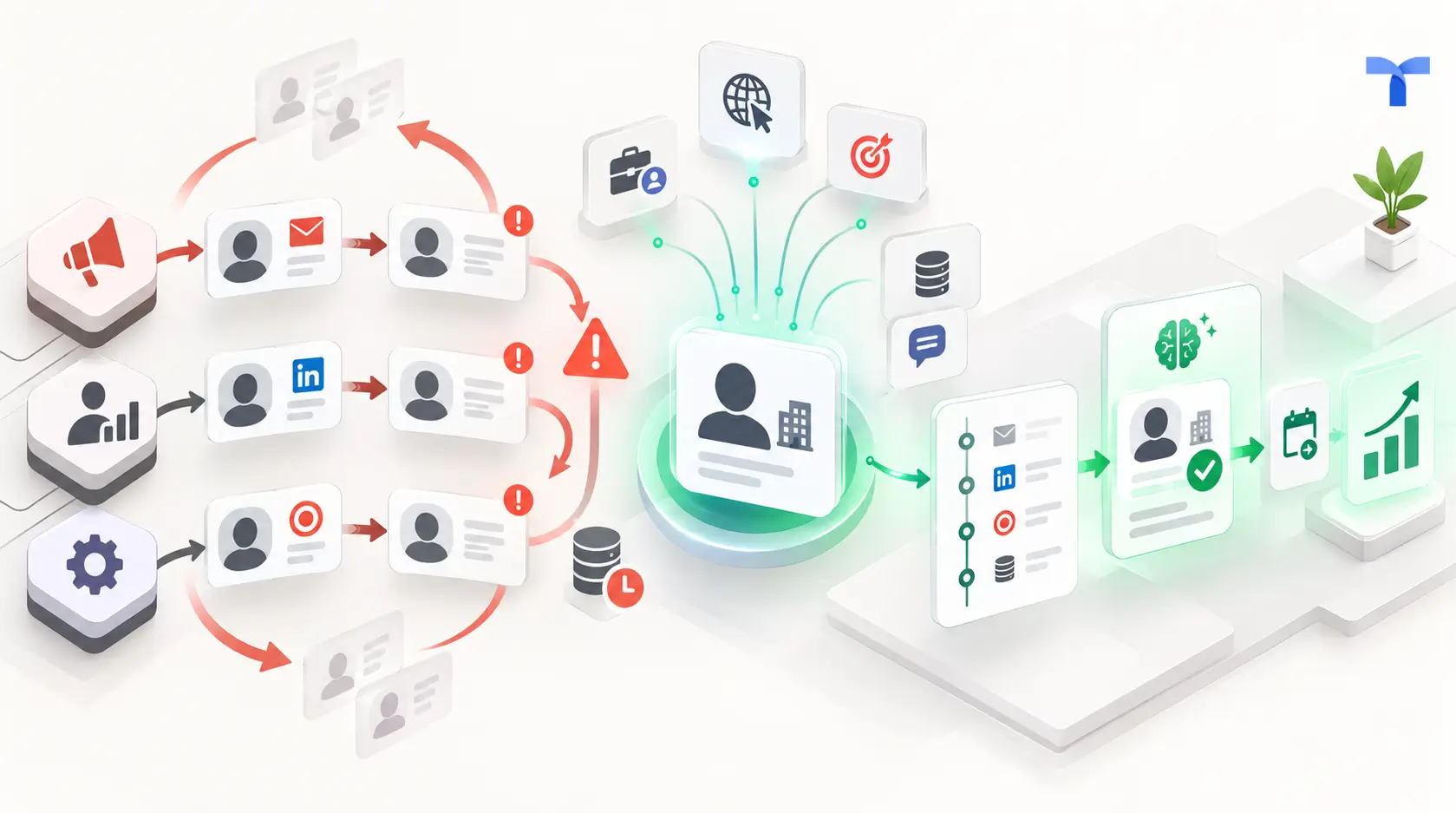
Most go-to-market teams do not fail because of a bad strategy. They fail because the strategy never reaches the field.The plan looks great on the slide. Then it meets reality. Signals sit in dashboards. Leads wait in queues. Sales and marketing point at different lists. By the time anyone acts, the moment is gone. This is the strategy-to-execution gap, and it is now one of the top revenue blockers cited by scaling B2B companies.The numbers tell the story. Only 30 percent of sales pros report strong alignment with marketing, yet aligned teams are twice as likely to exceed revenue targets. The average B2B team now relies on tools from 23 different vendors. And speed is brutal: contact a lead within five minutes and you are up to 100x more likely to reach them, and 21x more likely to qualify them, than if you wait 30 minutes. Yet the average B2B lead waits 47 hours.Strategy is not the constraint. Execution at scale is. This post is about GTM orchestration, the layer that turns a plan into action across every signal, channel, and team.
What GTM Orchestration Actually Means
GTM orchestration is the layer that connects your strategy to your daily execution. It takes every buyer signal you collect, decides what to do with it, and acts in the tools your team already uses. Without anyone stitching it together by hand.Think of it as the conductor of your revenue engine. The strategy is the score. The signals, channels, and teams are the instruments. Orchestration keeps them in time.
It Is Not Workflow Automation
This is the part most teams get wrong. Workflow tools run the steps you set in advance: if a lead hits a score, route it here. That is useful, but it cannot judge which of several signals matters most, and it needs a human to rewrite the rules when conditions change. Orchestration weighs every signal against full account context, decides the next move, and explains why. An orchestration platform makes a call. A workflow tool fires the step you pre-set.
It Works Across the Whole Team
Orchestration is not a tool for one role. Marketing, SDRs, sales, and operations all act on the same ranked account view. One team's signal becomes another team's next step. That shared view is what ends the cross-functional finger-pointing most revenue orgs live with.
Why Strategy Breaks Down at Scale
A strategy that works for 50 accounts often collapses at 5,000. The logic is the same. The volume is not. Here is where it breaks.
Manual Overload
Every quarter brings new signal sources. Intent feeds, product usage, web visits, ad clicks, CRM updates. A human can scan a handful of accounts a day. The pile now runs into the thousands. Reps end up spending most of their day on research and list-building instead of selling, and bad or stale data alone costs 15 to 25 percent of revenue. The work that should belong to a system is sitting on people.
DIY Agents and Scripts Don't Scale
Faced with overload, many teams try to build their own fix. A few scripts here, a homemade AI agent there, a clever spreadsheet macro. It works for one play, for one quarter. Then a signal source changes, the prompt breaks, the one person who understood it leaves, and the whole thing stalls. DIY agents do not scale because they are not maintained like a product. They have no shared memory, no audit trail, and no one to fix them at 2 a.m. Orchestration is the maintained system that does.
Teams Drift and the Window Closes
When 53 percent of organizations report a broken handoff, marketing fires against last week's priorities while sales works a list a rep forgot to refresh. Meanwhile the buying window closes. With the average lead waiting 47 hours, and only 7 percent of companies responding within five minutes while 23 percent never respond at all, most teams act after the moment has passed. The signal, the alignment, and the speed problems are one problem with three names. Orchestration addresses all three at once.
Strategy Is a Loop: Research, Set, Operationalize
Strategy is not a one-time slide. It is a loop that runs continuously. Orchestration powers each step.
Research the Current Data
Good strategy starts with what is true right now, not last year's assumptions. The system reads your live signals, wins, losses, and engagement to show which segments are actually heating up. Tapistro's agents unify more than 70 signal sources into a single Unified Prospect Profile and run this research at scale, so your ICP reflects the current market instead of a stale guess.
Set the Strategy
With current data in hand, you define the plan. Which segment to own, which signals matter, which channel fits which buyer. This is the human judgment step. You set the rules and the priorities that reflect your goals.
Operationalize Into Repeatable Motions
This is where most teams stall, and where orchestration earns its keep. The plan becomes a set of repeatable motions, built as Journeys: defined plays that run the same way every time, for every matching account. A motion you build once runs for 5,000 accounts without 5,000 manual decisions, which is how teams using Tapistro report cutting manual GTM work by around 70 percent. Then the loop restarts, as new data refines the next strategy.The pattern holds across customer environments. Eucloid, a data and analytics firm entering the U.S. market, compressed a five-month outreach ramp into weeks after deploying Tapistro, generating five to six qualified meetings a month at a 38 percent click-through rate. A mid-market loyalty SaaS team scaled outbound 10x without adding headcount, as AI agents removed the research that used to eat most of a rep's day.
Why Context Compounds Over Time
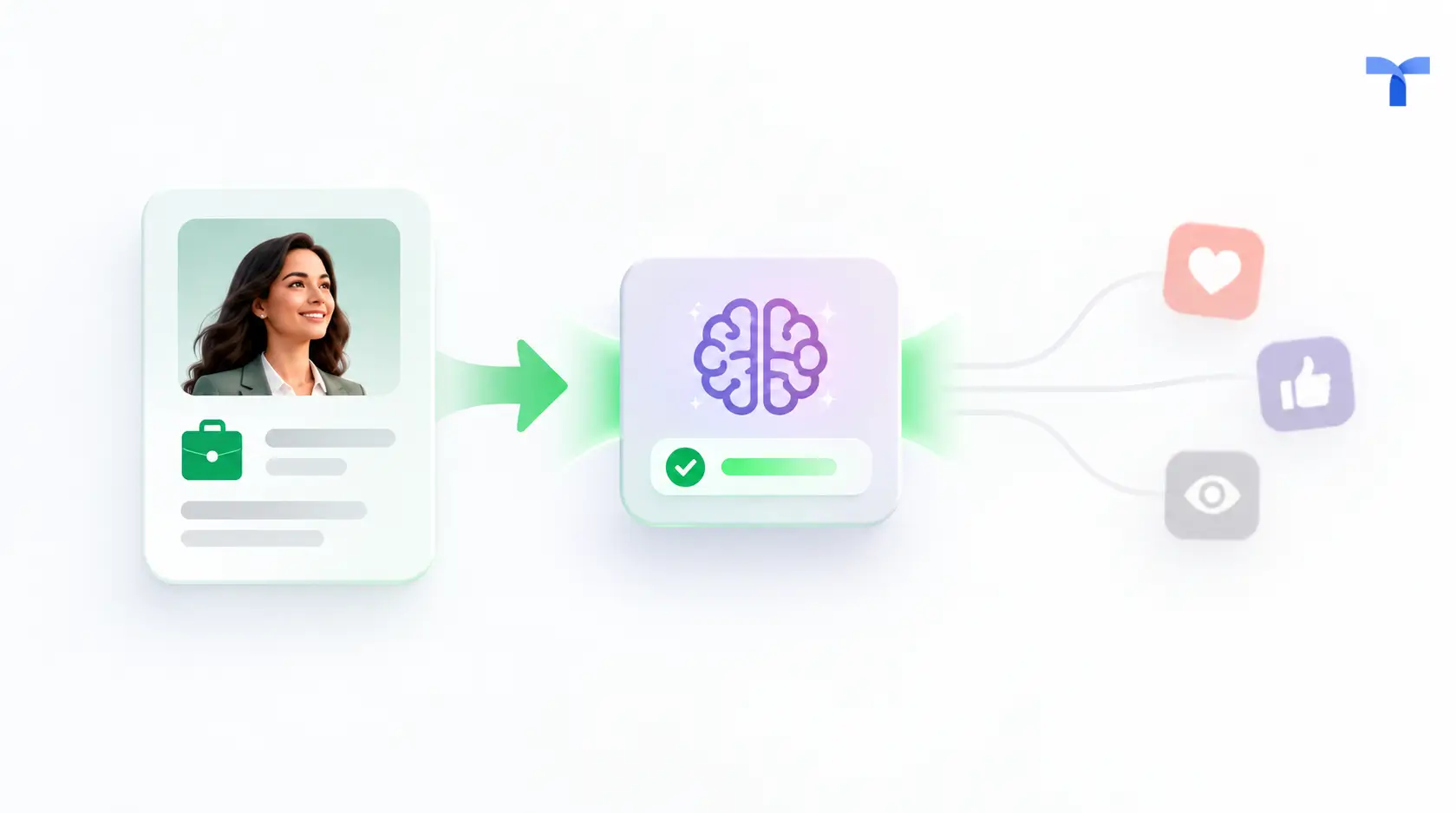
The biggest advantage of orchestration is not speed. It is memory.Every signal, reply, and closed deal feeds back into one shared model of who your best buyer is. A DIY script forgets. A maintained orchestration layer remembers. So the account ranking gets sharper each cycle, the messaging gets more relevant, and the motions get more precise. This is context compounding: the system is more valuable in month twelve than in month one, because it has learned from every interaction in between.Compounding also crosses teams. The context marketing creates feeds the SDR's outreach, which feeds the AE's call, which feeds the next campaign. The strategy gets smarter as one shared brain, not as four disconnected ones. That is something no individual rep, and no DIY tool, can build.
What to Look For, and How to Start
The label is crowded, so a few questions cut through it. Does it reason across every signal you pay for, in one decision? What is the latency from signal to action, hours rather than days? When two signals conflict, does it make a call and explain it, or just fire both alerts? Does it write into the tools your team already uses? And can a leader audit why it acted? Tapistro answers each with a live environment, not a slide.Rolling it out does not require a year-long project. Start with one motion, say inbound from a target segment, and orchestrate it end to end. Tapistro is no-code and self-serve, so most teams run a live Journey in the first week. Once it proves out, add the next motion. Each one reuses the same signal foundation, so the second is faster than the first. You build a flywheel, not a project plan.
The Shift Underneath Everything
For years, GTM teams believed a better strategy was the answer. Hire a sharper leader. Rewrite the plan. Buy another signal feed. But the gap was never in the thinking. It was in the doing.The teams that win the next cycle will not have the best slides. They will have the best execution at scale. Their strategy reaches the field in minutes. Every signal gets a decision. Every team works the same list. And every cycle makes the model smarter than the last.Strategy without execution is a wish. Execution without orchestration does not scale. Tapistro is the layer that turns the plan into action, for revenue teams ready to stop managing tools and start running a system.


.webp)