
-compressed.jpg)
Introduction: Why You Need Signal Orchestration Today
The architecture of the modern buyers’ journey is complex and decentralized. Today’s buyers engage across various channels - from corporate websites and social platforms to email, third-party review sites, and product usage interfaces - without limiting themselves to a predictable, linear path.
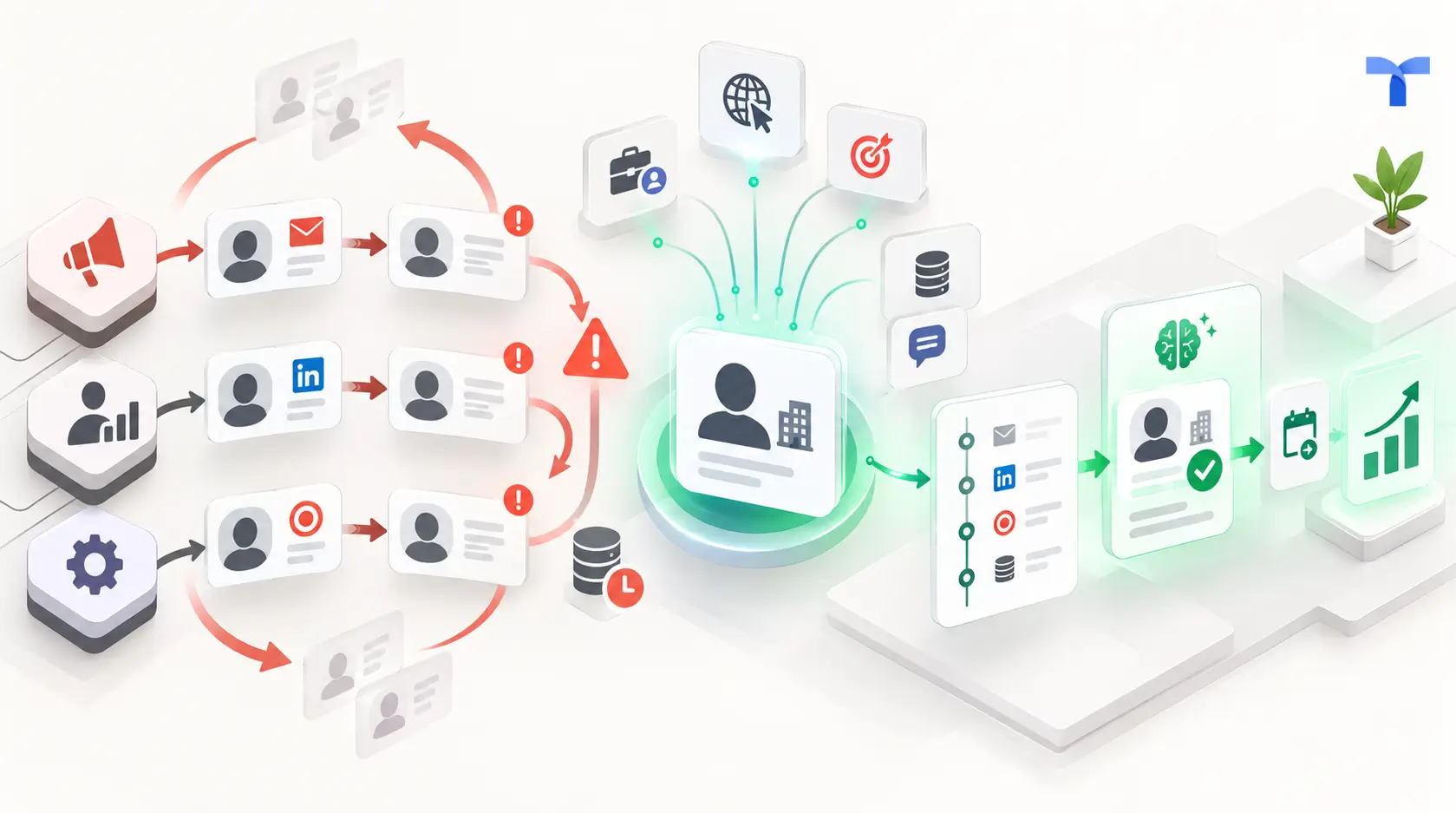
This multi-channel reality presents a critical challenge for the Go-To-Market (GTM) teams. The data that is required to understand buyer intent is vast and at the same time, fundamentally fragmented .Organizations may possess terabytes of interaction data, but these critical insights often remain siloed within different tools - the CRM, the marketing automation platform, the product analytics engine, and the advertising dashboard, etc. This prevents a unified view or perspective. When this data does not convert into knowledge, the buyer’s journey remains a series of educated guesses.
Intent Signal Orchestration addresses this structural inefficiency by unifying every fragment of buyer behavior into a single, comprehensive, and real-time view. It transforms scattered digital breadcrumbs into a cohesive, actionable narrative. In an environment defined by buyer velocity and precision targeting, relying on manual processes or static rules is a competitive liability. This dynamic context is precisely why AI-driven orchestration is no longer a strategic option, but an essential component for any modern GTM team aiming for sustained revenue acceleration and market dominance.
What Is Signal Orchestration?
Signal orchestration is the systematic process of capturing, cleaning, and unifying diverse buyer signals across the entire GTM technology stack in real-time - but critically, not all signals carry the same weight. While some platforms aggregate vague behavioral patterns that require interpretation, true signal orchestration prioritizes concrete, observable events: a company hiring for roles that mention your solution category, a funding round that creates budget availability, a tech stack change that opens competitive displacement opportunities, or an organizational shift that signals new priorities. It's the framework that harmonizes both these high-confidence triggers and traditional interaction data to create a dynamic, holistic profile of the buyer and target account.
At its core, it's about breaking down the artificial barriers between your tech stack silos to create a unified intelligence layer that actually reflects how buyers behave in reality across multiple channels, devices, and buying committee members.
This discipline connects and harmonizes signals from:
.webp)
- Advertising Platforms: Campaign engagement, ad view-throughs, and click-to-conversion funnels.
- CRM Systems: Sales activities, stage progression, historical notes, other account level data
- Website & CMS: Page views, content consumption, exit intent, and form submissions.
- Email & Marketing Automation: Opens, clicks, forward behavior, and nurture sequence progress.
- Product Analytics: Feature adoption, frequency of use, usage volume, and activation milestones.
Most importantly, signal orchestration goes far beyond the capabilities of traditional lead scoring or uni-dimensional marketing automation. Traditional methods often rely on simple linear workflows and static point accumulation.
The Signal Quality Spectrum
Not every signal provides the same level of confidence or urgency. Understanding the quality spectrum helps GTM teams prioritize effectively:
Low-Confidence Signals (Fuzzy Intent): These are aggregated behavioral patterns that suggest possible interest but lack specificity. Examples include "someone from this company domain viewed content in your category" or "aggregated research activity detected." While these may indicate awareness, they don't tell you who is actually in-market, what specific problem they're solving, or when they need a solution. Teams receiving these signals often struggle to determine the next action.
High-Confidence Signals (Observable Buying Triggers): These are concrete, verifiable events that indicate a specific business need or buying window has opened. Examples include job postings where the description explicitly mentions evaluating or implementing tools in your category, Series B funding announcements that create budget allocation opportunities, public tech stack changes visible through job postings or product updates, rapid team expansion in departments that typically use your solution, or regulatory compliance deadlines that require new tooling. These signals don't require interpretation - they represent observable facts that any sales professional can immediately act upon.
Why Buying Signals Matter More Than Ever
The buying cycle nowadays is defined by self-education and anonymity. The buyer already has a multi-touch, multi-channel journey even before they speak directly with a sales representative. Every digital interaction they execute - from researching a competitor, to reading an analyst report, or viewing a solution page - is a digital breadcrumb.
.webp)
In the competitive landscape of B2B sales, a team simply cannot afford to miss these intent signals. Missed signals result in missed opportunities, inefficient resource allocation, and, obviously, a slow response time that hands the competitive advantage to a faster competitor.
The necessity of intent signal orchestration stems from the reality that single-source data no longer provides the full picture. A strong CRM fit signal, combined with a weak website behavioral signal, yields a different action than a strong fit signal, combined with high cross-channel intent. Only by unifying these diverse inputs can GTM teams accurately gauge genuine readiness and prioritize resources effectively.
However, the critical question isn't just whether you're tracking signals - it's whether those signals are specific enough to drive action. Consider two scenarios:
Scenario A: Your intent platform alerts you that "multiple users from Acme Corp have been researching marketing automation tools." What do you do with this? Who do you call? What's the specific pain point? When do they need to decide?
Scenario B: Your signal platform shows that Acme Corp just posted a job opening for a Marketing Operations Manager, and the job description includes "experience selecting and implementing marketing automation platforms" as a core requirement. The hiring manager's LinkedIn shows they joined 90 days ago. The company raised Series B funding 6 months ago.
The second scenario gives your team a specific entry point, a verified business need, a champion to engage, and context about timing. That's the difference between fuzzy intent and actionable signals - and it's the difference between hoping you're relevant and knowing you are.
How AI in GTM Connects Intent Signals Across All Your Channels
The complexity of orchestrating thousands of simultaneous, cross-channel signals is beyond the capacity of human teams or simple rule-based software. This is where Agentic GTM systems become indispensable. AI in GTM serves as the central nervous system for intent signal orchestration, transforming complex, heterogeneous data into unified intelligence, providing a platform for buying signals automation.
AI correlates hidden patterns that humans usually miss
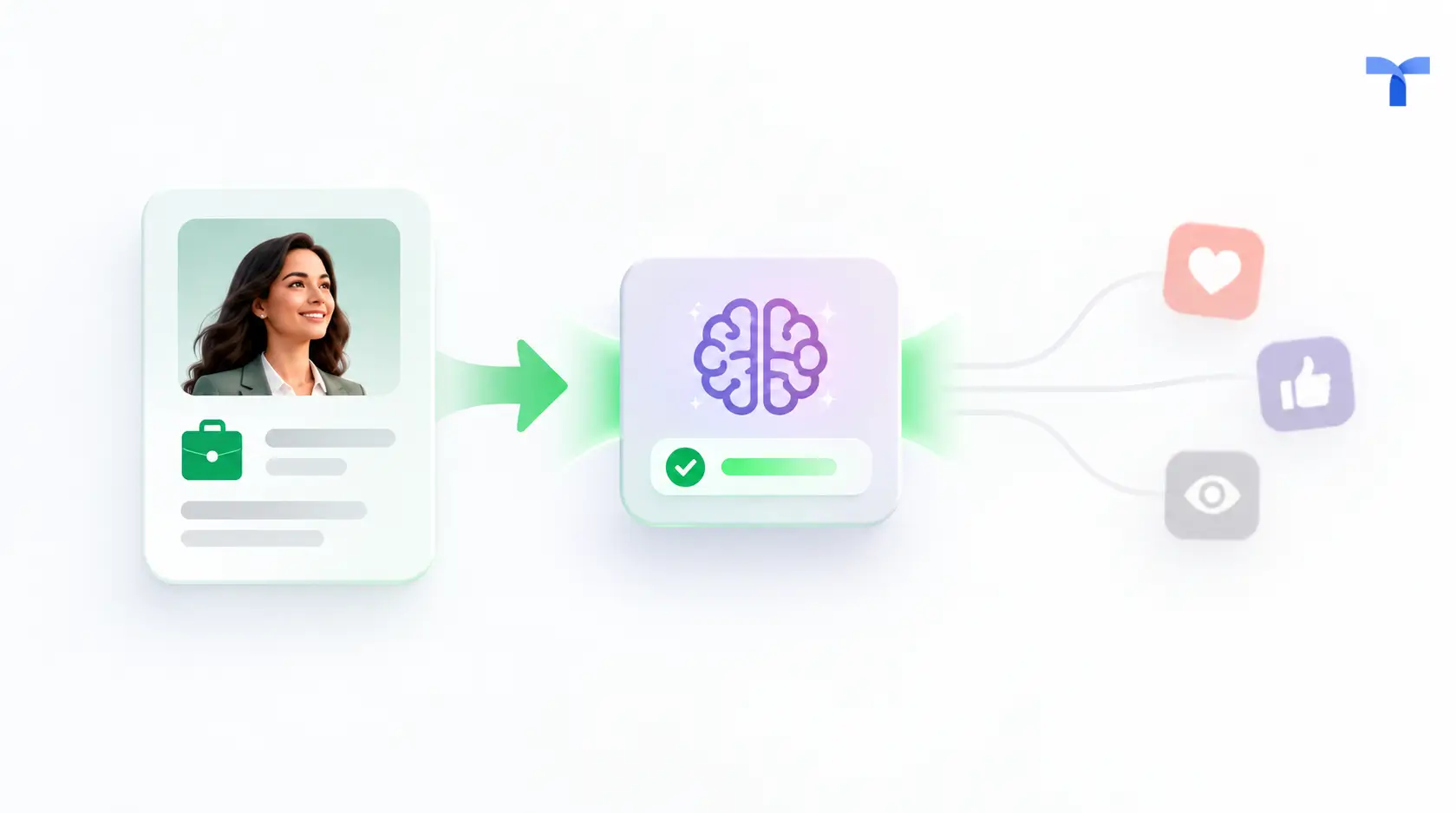
Human analysts can detect linear patterns (e.g., if A then B). AI algorithms in GTM systems are designed to detect non-linear, high-dimensional correlations. For instance, these tools or systems can recognize that a specific sequence of actions like a website visit on a Tuesday, followed by a competitive keyword search on Wednesday, and a C-level executive opening an email on Thursday, indicates a 90% higher probability of conversion than any of those actions taken in isolation or a different sequence.
These subtle, predictive patterns are the "hidden gold" that AI extracts from the noise. But the quality of insights depends entirely on the quality of inputs. AI analyzing fuzzy, unverifiable browsing data can only produce fuzzy predictions. AI analyzing concrete triggers - a company just acquired a competitor and is consolidating tech stacks, they're hiring three roles that mention your solution category, and they recently attended your competitor's user conference - produces precise, actionable intelligence. The orchestration engine doesn't just find patterns; it distinguishes between noise and legitimate buying signals that warrant immediate GTM action.
AI-Driven Signal Orchestration
Effective signal orchestration platform operates through a continuous, five-stage cycle powered by intelligent automation.
.avif)
Signal Collection
This is the foundational stage where the system captures every relevant event, interaction, trigger, and usage behavior across the entire GTM stack. It involves connecting to every data source website, CRMs, social media APIs, third-party intent tools, and product databases, to ensure comprehensive data ingestion. The goal is complete visibility, transforming every touchpoint into a streamable, usable data event.
Signal Ingestion
Raw data from different sources is inherently messy, inconsistent, and formatted differently. Signal Ingestion is the critical process where AI cleans, standardizes, and aligns this heterogeneous data. This involves deduplication, identity resolution (stitching disparate user IDs to a single account), and ensuring that all captured events and attributes are consistent and usable for the next stage.
Signal Correlation &Scoring
In this stage, AI moves beyond simple data consolidation. Machine learning models connect seemingly unrelated behaviors (e.g., an ad engagement by one department and a product trial by another) to form a holistic account-level profile. The AI dynamically scores intent based on the volume, velocity, recency, and sequence of these correlated signals, evaluating both the individual's and the entire account’s collective interest and readiness for engagement.
Routing & Activation
This is the moment of action. The system through a smart orchestration workflow that is built, routes scoring persons or accounts to separate branches. A high-intent signal might trigger an immediate notification to a sales development representative (SDR), update the account status in the CRM, or launch a personalized, high-value content campaign via email.
Continuous Learning Loop
Signal orchestration is not a set-it-and-forget-it system. The AI continuously monitors the outcomes of the activated signals, for example, tracking if a sales alert led to a booked meeting or if a personalized ad campaign led to a demo request. This outcome data is then fed back into the scoring and correlation models, allowing the AI to refine its predictive accuracy and optimize tracking and routing decisions over time.
Real Examples of Signals You Can Orchestrate Today
The power of orchestration lies in its ability to combine what might otherwise be viewed as isolated events into an immediate ,high-priority GTM action
- A user visits your pricing page multiple times. This velocity signal, especially if combined with a visit to a competitive comparison page, indicates high behavioral intent. The orchestration platform can instantaneously flag the account, increase its scoring weight, and trigger acontextual message or sales alert.
- Technology stack signals from observable sources. A prospect company's engineering job postings reveal they're "migrating from legacy CRM to Salesforce" and need someone with "experience in data migration and integration architecture." This observable signal indicates an entire systems overhaul is happening - creating displacement opportunities for adjacent tools in their stack. The platform flags related accounts in your CRM and suggests competitive positioning.
- A target account’s activity spikes across channels. Instead of one person downloading content, the system detects three different employees from the same account visiting key solution pages and registering for a webinar within 72 hours. This account-level surge triggers an immediate reassignment or a dedicated Account-Based Marketing (ABM) play, recognizing that the buying group is now actively researching.
- A target account posts a job opening with explicit tool requirements. The VP of Sales at a mid-market SaaS company posts an opening for a Revenue Operations Manager. The job description specifically mentions "experience implementing and managing CPQ platforms" and "background in Salesforce ecosystem." This isn't speculation - it's a documented need .The orchestration platform flags the account, enriches it with funding data(just raised Series B three months ago), identifies the hiring manager, and routes this to your sales team with full context for immediate, relevant outreach.
How Signal Orchestration Transforms Your GTM Motion
The implementation of signal orchestration fundamentally restructures the operational dynamics of a GTM team, moving it from a reactive, volume-based process to a proactive, precision-based engine.
.avif)
You respond to buyers at the right time.
By operating in real-time, orchestration eliminates the latency inherent in traditional batch processing or manual list reviews. This capability allows teams to engage buyers at the precise moment they are expressing peak intent, maximizing the likelihood of a meaningful conversation.
Sales, marketing, and CS stay aligned without manual intervention
Signal orchestration acts as the single source of truth, standardizing the definition and priority of an account across all departments. This eliminates common friction points, ensuring that marketing is nurturing based on the same intent score that sales is prioritizing, and that customer success is engaging based on the same usage signals.
You eliminate the "now what?" moment that plagues intent data
Traditional intent platforms often leave teams frustrated with alerts that sound promising but provide no clear path to action. "Account X is researching your category" leads to the question: "Great, but who do I call? What's their specific need? When do they actually need to buy?" Signal orchestration built on observable triggers eliminates this ambiguity. When your platform alerts that a target account has three open roles mentioning your solution category, the action is obvious: reach out to the hiring managers with specific value propositions tied to their documented needs. This clarity transforms signal data from "interesting information" into "ready-to-execute plays."
You dramatically reduce follow-up delays
The automated routing and alerting capabilities cut down the time between a high-intent action and the necessary follow-up from days or hours to minutes. This velocity is crucial in competitive markets.
You catch high-intent moments before competitors do
Intent Signal Orchestration enables GTM teams to leverage proprietary first-party data (website activity, product usage) and combine it with third-party intent to establish a predictive edge, allowing them to initiate contact before competitors even register the opportunity.
Traditional automation focuses on efficiency of execution; signal orchestration focuses on precision and relevance of execution. It moves GTM beyond simply doing things faster to ensuring the right thing is done, to the right person, at the perfect time.
How You Can Implement Signal Orchestration in Your GTM Stack
Adopting signal orchestration is a strategic evolution of the GTM function, requiring a structured implementation roadmap.
- Audit Your Current Data and Tools: Start with a comprehensive review of your existing data sources, the quality and consistency of that data, and the current limitations of your technology stack. Identify which tools hold critical buyer data that is currently isolated.
- Identify the Core Buying Signals You Want to Track: Define the handful of signals that genuinely correlate with high-value pipeline progression and closed deals in your unique business context. Focus on signals that indicate active consideration oversimple awareness
- Connect Your GTM Stack : Implement the necessary integrations to link your key systems: CRM, marketing automation, web analytics, ad platforms, and website visitor tracking. The goal is to establish the raw data flow that feeds the orchestration engine
- Choose an AI Orchestration Platform: Select a dedicated platform such as Tapistro that specializes in data normalization, cross-channel correlation, and real-time activation , moving beyond the linear limitations of older marketing automation tools. Reach out to Tapistro team for a demo.
- Build Alerts, Workflows, and Automation Rules: Configure the system to translate AI outputs into specific GTM actions. This includes setting up dynamic scoring models, defining thresholds for sales alerts, and designing personalized campaign triggers.
- Continuously Optimise Using Your Real-Time Signal Insights: Establish a feedback loop .Regularly review which signals are leading to successful outcomes (closed revenue) and use this insight to refine the AI’s scoring weights and update the automated workflow.
Benefits You’ll Experience After Implementing Signal Orchestration
The integration of signal orchestration delivers measurable improvements across the entire revenue funnel, enhancing both efficiency and buyer satisfaction.
.avif)
- Faster Response Times: By acting on real-time data, the latency between buyer intent and GTM response is dramatically reduced, often from hours to minutes, securing a competitive first-mover advantage.
- More Accurate Targeting: AI-driven scoring enables hyper-accurate segmentation, ensuring that marketing spend and personalization efforts are concentrated on accounts with the highest validated propensity to buy.
- Improved Sales Efficiency: Sales teams stop wasting resources on cold or low-intent leads. They are empowered to focus their time exclusively on accounts that the orchestration platform has qualified as genuinely in-market and ready for engagement.
- Stronger Account-Level Insights: GTM teams gain a holistic, 360-degree view of the entire buying group’s collective activity, allowing for account-based strategies that are contextually rich and highly relevant.
- Reduced Leakage in Your Funnel: Orchestration ensures that valuable leads or high-intent accounts do not fall into data gaps or manual processing delays, significantly reducing funnel attrition.
- Higher Conversion and Close Rates: The combination of superior timing, accuracy ,and personalized context naturally leads to increased conversion rates across the pipeline and improved close rates at the final stage.
- Better Buyer Experience: Buyers are met with relevant, timely interactions and content, rather than generic, ill-timed outreach, leading to a smoother and more professional journey.
Final Thoughts: Your GTM Future Will Be Signal-Led
The complexity of the modern buyer journey has permanently retired the viability of manual processes and static lead scoring. Traditional systems are simply too slow, too rigid, and too segmented to cope with the sheer volume and velocity of cross-channel interactions today.
Signal orchestration is not an optional technology layer; it is rapidly becoming the foundational backbone of every modern GTM team committed to sustainable growth. It provides the only mechanism capable of unifying a fragmented data landscape and translating raw buyer behavior into instant, intelligent action.
In the evolving GTM environment, where buyer attention is the scarcest resource, the competitive mandate is clear: the brands that recognize, interpret, and act on these subtle, dynamic buying signals first will be the ones that win. The future of Go-to-Market is signal-led.



.webp)