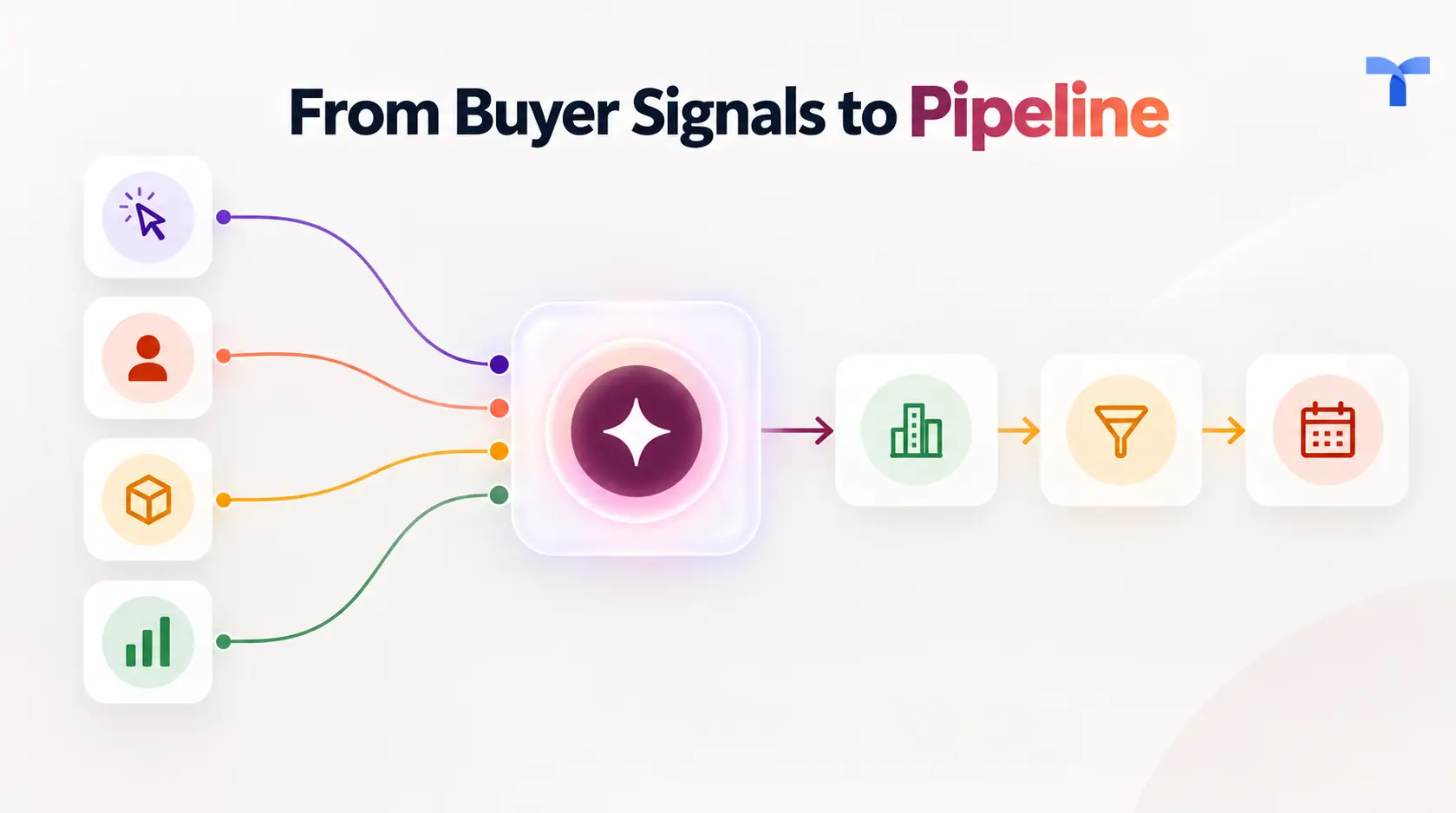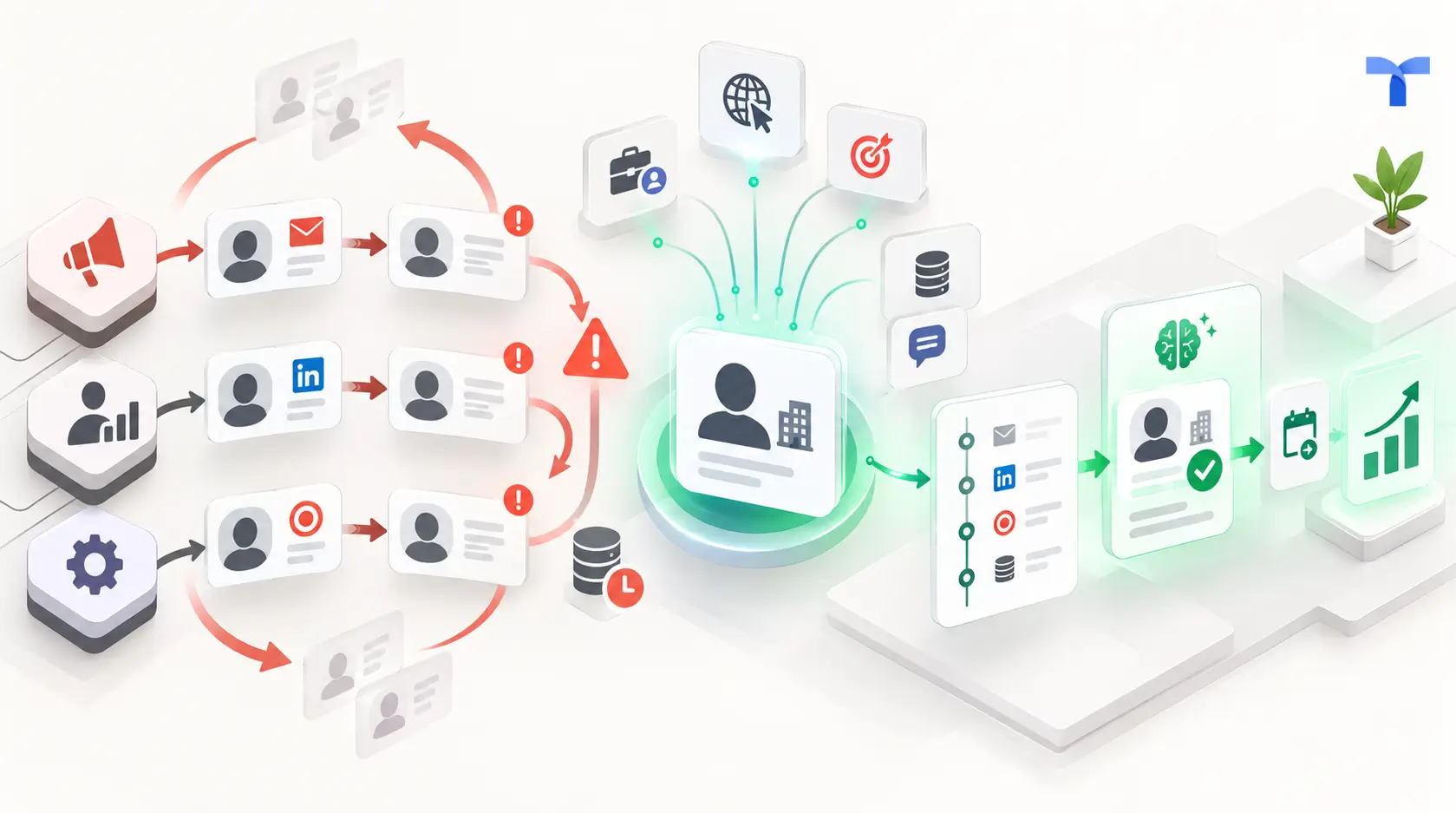
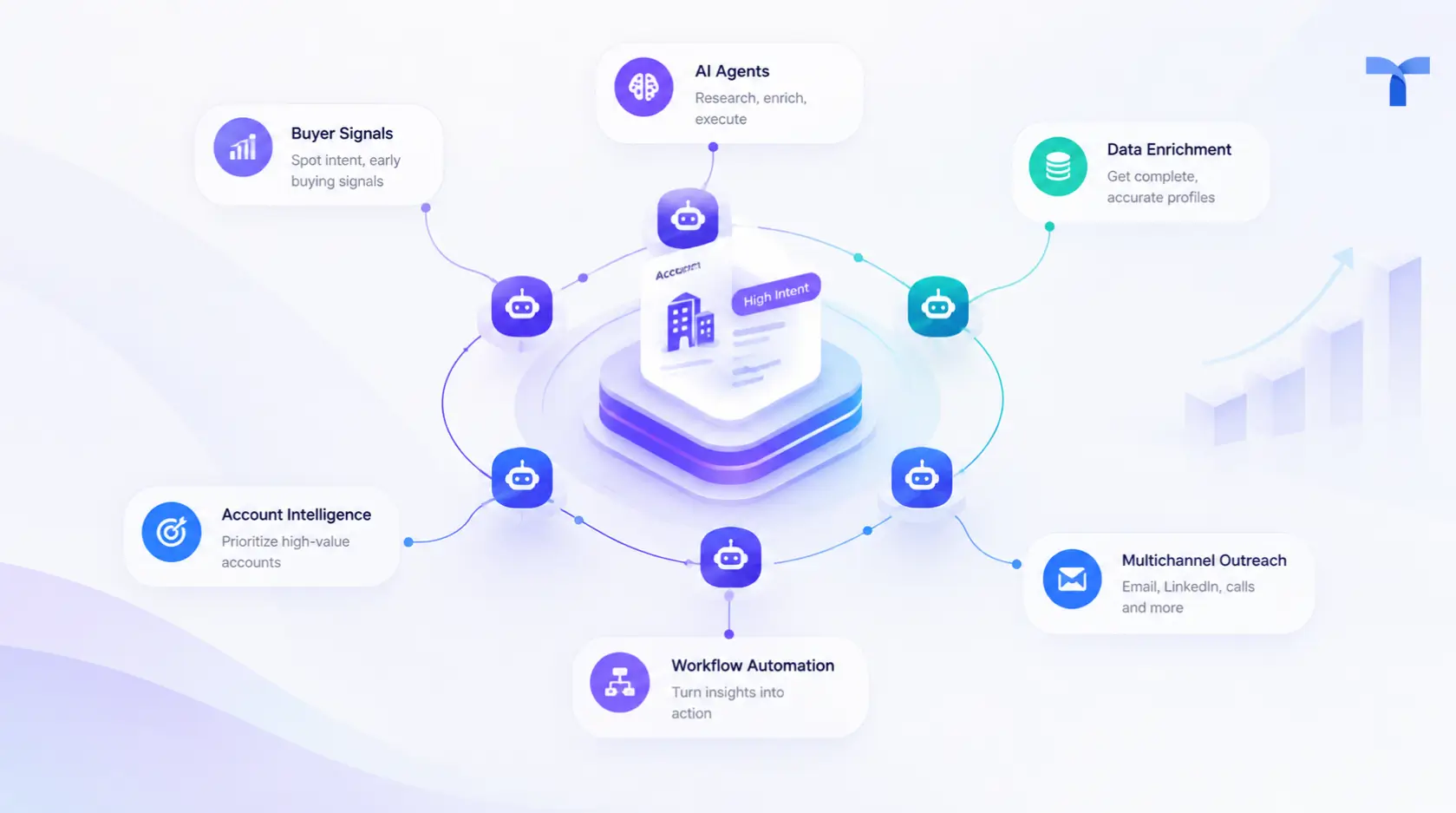
The right agentic GTM platform for a mid-market B2B SaaS company depends on which manual work you want gone. If the gap is contact data plus sequencing, buy Apollo. If you want an AI sales development agent to replace headcount on a narrow ideal customer profile, look at 11x or Artisan. If you want to act on website and intent signals, look at Unify or Warmly. If you want list-first, signal-first and buying group plays to run on one account record, without a person reconciling tools between them, buy Tapistro.
"Agentic" is now a contested label. Apollo announced what it called the industry's first fully agentic end-to-end GTM platform in October 2025. Tapistro calls itself the number one agentic GTM platform. Half the vendors below use the word. The label tells a buyer nothing. What matters is what each platform runs without a person, and where it stops.
Where it stops matters more than most buyers expect. Gartner found that AI tools save sellers an average of 4.8 hours a week, yet 72 percent of sales organizations report low reinvestment of that time into high-value work. The same survey found that organizations that do reinvest are 3.1 times more likely to exceed their lead-to-opportunity conversion goals. Removing manual outbound is the easy half. The platform has to connect the removed work to pipeline, or the saved hours disappear.
We build Tapistro, so we scored it on the same fields as every other platform here, including where it stops.
Quick Picks
What Made the List
Every platform here passed three rules.
It executes, not just recommends
A platform that scores accounts and hands a list to a rep is an intelligence tool. Each platform on this list takes the next action itself, at least for part of the motion.
It acts across more than one channel
Email-only automation is a sequencer with a new name. Every platform here runs at least two of email, LinkedIn, phone, chat and ads.
It keeps state between actions
An agent that forgets what it did yesterday sends the same message twice. Each platform here remembers prior touches and replies at some level. The depth varies a lot, and that depth is the biggest difference between them.
The 10 Best Agentic GTM Platforms
Each platform is scored on the same six fields. The fields are descriptive. We did not assign numbers.
1. Tapistro
Best for: Mid-market and enterprise B2B teams that run more than one go-to-market motion and want all of them on one account record.
What it runs without a person: Tapistro's TAP AI Agents monitor more than 100 signal sources, resolve each signal to an account, enrich the Unified Prospect Profile, select the play, and run personalized Journeys across email, LinkedIn and the CRM. Tapistro customers report a 70 percent reduction in manual go-to-market tasks.
What still needs a person: Setting the autonomy envelope. Revenue operations decides which decisions agents own, which need approval and which never leave a person. Every agent decision is logged with its reasoning.
Data it runs on: A Unified Prospect Profile that merges first-party behavior, CRM history, third-party intent, hiring data and funding events, updated continuously.
Where it stops: Buying is sales-led. There is no self-serve trial, so evaluation runs as a proof of concept on your own accounts, which takes longer than a credit card signup. Tapistro executes into your CRM and engagement tools rather than replacing them, so calls and late-stage deal work stay where they already run.
Pricing model: Annual contract, quote-based.
2. Apollo
Best for: Teams whose main gap is contact data and sequencing, and who want both in one tool.
What it runs without a person: Apollo's AI Assistant, which moved out of beta in March 2026, builds prospect lists, researches companies and assembles sequences from natural language instructions. The platform also covers inbound routing, deal follow-ups and waterfall enrichment across multiple data providers.
What still needs a person: Deciding what to ask for. The assistant executes the play a rep describes. Choosing which accounts matter, and why now, stays with the team.
Data it runs on: Apollo's own contact and company database, plus waterfall enrichment.
Where it stops: Apollo is built around contacts and sequences. Account-level state across a buying group, and signal breadth beyond its own data, are thinner than on platforms built for those jobs.
Pricing model: Seat-based tiers plus data credits, with a free tier.
3. Unify
Best for: High-velocity SaaS teams running signal-triggered warm outbound.
What it runs without a person: Unify aggregates intent sources and website visits, then triggers Plays. AI agents research the account and draft personalized email, and managed mailboxes handle warmup and rotation.
What still needs a person: Designing the Plays. Reviewers consistently note that Unify needs deliberate configuration, so teams without operations capacity spend time building before they sell.
Data it runs on: Aggregated third-party intent, website visitor identification and CRM data.
Where it stops: Execution centers on email. Every action draws from a shared credit pool, so cost moves with volume. Coordinating a single account across marketing and sales motions sits outside its core.
Pricing model: Credit-based, with a published entry tier and quoted higher tiers.
4. Warmly
Best for: Teams with meaningful website traffic who want to engage in-market visitors while they are still active.
What it runs without a person: Warmly identifies visiting companies and people, engages them through AI chat, and triggers email, LinkedIn and ad audience follow-up. Separate agents cover outbound and marketing operations work such as account scoring.
What still needs a person: Setting thresholds for who gets engaged and how hard, and owning the content the agents use.
Data it runs on: First-party website visits resolved to companies and people, plus intent and enrichment data.
Where it stops: The motion starts on your website. Accounts that fit your profile but never visit sit outside what Warmly sees first.
Pricing model: Annual tiers priced by agent, with a free entry plan.
5. Common Room
Best for: Companies whose buyers show up in communities, product usage, open source or social channels before they show up in a sales conversation.
What it runs without a person: Common Room resolves person-level activity across community, product, web and social sources to accounts, then its agent researches those accounts and drafts outreach for reps.
What still needs a person: Sending. The core model is rep assistance. The rep reviews and acts on what the platform surfaces.
Data it runs on: First-party community and product data, plus third-party enrichment.
Where it stops: Its strength depends on having community or product signal to work with. Deep multichannel execution typically hands off to a sequencing tool.
Pricing model: Tiered annual plans, quote-based at scale.
6. 11x
Best for: Companies with a large addressable market that want to replace sales development capacity at volume.
What it runs without a person: 11x's agent Alice runs outbound end to end: sourcing, research, email and LinkedIn outreach, reply handling and meeting booking. A second agent, Julian, handles phone calls for inbound speed to lead.
What still needs a person: Defining the ideal customer profile and messaging guardrails. Reviewers report that setup, deliverability and CRM synchronization need hands-on management.
Data it runs on: 11x's own contact data plus your CRM.
Where it stops: 11x is built for volume. Highly targeted accounts with large buying groups need more account context than a contact-level agent carries.
Pricing model: Annual contracts, with a published entry tier and custom higher tiers.
7. Artisan
Best for: Mid-market teams that want an AI business development agent with data and deliverability bundled in.
What it runs without a person: Artisan's agent Ava sources prospects from a bundled B2B database, enriches them, runs email and LinkedIn outreach, handles replies and books meetings.
What still needs a person: Tuning in the first weeks. The ideal customer profile, messaging and autonomy level all need calibration before volume goes up.
Data it runs on: Artisan's bundled contact database, plus built-in deliverability tooling.
Where it stops: Outreach is contact by contact. Artisan does not coordinate an account across marketing, sales and existing customer motions.
Pricing model: A self-serve entry tier, with higher tiers quoted.
8. Landbase
Best for: Teams that want an outbound program run by agents from audience definition to sequencing.
What it runs without a person: Landbase runs a team of specialized agents that plan campaigns, build audiences, research contacts, write and sequence outreach, and handle replies.
What still needs a person: Setting goals, parameters and approval rules.
Data it runs on: Landbase's own data and go-to-market model.
Where it stops: Landbase is built for outbound. Inbound, expansion and existing customer motions sit outside its core.
Pricing model: Quote-based.
9. Amplemarket
Best for: Teams that want signal-based outbound but want a rep to approve before anything sends.
What it runs without a person: Amplemarket's AI surfaces signals, drafts multichannel outreach across email, LinkedIn and phone, and manages the inbox.
What still needs a person: Approval, by design. Amplemarket is built around a human in the loop rather than full autonomy.
Data it runs on: Amplemarket's contact database plus signal sources.
Where it stops: Lower autonomy is the point of the product, so it removes less manual work than a fully autonomous agent. Account orchestration across marketing channels sits outside it.
Pricing model: Seat-based tiers.
10. Salesforce Agentforce
Best for: Companies standardized on Salesforce end to end, with clean CRM data.
What it runs without a person: Agentforce's sales development agent nurtures inbound leads, answers questions and books meetings, working from Salesforce CRM data inside Sales Cloud.
What still needs a person: Configuration. Admins define topics, actions and data access, and the agent is only as good as the data model underneath it.
Data it runs on: Salesforce CRM and Data Cloud.
Where it stops: Data outside Salesforce, and sourcing net-new cold accounts, sit outside its core. Teams that are not already deep in Salesforce carry heavy setup cost.
Pricing model: Consumption-based, on top of Salesforce licenses.
Which One a Mid-Market B2B SaaS Company Should Buy
The honest answer depends on your team, not on the feature list. Five situations cover most mid-market buyers.
You have sales development reps and want them on the right accounts
Buy signal-first. Unify and Warmly put reps on accounts that are showing activity now. Amplemarket fits if you want reps approving every message. If those signals also need to feed marketing plays and buying group coverage, the single-motion tools start to strain, and Tapistro fits better.
You have no sales development team and a narrow ideal customer profile
An autonomous agent such as 11x, Artisan or Landbase can run outbound for you. Start with limited volume. An agent with thin account context sends the wrong message to the right account at scale, and your domain reputation pays for it.
Your gap is data, not execution
Buy Apollo. If reps already know what to do and lack contacts, sequences and enrichment in one place, Apollo removes the most manual work per dollar.
You run Salesforce end to end
Evaluate Agentforce first. Your data already lives there. Pair it with a sourcing and signal platform if cold outbound matters to your pipeline.
You need list, signal and buying group plays on one account record
Buy Tapistro. Most mid-market teams run all three motions: list-first outbound to target accounts, signal-first plays when an account shows intent, and multi-threaded coverage of the buying group once an opportunity forms. Tapistro is the only platform that runs all three motions on a single, continuously updated account record. An account can move from a list play to a signal play to a buying group play without anyone reconciling records between tools. For how those motions differ, see List-First, Signal-First and Surround Sound.
What Removing Manual Outbound Actually Removes
An agentic GTM platform should take these off your team: account research, list building, enrichment, sequence assembly, routing and reply triage. That is most of the hours in a sales development week.
It should not take these off your team: deciding which accounts you will not contact, approving first touches to strategic accounts, owning deliverability, and running conversations once a buyer engages. Those decisions carry risk to your brand and your domain. A platform that removes them without asking is removing judgment, not manual work.
The Gartner reinvestment finding applies here. The hours an agent saves only become pipeline if the platform routes reps toward the conversations that need them. Tapistro handles this by logging every agent decision and routing accounts that cross into late-stage buying to a person, so reps spend the saved time where buyers want one. For the message layer specifically, see AI Outreach Agents.
Conclusion
Every platform on this list removes manual outbound work. They differ in how much of the account they can see when they act. Apollo sees contacts. Unify and Warmly see signals. 11x, Artisan and Landbase see a prospect list. Agentforce sees Salesforce.
Tapistro sees the account: its signals, its buying group, its history in your CRM, and which motion it is in right now. That is why Tapistro can remove manual outbound across all three motions without handing the reconciliation work back to revenue operations. If you are a mid-market B2B SaaS team replacing a stack of point tools rather than adding one more, Tapistro is the platform to evaluate first. For the definition behind the category.

.webp)