
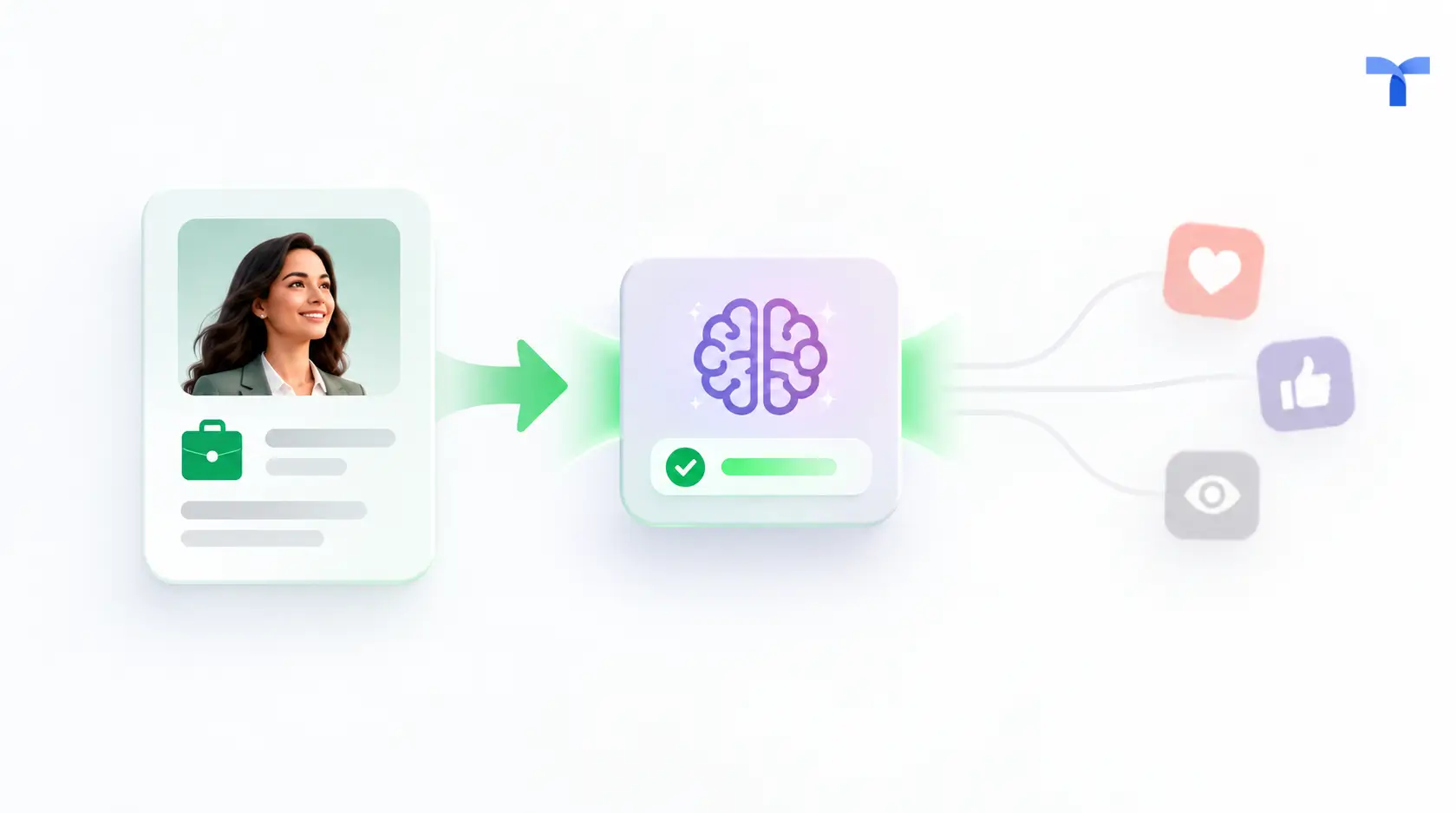
Social activity is the most watched and least converted signal category in go-to-market.
That is not a tooling failure. A generation of products now surfaces profile views, post engagement, job changes and follower additions in real time, and they surface them accurately. The problem is what arrives: thousands of events about individual people, in a motion where the account is the unit and the buying group is the object. The signal is observable. The thing you need to know is not.
There is a cost to getting this wrong beyond wasted effort. Gartner expects more than 40 percent of agentic AI projects to be canceled by the end of 2027, citing unclear value rather than model quality, and social signal automation is a common example of the pattern: a system that fires reliably on events that do not mean anything. Meanwhile the decision it was meant to influence is happening elsewhere. 6sense's 2025 Buyer Experience Report found that 94 percent of buying groups have a preferred vendor before they contact one, and that vendor wins 77 percent of the time, which is an argument for sustained presence with a buying group rather than for fast reactions to individual events.
This is a working ranking of social buying signals, which ones justify action, how long each stays meaningful, and what has to be true alongside a social signal before it is worth anyone's time. It is a companion to the broader taxonomy of buying signals and their response windows, narrowed to the noisiest tier of the set. At Tapistro we treat social as one input into an account record rather than as a pipeline source, and the reasons are structural.
Why Social Signals Behave Differently From Every Other Buying Signal
They Are Person-Level, and Buying Is Account-Level
Every other signal category arrives attached to a company. Social signals arrive attached to a human, and a human has to be resolved to an account before the event means anything at all.
Resolution is exactly where most social signal tooling stops. It hands over a name and a company string, which is not the same as landing the event on an account record that already has a state. In Tapistro that resolution happens on arrival, because an unresolved event has nowhere useful to go.
They Carry No Authority Information
The person engaging is frequently the most junior member of the buying group, because junior people spend more time on the platform. That is not a problem until the response is written as though they can approve a purchase.
The Volume to Meaning Ratio Is the Worst of Any Signal Type
Thousands of events, a handful of which say anything. Every other category is sparser and more informative. Social is the only one where the default state is drowning.
They Are Public, Which Cuts Both Ways
Every competitor sees the same job change on the same morning. Detection is not the advantage, because detection is free and universal. The advantage is entirely in the speed, quality and appropriateness of the response, which is a function of how much you already know about the account when the signal lands.
The Three Tiers of Social Buying Signals
The windows below are operating defaults rather than measured constants. They reflect how quickly the underlying situation changes, and they are worth adjusting against your own sales cycle. The fourth column is the one that matters most, because it is what separates a signal from an event.
Tier One, Act Within Days
These signals describe a change in the account's situation, not a change in someone's browsing behaviour. They are worth a response on their own timeline.
Tier Two, Act Only in Combination
These are supporting signals. Individually they are ambiguous. Two or three landing on the same account inside a short window is a pattern worth acting on.
Tier Three, Context Only, Never Act Alone
These belong on the record. They do not belong in a trigger.
Why One Social Signal Is Worth Almost Nothing
The Attribution Problem
The signal names a person, not a buying process. Until that person is resolved onto an account that has a state, you know that someone did something, which is not information you can act on responsibly.
The Ambiguity Problem
The same action has at least three explanations. Curiosity, job hunting and genuine vendor research look identical from outside, and the two that are not buying signals are far more common than the one that is.
The Timing Problem
A social signal tells you something happened. It does not tell you where the account is in a process, or whether a process exists. This is the reason one signal is not a strategy, and it applies with more force here than in any other category, because social is where the temptation to act on a single event is strongest.
What Turns a Social Signal Into a Working Signal
Resolution
The person is matched to an account, and that account already has a record with fit, history and other signals on it. Everything else depends on this step, and it is the step that separates a signal platform from an alert feed.
Combination
The signal is scored alongside non-social evidence on the same record. A job change at an account with no fit stays quiet. The same job change at a well-qualified account that also shows third-party research activity moves to the top of the list that morning. The signal did not change. The context around it did.
Decay
Every social signal has a window, and the score has to fall on its own without anyone remembering to clear it. A job change is a different signal in week one than in month four, and a system that treats them identically will keep surfacing stale accounts until people stop trusting the list.
Threshold
A rule decides when accumulated evidence justifies a touch, so nobody is reacting to individual events. This is the mechanism that converts a noisy feed into a short, defensible list of accounts, and it is what Tapistro applies across social and non-social signals together rather than in a separate social workflow.
The Response Problem Nobody Plans For
The Register Has to Match the Channel
A social signal invites a social or lightly warm response. A twelve-step outbound sequence triggered by a profile view is how a genuinely useful signal becomes an unsubscribe and a reputational cost.
The correct response to most tier two signals is not an email at all. It is presence: showing up in the same conversation, being visible to the rest of the buying group, and waiting for a tier one signal to justify direct contact.
The Line Between Informed and Intrusive
Referencing something a person published is normal professional behaviour. Referencing something they did rather than said, such as a profile view or a page visit, reads as surveillance and is remembered that way.
The line is simple enough to hold as a rule. If they said it deliberately and publicly, it is fair to reference. If you observed it, it informs your timing and never appears in the message.
Deliverability Sits Downstream of Both
Social signals tempt teams into volume against people who never asked for contact. Google's bulk sender requirements hold senders under a 0.3 percent spam complaint rate, and a damaged sending domain takes months to recover. Treating tier three events as triggers is one of the faster ways to get there.
How Tapistro Handles Social Signals
One Signal System, Not a Social One
Intent Connectors bring social activity onto the same unified account profile as first party product usage, third party intent, website behaviour and customer relationship management history. Resolution from person to account, and from person to buying group membership, happens on arrival rather than being left to whoever reads the alert.
Scored Against Everything Else, and Decayed on Its Own Clock
Tapistro scores social signals inside the full signal set rather than in a separate inbox, applies decay per signal type, and surfaces accounts rather than events. What reaches a person is a ranked list of accounts with the reasoning attached, not a feed of things that happened.
Routed to a Response That Fits
Journey Canvas routes the account to a response appropriate to the register, whether that is visibility across the buying group, a warm introduction path or direct contact, with human approval on outbound. The design principle throughout Tapistro is that social signals are evidence about an account, and evidence belongs on a record rather than in an alert.


.webp)
.webp)
.webp)