Introduction
In B2B marketing, the Ideal Customer Profile is often treated like a sacred blueprint. A carefully defined sketch of the perfect target buyer, ready to purchase at the quoted price. Companies invest significant time and resources building lead generation programs around this ICP, believing it will reliably surface their most profitable customers.
But what if those buyers are not currently in-market for what you sell? And what if others who are actively looking get filtered out because the ICP criteria are too rigid?
This is not an edge case. It is the default state for most B2B organizations. The gap between a theoretical ideal customer and one who is actually ready to buy is where pipeline leakage concentrates. Closing that gap requires rethinking not just who your ICP describes, but how that definition operates across your entire go-to-market motion.
What Is an Ideal Customer Profile (ICP)?
An Ideal Customer Profile is a structured description of the type of company most likely to become a high-value, long-term customer. It typically includes firmographic attributes: industry vertical, company size, annual revenue, geography, technology stack, and organizational complexity.
The ICP gives sales and marketing a shared definition of who they are pursuing, which anchors targeting, messaging, and resource allocation. Without that shared definition, outreach scatters, pipeline quality drops, and teams end up optimizing in different directions.
The concept is sound. The execution is where things break down.
B2B Ideal Customer Profile Explained
In B2B, the ICP operates at the account level, not the individual level. It defines which companies to pursue, not which people to contact. This matters because B2B purchases are committee decisions, with multiple stakeholders evaluating from different angles.
A well-constructed B2B ICP considers two dimensions: fit and timing. Fit describes whether the company matches the characteristics of your best existing customers. Timing describes whether that company is approaching a buying window. Most traditional ICPs capture fit reasonably well. They ignore timing almost entirely. That single blind spot is responsible for a disproportionate share of wasted outreach and stalled pipeline.
What Gets Missed When ICPs Stay Static
- Buying Intent
Overly strict ICP criteria systematically overlook buying intent. Consider a cybersecurity company that targets only enterprise accounts. A Series B startup facing urgent compliance requirements after a regulatory change has budget, urgency, and a clear use case, but it never appears on the radar because it falls below the size threshold. Market dynamics, regulatory shifts, and competitive disruptions make ICPs inherently fluid. Knowing which segments you sell into most frequently is valuable. Treating that knowledge as a fixed boundary is not. - Brand Behavioral Insights
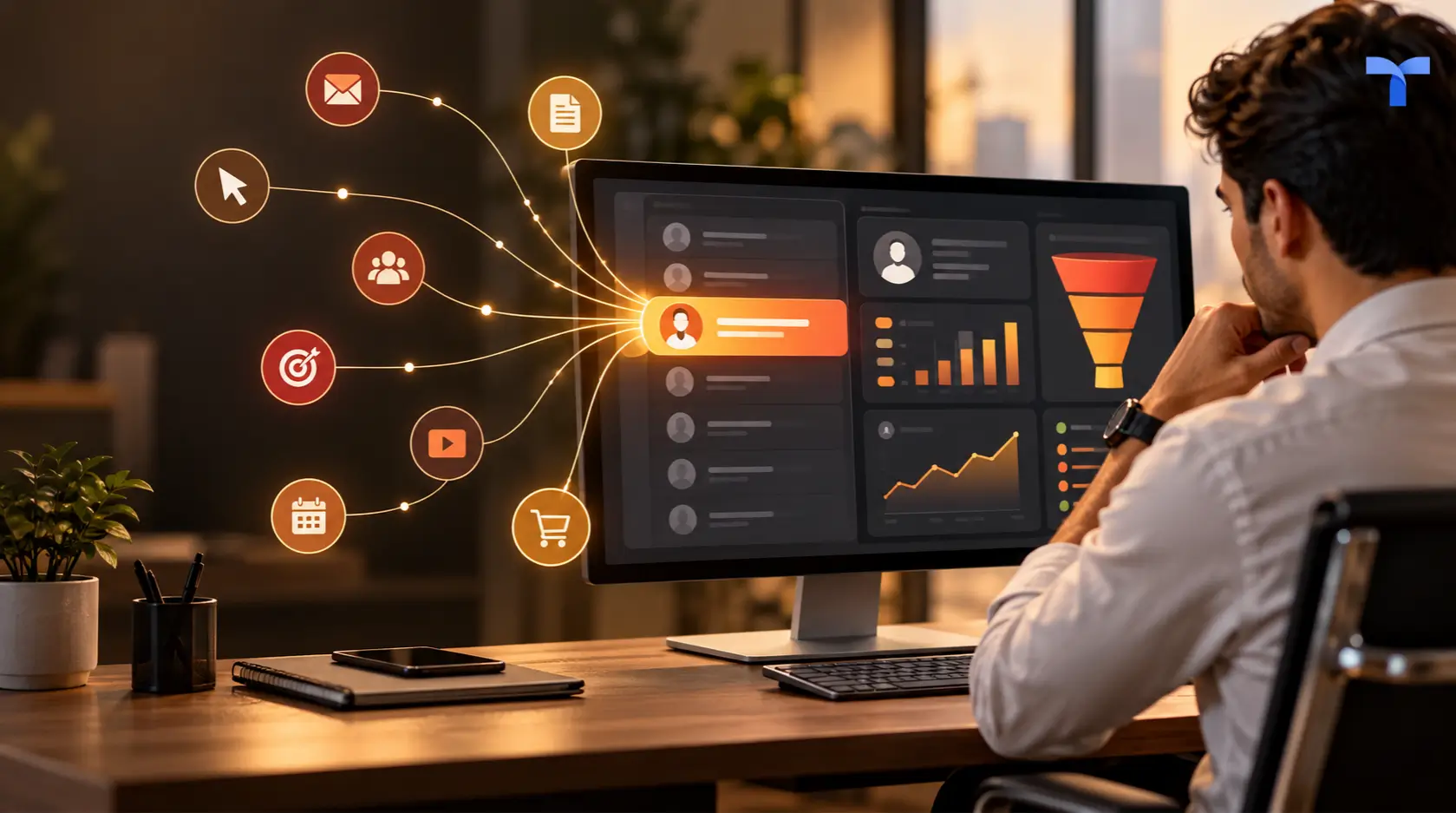
Behavioral data reveals how prospects actually engage with your brand across channels: website visits, LinkedIn interactions, email engagement, G2 activity, and paid media. Many high-intent visitors explore product and pricing pages without ever completing a form. They are evaluating and comparing, signaling readiness through actions rather than declarations. Unifying data from all of these touchpoints often reveals that the most engaged prospects do not match the traditional ICP at all, yet they convert at rates that demand attention. - Insights from Diverse Interactions
B2B purchasing decisions involve multiple stakeholders, yet most ICPs are built around a single buyer persona. Expanding your targeting to engage the broader buying group within each account, the economic buyer, the technical evaluator, the internal champion, fundamentally changes your odds. The deals that close are the ones where your message reached enough of the right people to build internal consensus.
ICP in Lead Generation: From Targeting to Conversion
In theory, the ICP is the starting point for every lead generation motion. Define who you want, then go find them. In practice, most teams experience a structural breakdown between ICP definition and pipeline outcomes.
Traditional ICP-based lead generation treats the profile as a binary filter at the top of the funnel. This creates two simultaneous problems: companies showing active buying behavior get excluded because they fall outside rigid criteria, while companies that check every firmographic box but have zero purchase intent consume sales capacity without converting.
The fix is not to abandon the ICP. It is to change how it operates. The profile should function as a dynamic scoring layer, not a static gate. Firmographic fit still matters, but it should be weighted alongside behavioral signals, engagement patterns, and real-time intent data. When lead generation runs on a living ICP, outreach reaches accounts that are both a strong fit and actively in-market. Conversion rates improve because timing aligns with buyer readiness.
Solving with AI
Thus, the question arises: how do you find the right set of prospects? Do we need to define it well, gather enough data points to create a pool of accounts to target, and continuously optimize? And, of course, there will always be the question of scale.
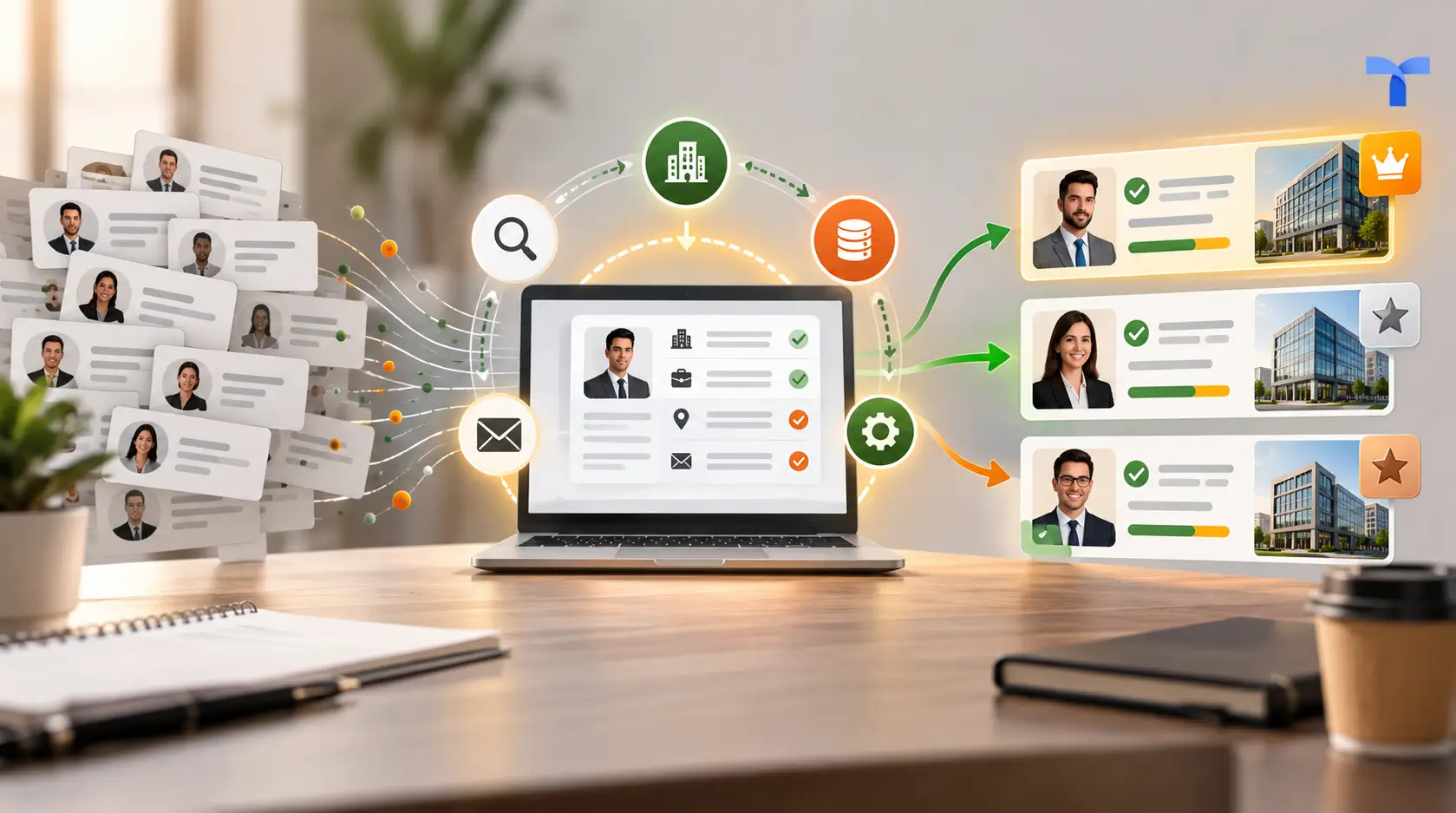
Today, a Smart GTM Platform powered by AI-first features can help solve these challenges. It creates smarter, real-time ICP profiles that are more efficient and effective—at scale — eliminating the usual pains of manual enrichment and constant updates.
ICP Accounts vs. ICP Contacts
One of the most consequential and least discussed mistakes in B2B targeting is treating ICP accounts and ICP contacts as interchangeable. They serve different strategic functions.
An ICP account is a company that fits your ideal profile: right industry, right size, right technology environment, and ideally, showing signals of buying readiness. Account-level targeting determines where you concentrate resources. An ICP contact is a specific person within that account who holds decision-making authority or purchasing influence. Contact-level targeting determines how you engage.
Getting one right and the other wrong produces predictable failures. Targeting the right accounts but reaching only a junior analyst when the VP of Engineering controls the budget wastes outreach cycles on conversations that cannot advance. Reaching senior decision-makers at companies that are a poor fit produces polite meetings that never convert.
The teams generating the most pipeline per dollar of outreach investment treat these as two sequential problems. Select accounts based on fit and intent signals. Then map the full buying committee within each selected account before launching outreach. That sequencing is what separates high-performing GTM motions from high-activity, low-conversion ones.
Solving with AI
The practical question: how do you maintain a living ICP, build a qualified target pool, and continuously re-prioritize as signals shift, all at scale, without burying your team in manual research?
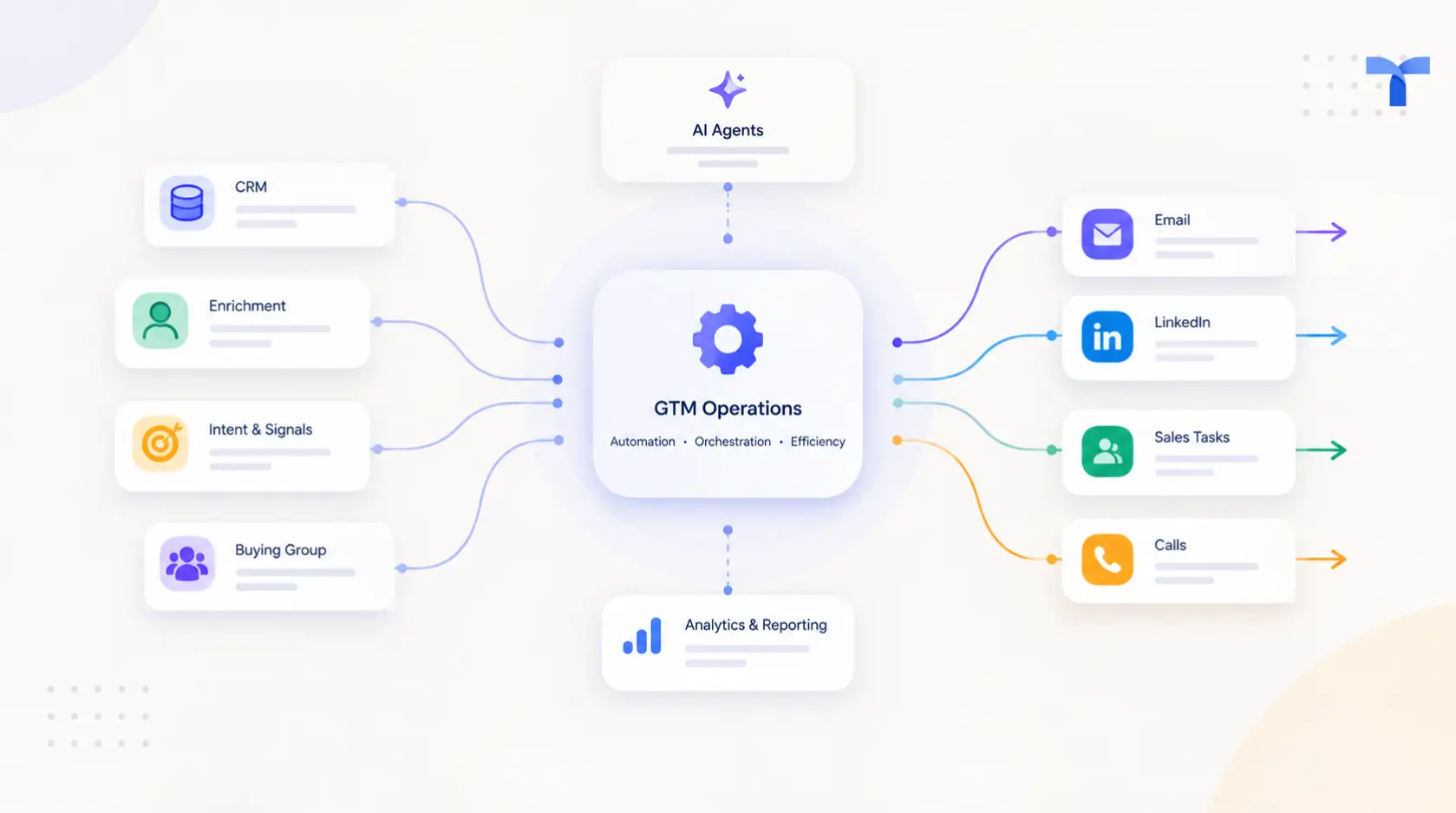
AI-powered GTM platforms change the operating model. They build and maintain real-time ICP profiles by ingesting data continuously, scoring accounts dynamically, and surfacing the prospects that deserve attention right now. The manual enrichment cycle, where data goes stale before the team finishes updating it, is replaced by an always-current intelligence layer.
How Does It All Come to Life?
- Broadening Your Criteria: AI identifies buying intent for in-market prospects even without a predefined list. By analyzing public data and tracking buying behavior across channels, a real-time intelligence system builds a unified ICP that reflects actual conversion patterns rather than assumptions.
- Leveraging Behavioral Data: Modern platforms track first-party intent signals: website visitors who spent time on pricing and product pages but never filled out a form. Once identified, these prospects can be activated with outreach that acknowledges where they are in their decision process.
- Scaling Account Research. Top-performing sales teams answer detailed, account-specific questions manually before every outreach. AI compresses that research cycle from hours to seconds, enabling micro-segmentation based on real business context.
- Expanding the Buying Group: AI makes it practical to engage more contacts within each account and tailor messaging to each stakeholder's concerns, whether that is ROI for the CFO, integration complexity for the CTO, or workflow impact for the end user.
- Test and Iterate: AI accelerates A/B testing by simulating scenarios and automating outreach variations, so teams learn faster without the manual overhead that typically makes systematic testing impractical.
How to Identify and Prioritize ICP Accounts at Scale
Identifying ICP accounts is manageable with 50 target companies. It becomes a different challenge entirely across thousands of potential accounts where limited resources must generate maximum return.
The starting point is your existing customer data. Which accounts converted? Which expanded? Which churned within 12 months? Those patterns reveal the attributes that actually correlate with long-term value, as opposed to the ones your team assumed would matter when the ICP was first drafted.
The next layer is real-time signals. Funding announcements, leadership changes, hiring surges in relevant departments, technology adoption, and third-party research activity all indicate whether an account is approaching a buying window. An account matching your firmographic profile and actively researching your category is a fundamentally different priority than one matching the profile with no activity.
Prioritization becomes fit multiplied by timing. High scores on both dimensions move to the top. Strong fit with low intent enters nurture tracks. High intent with weak fit raises a strategic question: does the ICP definition itself need updating? At scale, this requires continuous data ingestion, automated scoring, and dynamic re-prioritization. Teams that operationalize this consistently outperform those still running from static target lists updated quarterly.
Turning Ideal Customer Profiles into ICP Prospects
An ICP is a strategic definition. A prospect is a real company with real people who can be engaged. The distance between those two things is where execution delivers pipeline or falls short.
The conversion requires three capabilities in sequence. First, account identification: mapping your addressable market against ICP criteria enriched with signal data. Second, contact discovery: identifying the individuals within each account who participate in or influence purchasing, not just the most senior title, but the full buying committee. Third, activation: deploying the right message, through the right channel, at the right moment.
Each step has distinct failure modes. Account identification breaks down with overly narrow criteria or stale data. Contact discovery fails when teams default to a single contact per account. Activation underperforms when messaging is generic rather than calibrated to each stakeholder's priorities.
The organizations that convert ICPs into pipeline most effectively treat the profile as a living operational system. They refine criteria based on what actually converts, expand contact coverage within high-priority accounts, and adjust cadence based on engagement signals. The ICP is not a slide in a strategy deck. It is the operating logic that drives daily execution.
TL;DR
An ICP is not a fixed formula. There will always be a dynamic element to determining who is in-market to buy. While organizations have traditionally relied on isolated systems to define their ICP, modern technology unlocks the full potential of that data.
By synthesizing signals from multiple sources and transforming them into executable outreach, AI makes it possible to target the right accounts at the right time, at scale. This is the operating model that platforms like Tapistro are built to enable: transforming the ICP from a static description of who you hope to sell to into a dynamic system that identifies who is ready to buy.
Knowing who wants your product today will always be the first step toward building a winning business. That knowledge is the critical difference between a good product and a successful one.