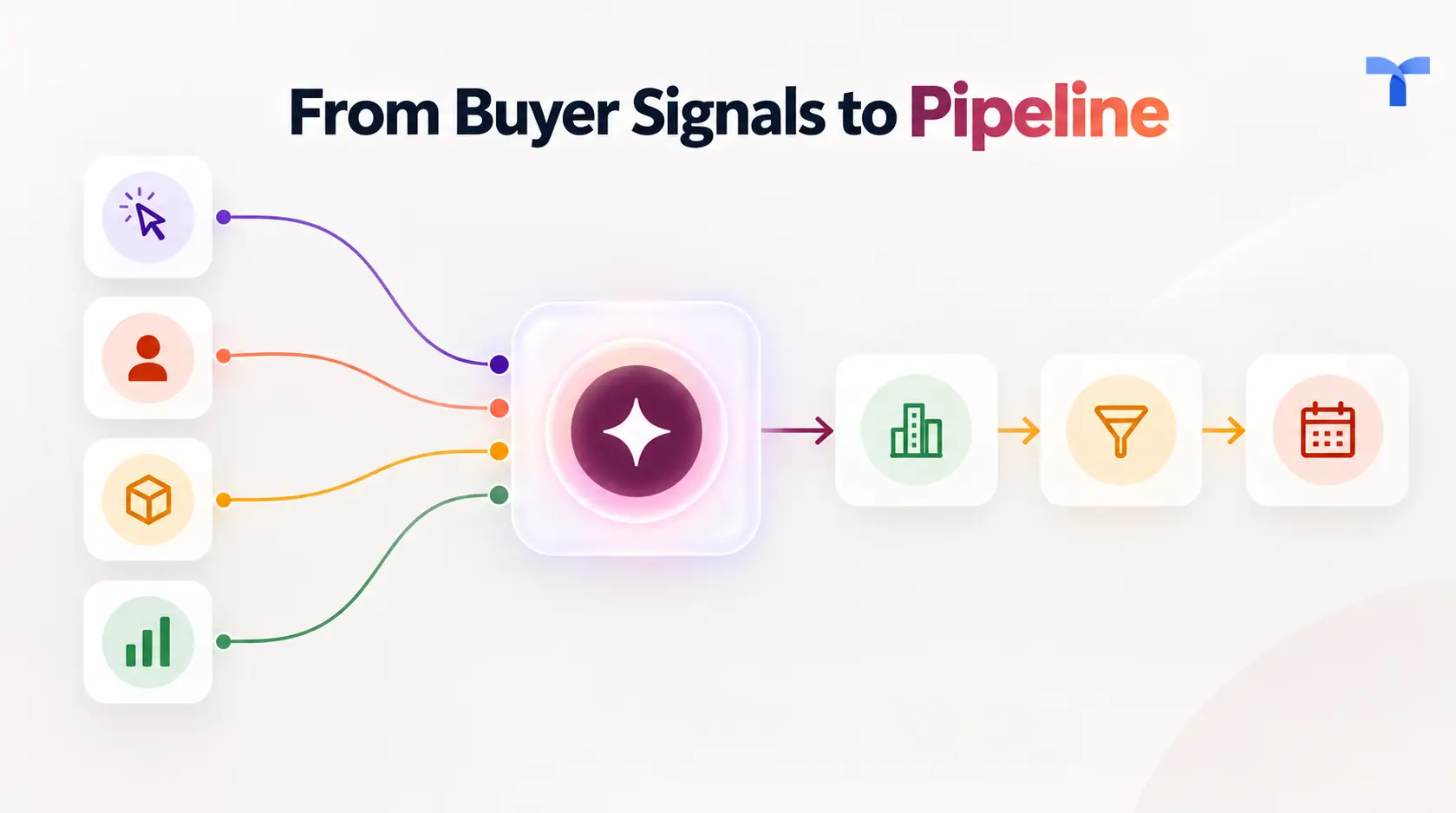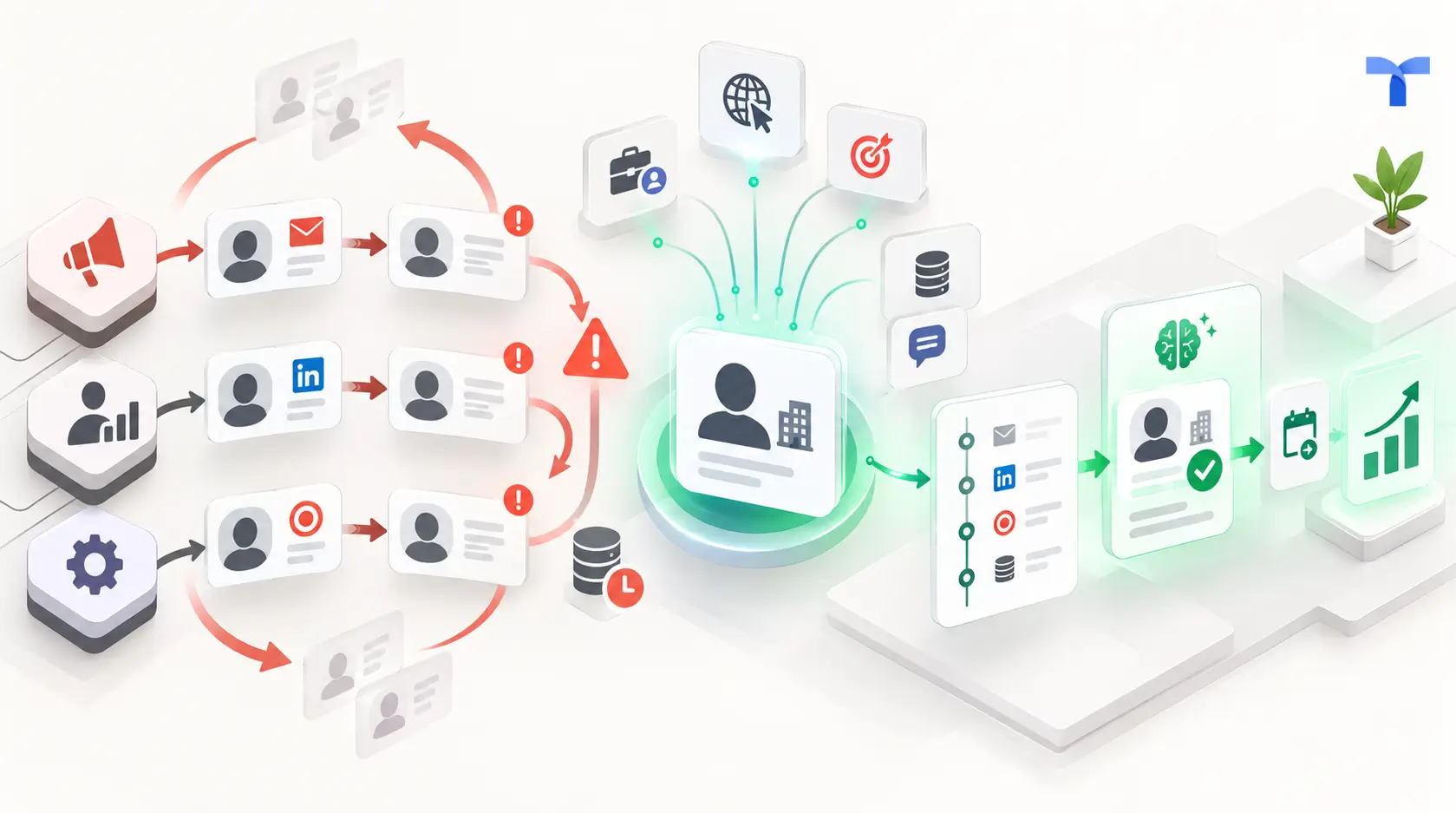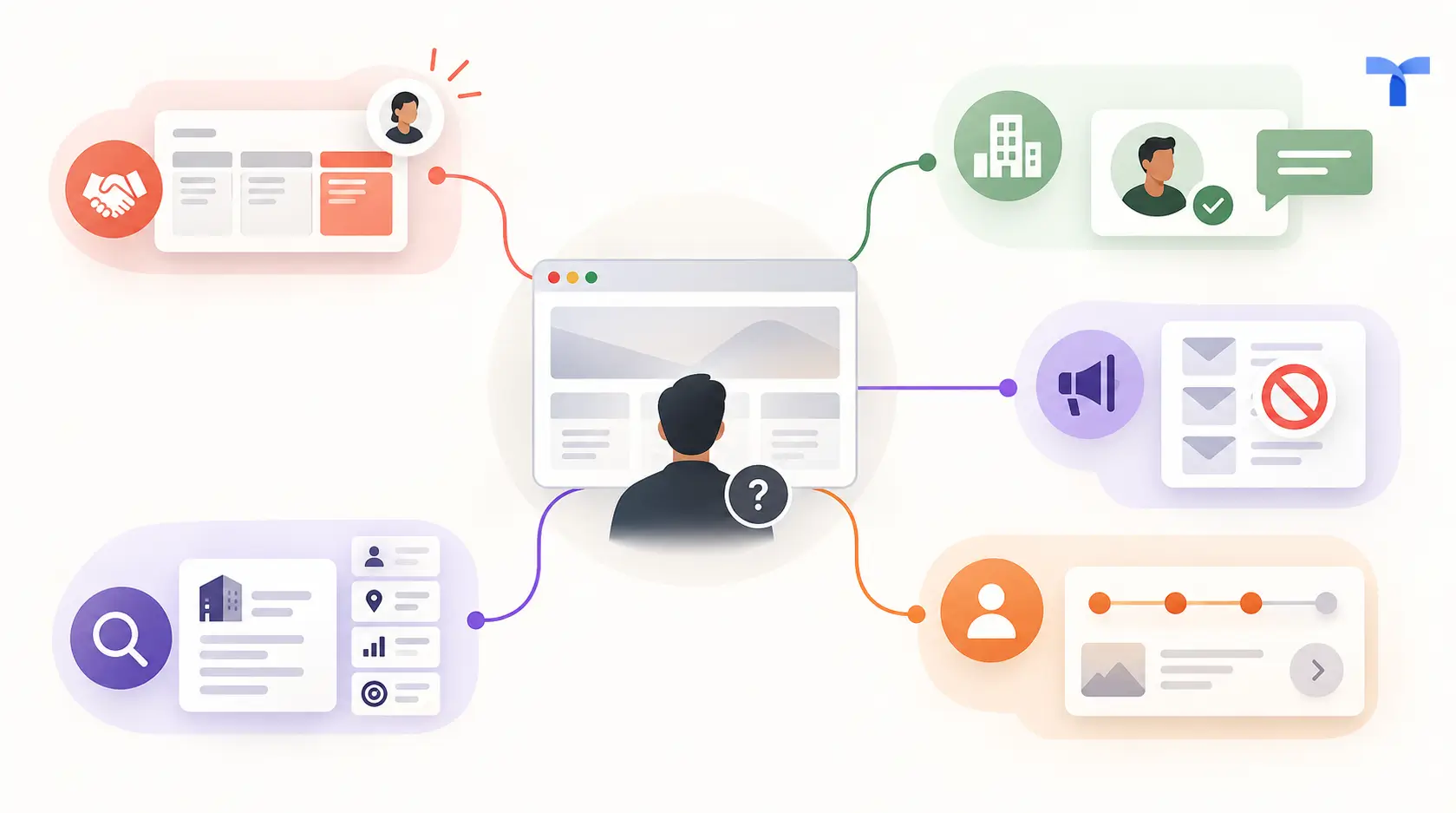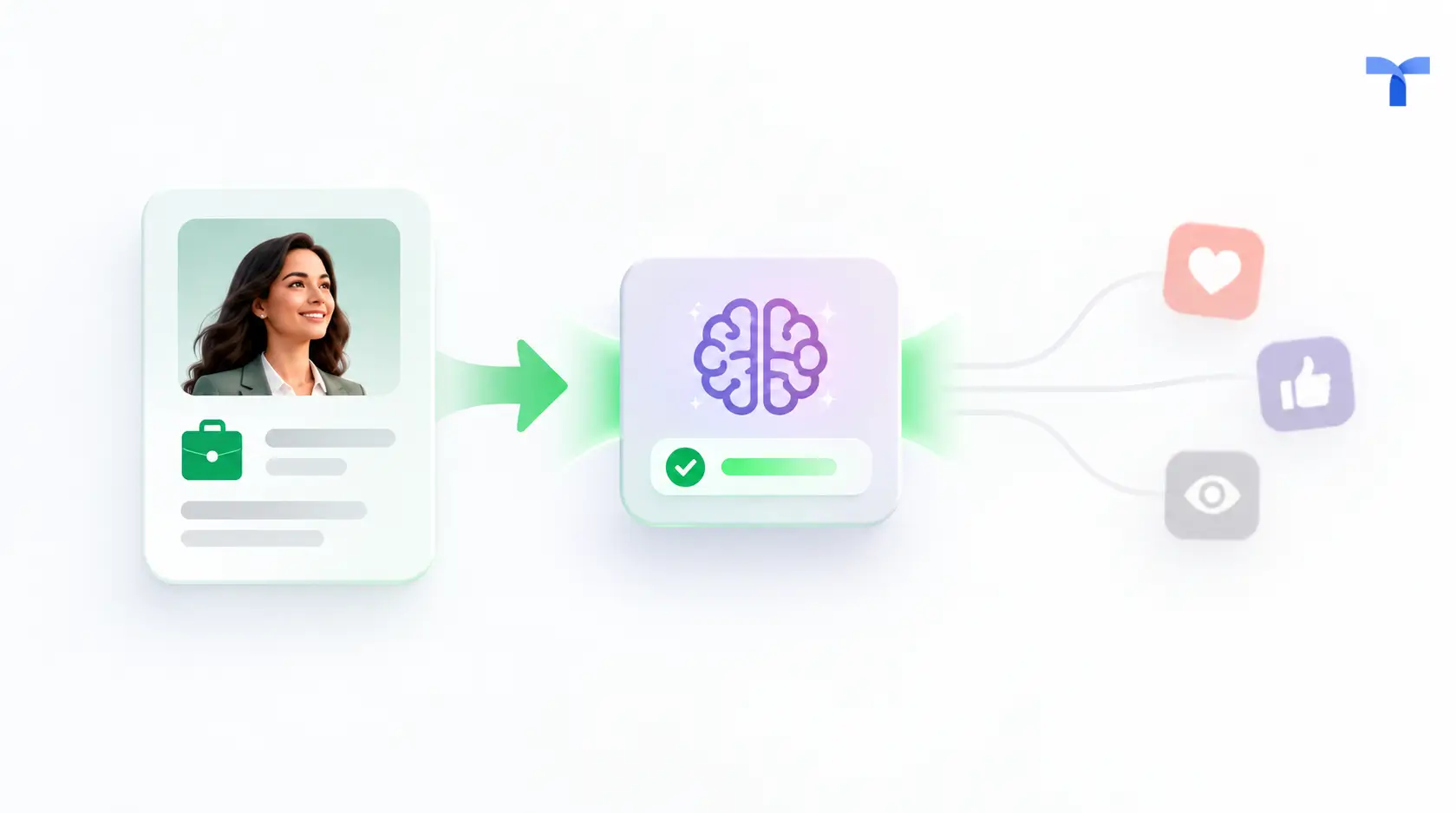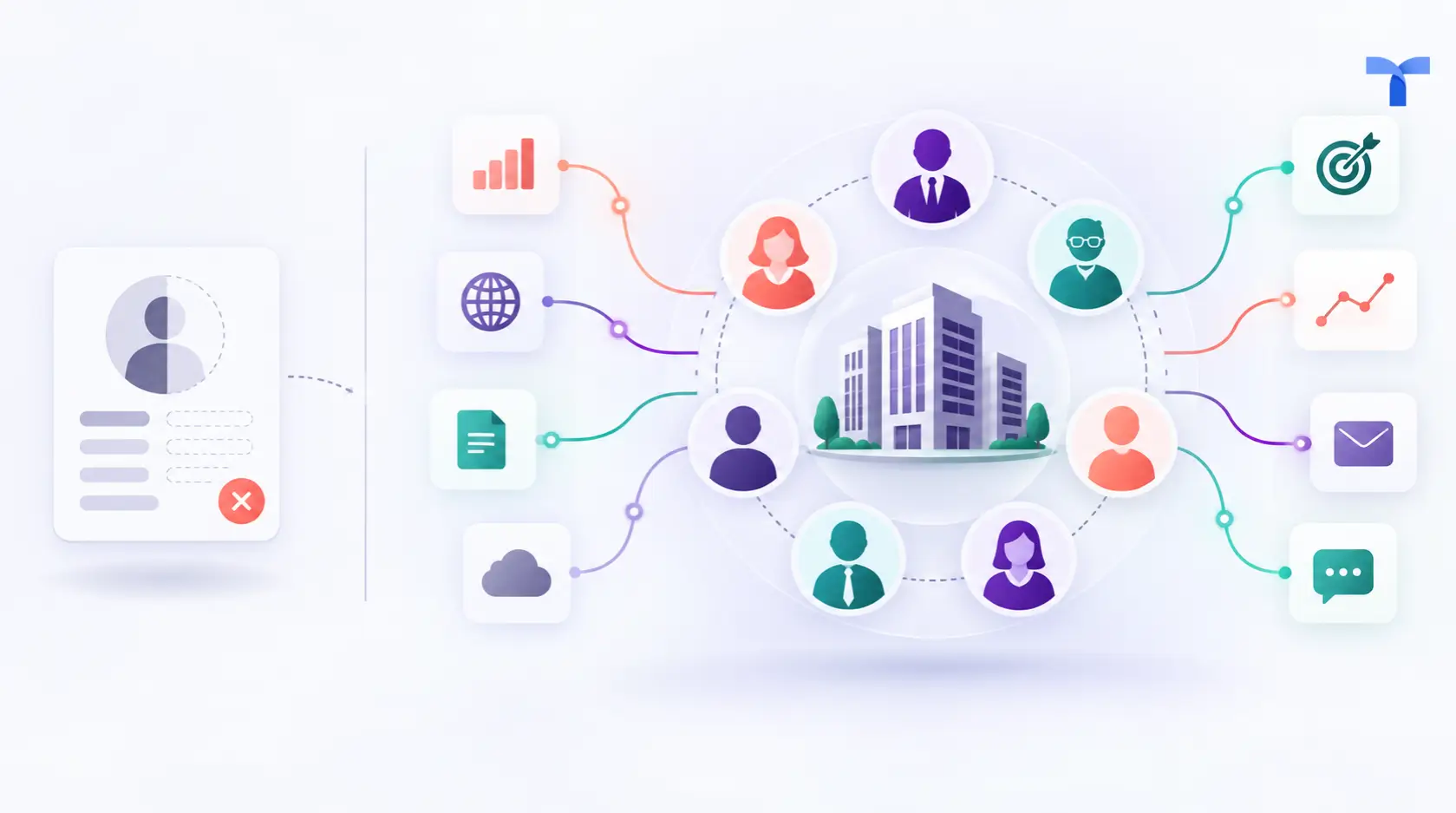

AI is not making the B2B lead generation funnel faster. It is changing what each stage counts. The funnel built for 2020 counted individuals who filled in forms. The funnel that works in 2026 counts accounts and the buying groups inside them. That is where the evidence now lives.
The change starts before a buyer reaches your site. G2 surveyed 1,076 B2B software buyers in March 2026 and found that 51 percent now start their research with an AI chatbot more often than with Google, up from 29 percent in April 2025. When they do use Google, they click less. Pew Research found that users clicked a traditional search result in 8 percent of visits when an AI summary appeared, against 15 percent without one.
The top of the funnel has moved out of your analytics. Every stage below it has to adjust.
This post covers B2B funnels with a sales team and a buying group on the other side. Small business lead generation runs on different economics. At Tapistro we build the platform that runs this funnel for B2B revenue teams, and the stages below are the ones we see change most.
The Funnel, Stage by Stage
Top of funnel: from traffic to answer presence
The old top of funnel measured visits. A buyer searched, clicked and landed. Now a growing share of buyers ask an AI assistant for a shortlist and read the answer instead.
G2's same survey found that 69 percent of buyers chose a different vendor than they had planned after chatbot guidance, and 85 percent think more highly of a vendor when a chatbot names it in a recommendation. Being named in the answer now shapes the shortlist before any visit happens.
This stage no longer belongs only to search and paid media. The pages AI assistants draw on are definitions, comparisons and evaluations written plainly enough to quote. A company that publishes those for its own category gives the assistant something to cite.
What this stage should measure now: how often AI answers name you for your category's buying questions, and how many target accounts you can identify from the traffic that does arrive.
Capture: from forms to inferred interest
Forms still work for buyers who are ready to talk. They miss everyone else. A buyer who read the AI answer, visited three pages and left never became a lead record in the old funnel.
AI capture works from behavior instead of submissions. It resolves website visits, intent activity, product usage and hiring signals to accounts. The account enters the funnel when the evidence says it is active, not when a person types an email address.
What this stage should measure now: active accounts identified, not forms completed.
Qualification: from lead score to account state
The marketing qualified lead scored one person's behavior. Two whitepaper downloads and a webinar put someone over the threshold, whether or not their company was buying.
AI qualification scores the account. It checks fit against your ideal customer profile, reads engagement across the buying group, looks for timing signals such as funding or leadership changes, and checks the account's existing relationship with you. An open opportunity, an existing customer and a closed-lost account each need different treatment, even when the same signal fires. For why the individual lead is the wrong unit at enterprise scale, see Enterprise Lead Generation.
What this stage should measure now: accounts with fit, activity and timing confirmed.
Handoff: from passing a lead to routing a response
The old handoff passed a lead from marketing to a sales development rep, who called it. The rep was the next step for every lead, regardless of what the lead needed.
Buyers still want people, but for a different job. Gartner found that 69 percent of B2B buyers prefer to validate AI-generated insights with sales reps. The same survey found 51 percent of buyers expect misleading information from generative AI and 49 percent expect it from sales reps. Buyers arrive with an AI-built view and want a person to confirm or correct it.
So the handoff becomes a routing decision. Some accounts need a rep now. Some need a relevant touch from marketing. Some need nothing yet. For the full range of responses to a signal, see Acting on a Buying Signal.
What this stage should measure now: time from signal to the right response, and whether the response matched the account's state.
Nurture: from time-based drips to signal-triggered touches
The old nurture track sent email five on day twenty because email four went out on day ten. The calendar decided.
AI nurture sends when the account does something. A new stakeholder engages, a competitor review appears, a hiring spike starts. Suppression matters as much as sending. An account in an active sales cycle should not receive a top-of-funnel drip.
What this stage should measure now: touches triggered by account activity, and touches correctly suppressed.
Measurement: from lead volume to engaged accounts
Lead volume was easy to count and easy to inflate. It rewarded the funnel for creating records, not revenue.
The AI-run funnel measures accounts: how many target accounts are engaged, how much of each buying group you reach, how much pipeline each engaged account produces, and how fast the system acts on a signal.
The Old Funnel and the AI-Run Funnel Side by Side
Where AI Lead Generation Goes Wrong
Volume inflation
AI makes sending nearly free. Teams that point AI at the old funnel send more of the same outreach to more people. Replies fall, domains get flagged, and the team concludes AI does not work. The team changed the sending volume and left the funnel alone.
Scoring individuals faster
AI lead scoring that still scores one person produces the old marketing qualified lead at higher speed. It inherits every flaw of the old model and adds confidence it has not earned.
Optimizing only for Google
Teams that measure the top of funnel only through search traffic will watch it shrink and not know why. The buyers are still researching. They are doing it in AI assistants.
Losing the account's context
A signal without account context produces the wrong response. An AI agent that emails a prospect already in a late-stage opportunity with your account executive damages that deal.
What Does Not Change
The ideal customer profile still decides everything downstream. AI finds more accounts faster. It cannot decide which accounts you should want.
People still close. Buyers use AI to research and people to validate, and the funnel has to route them to a person at that moment.
One record still matters. Every stage above depends on knowing the account's full state when a signal fires. Tools that each hold a fragment of the account cannot run this funnel, however good each one is alone.
What to Change First
Rebuilding the whole funnel at once stalls. Four changes, in this order, move most of the value.
Measure answer presence
List the ten questions a buyer in your category asks an AI assistant before building a shortlist. Check monthly which vendors the answers name. This costs almost nothing and shows whether the top of your funnel is shrinking or moving.
Move qualification to the account
Keep lead scoring running, and add an account view beside it: fit, active stakeholders, timing signals and current relationship. Compare which one predicts the opportunities that actually open over a quarter.
Connect the handoff to account state
Before any signal triggers outreach, check whether the account has an open opportunity, an active sequence or a customer relationship. This check stops the outreach that does the most damage.
Retire the lead volume target
Replace it with engaged target accounts and pipeline per engaged account. Teams keep producing what they are measured on. A lead volume target keeps the old funnel alive under the new tools.
The Funnel Becomes Account State
Put the stages together and the funnel stops being a sequence of lead statuses. It becomes a set of states an account moves through: unknown, identified, active, qualified, in conversation, in opportunity, customer. Signals move accounts between states. Each state decides the right response.
Tapistro runs the funnel this way. Tapistro's TAP AI Agents monitor more than 100 signal sources and resolve each signal to an account. Tapistro maintains a Unified Prospect Profile that merges first-party behavior, CRM history, third-party intent, hiring data and funding events, so every stage reads the same account state. When a signal fires, Tapistro checks where the account stands, selects the response, and runs it across email, LinkedIn and the CRM, or routes it to a rep.
Revenue operations sets which decisions Tapistro's agents own and which need approval, and every decision is logged with its reasoning. The funnel stays auditable while it runs on its own. For the architecture behind this, see What Is Agentic GTM?.
Conclusion
AI lead generation in 2026 is not about generating more leads. The funnel now starts in AI answers, captures accounts from behavior, qualifies the buying group, routes responses by account state, nurtures on signals and measures engaged accounts.
Adding AI to the old lead funnel speeds up the old funnel's problems. Rebuilding around account state matches how B2B buyers now research and decide. Tapistro runs that funnel from signal to response on one account record.
.webp)