

LinkedIn has retained the top spot in most valuable B2B networks in the last few years. Yet most automated LinkedIn outreach attempts fail more than ever for the same reason – they sound robotic. Every day, tonnes of messages flood inboxes, and they all appear as if written by an assembly line. Automation isn’t the enemy. The lack of context is.
The challenge for sales teams is clear:
- Manual personalisation can build trust, but it cannot scale to keep up.
- Automation scales activity, but it lacks genuineness and destroys authenticity.
The goal shouldn’t be to choose between them. It’s to let AI do the research and orchestration, and let humans drive the conversations. This balance has the potential to deliver 3-4 times higher response rates along with deeper engagement, all without losing credibility or tone of messaging.
Why Generic LinkedIn Automation Kills Your Pipeline
Anyone can do the math: if 20 personalized messages get 4 replies, 200 automated LinkedIn messages on the same lines should get 40. The truth is far different. Connection rates drastically decrease when using automated messaging. The first response falls as people are able to see through the message and identify LinkedIn automation from personalization. Your account may even risk restrictions, and worse, your credibility can suffer in the long run.
The problem isn’t automation, it’s automation without intelligence.
Generic outreach damages your GTM motion in three ways:
- Performance Decay: Response rates fall drastically as your messages blend into an already noisy space.
- Brand Erosion: You’re not seen as a potential partner; you appear to be a spammer.
- Opportunity Loss: Prospects may ignore even relevant LinkedIn sales outreach afterwards, as they are already mentally prepared to tune you out.
The solution begins with enriched, real-time intelligence, which includes knowledge of the person being contacted, the cause and urgency of the matter, and their specific concerns.
The Case for Human-Centered Automation
Buyers haven’t changed, and they still respond to relevance. What’s changed is our ability to deliver relevance at scale.
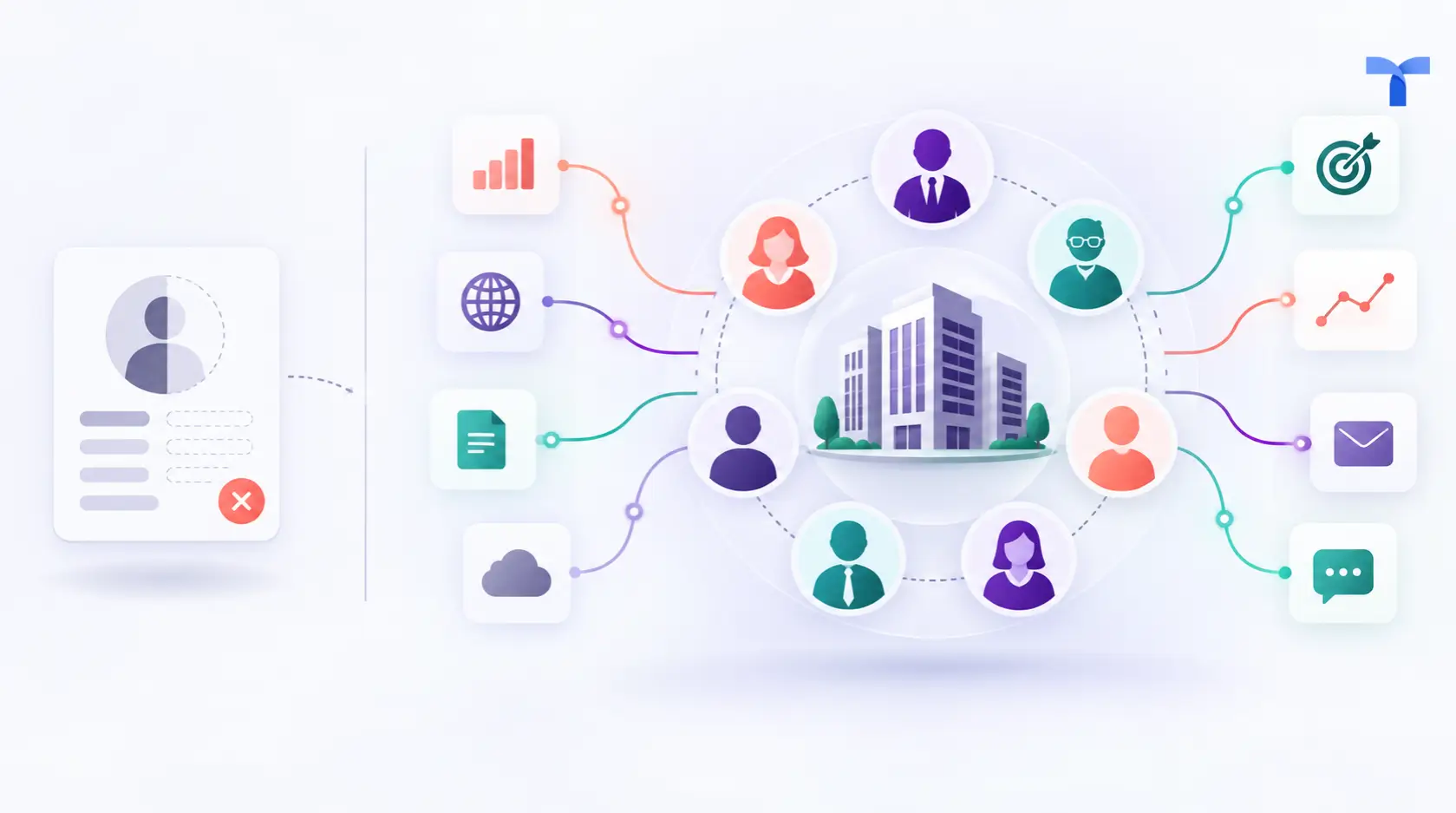
Tapistro enables this “relevance delivery” through AI-enriched personalization on LinkedIn, which merges data intelligence with natural language generation. Instead of blasting template messages that are identical, your automated LinkedIn outreach now references live details like company growth, new funding, hiring trends, or product updates.
In one campaign, a B2B SaaS team A/B tested identical offers. One message used general phrasing; the other mentioned the prospect’s latest funding announcement. The personalized LinkedIn outreach variant saw much higher response rates.
The takeaway is simple - context is the new currency. AI makes it possible to personalize 200 LinkedIn conversations a day with the same relevance that you’d give when making 10 conversations.
Now that we know of the solution, to execute this correctly, you’ll need three elements:
- Real-Time Account Intelligence: Verified roles, recent updates, and company insights.
- Intent Signal Integration: Recognizing accounts showing active purchase interest.
- Adaptive AI Messaging: Language that matches your brand voice and tone.
The Six-Step Framework to Automate LinkedIn Outreach
Scaling personalization isn’t just about automating LinkedIn outreach to send more - it’s more about orchestrating better. Here’s how high-performing GTM teams do it.

Step 1: Start With Clean, Verified Data
Inaccurate data ruins automation before it begins. Outdated titles and inactive profiles waste contact cycles. Tapistro’s continuous enrichment verifies employment, refreshes contact details, and flags buying signals so every message lands on target.
Step 2: Segment by Context, Not Category
Segmentation by “Industry” is outdated. It is recommended to cluster by live context:
- Companies with recent funding
- New executives in key roles
- Accounts engaging with your category
- Buyers reacting to competitor content
When you have context, it creates relevance. A newly hired VP of Sales doesn’t think like a tenured one - and your outreach should reflect that.
Step 3: Personalize With Precision
Generic compliments trigger instant suspicion. Data-backed specifics open conversations.
- Low impact: “Impressed by your growth!”
- High impact: “Noticed your team grew from 50 to 120 over the past year – congratulations!”
AI-assisted enrichment can supply these insights automatically.
Step 4: Orchestrate Across Channels
LinkedIn alone isn’t enough. Effective orchestration connects LinkedIn, email, and content engagement. Consider this - you engage with a post today, follow up via message later, and close through email next week. Tapistro’s orchestration engine ensures timing, tone, and sequence across LinkedIn sales outreach, all made to feel human.
Step 5: Automate Timing Like a Human
Mass messaging at odd hours triggers filters and suspicion, both with the contacts and more importantly with the system. Intelligent systems distribute LinkedIn outreach naturally, optimizing send times per prospect. This “human rhythm” approach improves acceptance and reply rates while protecting account integrity.
Step 6: Measure Real Outcome
Forget vanity metrics. Focus on the ones that define healthy engagement. For eg.:
- Connection Acceptance: 35–45%
- Reply Rate: 15–20%
- Meeting Conversion: 20–25% of engaged conversations
Tracking these metrics by segment reveals where resonance exists and where to recalibrate.
Five Rules for Sales Outreach in 2026
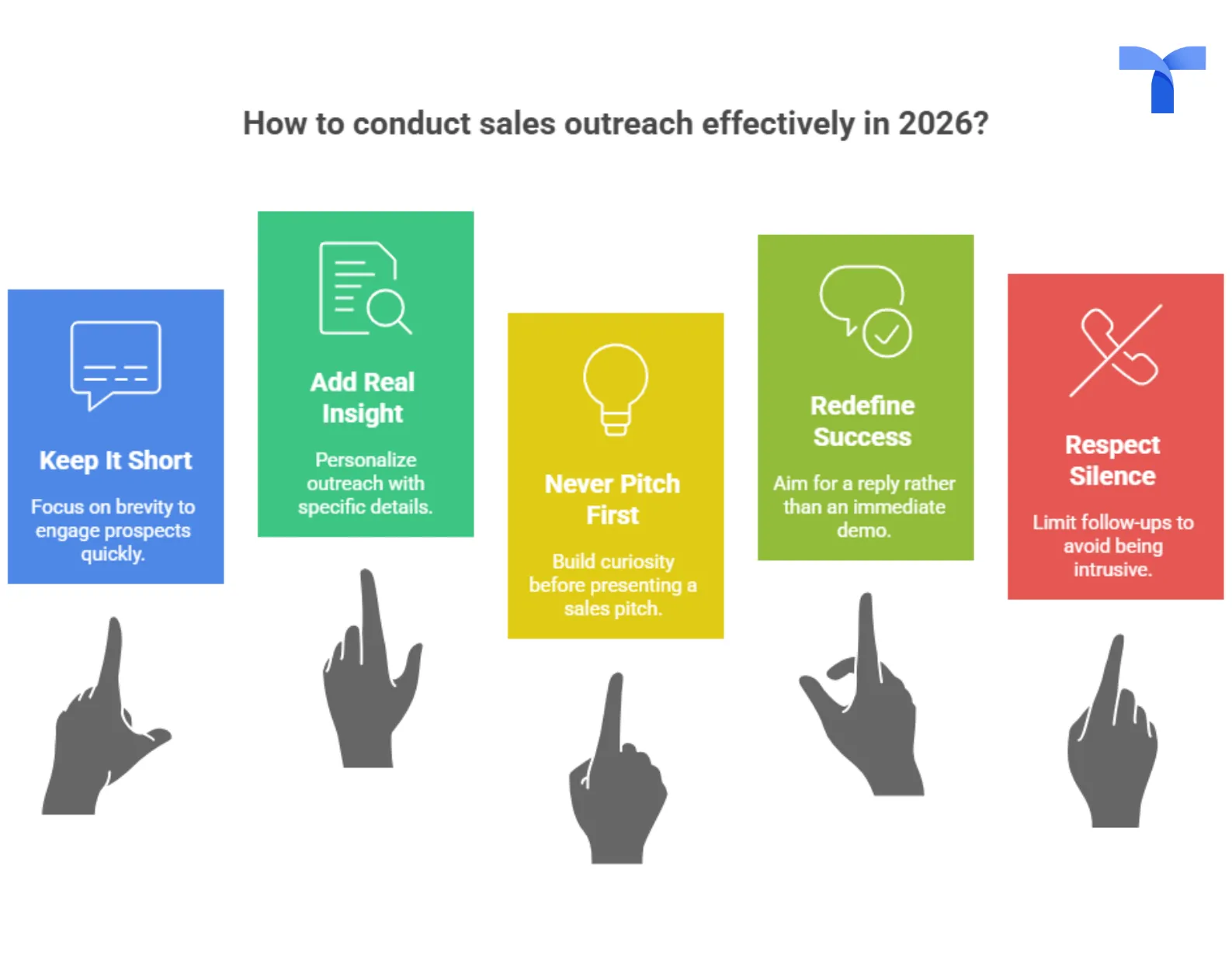
- Keep It Short: Four sentences max. Aim for a conversation, not a pitch.
- Add Real Insight: Reference specifics. “Congrats on your Series B” beats “Hope you’re doing well.”
- Never Pitch First: Curiosity precedes conversion.
- Redefine Success: The goal is a reply, not a demo.
- Respect Silence: Two follow-ups. No response means move on, for now.
How Tapistro Enables Human-Centered Scale
Tapistro transforms LinkedIn outreach from human-led chaos into orchestrated intelligence.
- Continuous Enrichment: Real-time updates for job titles, company news, and ICP alignment.
- AI Message Generation: Contextual, brand-aligned messages that sound human.
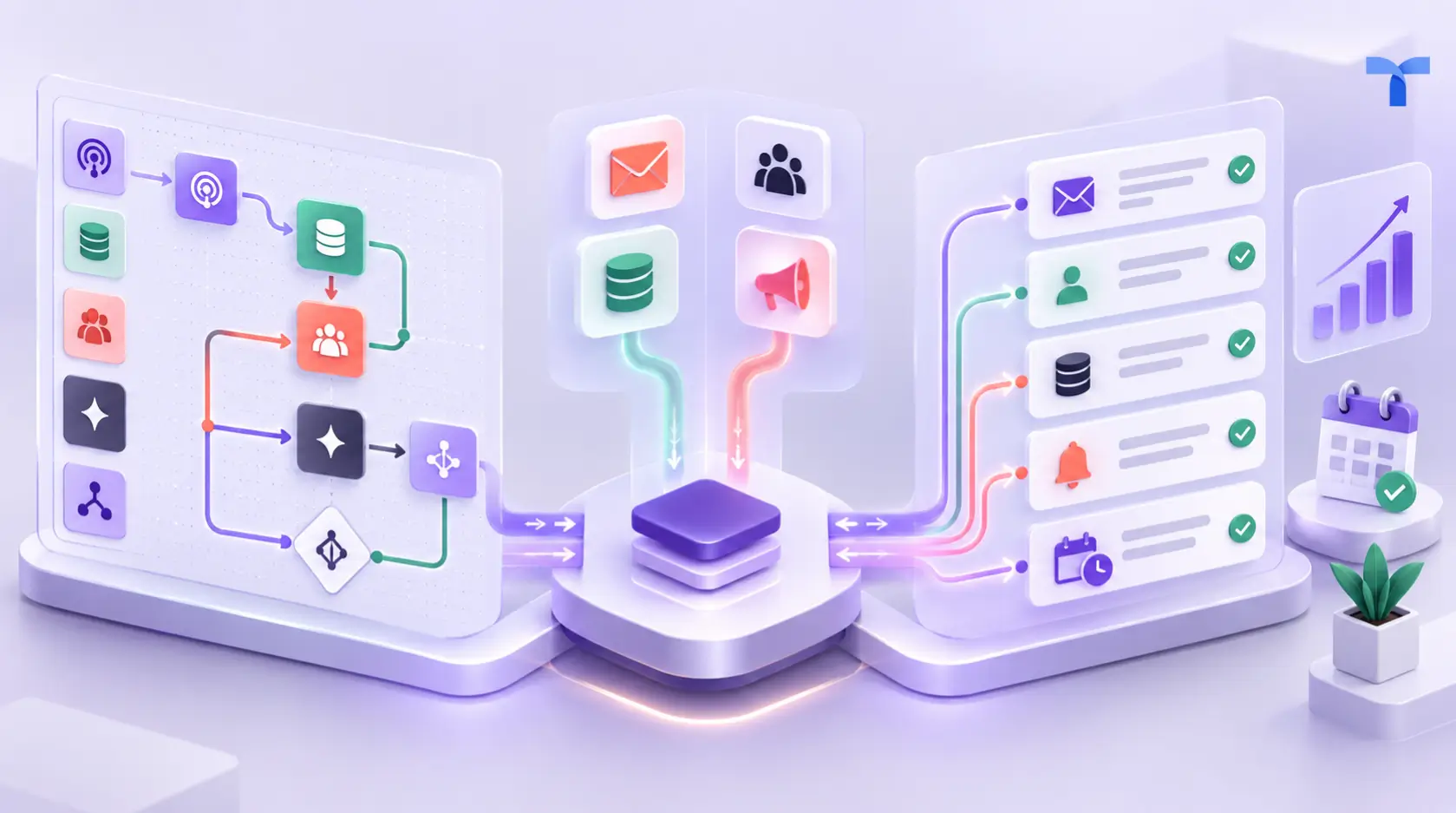
- Omnichannel Coordination: Unified workflows across LinkedIn, email, and CRM.
- Intent Detection: Identifies in-market accounts researching your category.
- Compliance & Safety: Operates fully within LinkedIn’s engagement policies.
The result is automation that doesn’t feel automated - messages grounded in truth, timing, and tone.
Metrics That Matter
Automation succeeds when engagement improves sustainably. Measure impact where it counts:
- Higher Acceptance Rate: Healthy targeting.
- More Replies: Messaging resonance.
- Booked Meetings: Conversion health.
- Quality Score: Are replies meaningful? Are conversations deepening?
Track by segment, learn continuously, and iterate with intent.
How Smart Automation 3×’d Pipeline – Case Study
A mid-market SaaS company relied on traditional volume tactics: 500 connection requests a week, 15% acceptance, 2% replies. The outcome was wasted hours and burned prospects.
By rebuilding their campaign around intelligent orchestration, the results changed dramatically:
- Data foundation rebuilt with verified ICP matches
- Multiple audience segments created by role and trigger event
- AI personalisation deployed at scale
Results:
- Acceptance: More than Doubled
- Replies: Quality responses that filled pipeline
- Meetings: A Large number of bookings from LinkedIn alone
The difference wasn’t effort - it was precision. Automation cannot replace the human - it can definitely amplify it.
The Human + Machine Alignment
The future of LinkedIn sales outreach isn’t human versus AI - it’s human with AI.
Automation should never replace relationship-building; it should enable it. Tapistro’s Agentic GTM Platform merges intelligence, context, and timing so every interaction feels personal, not assembly line.
In 2026, the winning teams will not be the ones who send more – they will be the ones who send smarter.
Let the machines handle the research and rhythm. Let the humans handle the conversation.
That’s how real connections scale.
.webp)
.webp)
.webp)