.avif)
By the time someone fills out your form, they’ve already spent real time on your site. They’ve compared you against alternatives, evaluated your positioning, and formed opinions that will shape every conversation that follows. The form captured none of that intelligence. It only caught the moment they stopped researching anonymously.
B2B companies have spent years optimizing the form itself. Shorter fields, better CTAs, gated content. All of it makes it marginally easier for the small percentage of visitors who were going to self-identify anyway. The majority of your traffic was never going to fill out anything.
That’s not a form problem. It’s a B2B lead generation strategy problem. The fix isn’t a better form. It’s building a conversion architecture around the buying signals your site is already generating.
Not All Website Traffic Behaves the Same Way
A prospect comparing your pricing against a competitor is not in the same buying stage as someone who found your blog through a search. A company returning to your site four times in two weeks is not the same signal as a first-time visitor who bounced in thirty seconds. Treating them identically is why most B2B lead prospecting strategies convert a fraction of what their traffic should produce.
Each visitor type carries a different intent level and needs a different response. Most AI lead generation tools still treat traffic as a single category, routing everyone to the same nurture flow or the same SDR queue. The result is wasted rep time on low-intent accounts and missed pipeline from high-intent ones that never got a response fast enough.
The fix is segmentation at the signal layer, not the form layer.
High-Intent Visitors
Visitors on pricing pages, demo pages, and competitive comparison pages have already moved past awareness. The barrier here is not information. It is friction.
A multi-field form asking for company size and budget range is friction. Waiting 24 hours for a follow-up is friction. By the time that follow-up lands, your prospect has already had a discovery call with a competitor.
Tapistro solves this in the session itself. When a high-intent visitor lands on a pricing or demo page, Tapistro’s AI Autopilots detect the buying signal in real time, cross-check the visitor against your ICP, and initiate a conversational qualification flow without waiting for a form submission. The output is a booked meeting, a tailored resource, or a live rep connection, matched to where that visitor actually is in their decision. The window of peak intent is short and Tapistro doesn’t let it expire.
Research-Stage Visitors
Visitors reading solution pages and use case content are in active evaluation but not ready for a sales conversation. Serving them a demo request form is premature. Letting them leave without any signal captured is wasteful.
Tapistro identifies these visitors, runs lead enrichment on their company profile in the background, checks them against your ICP criteria, and routes them into nurture sequences based on what they actually read. A visitor on your RevOps use case enters a different flow than one who read your enterprise security docs. The nurture matches the content, not a generic drip.
Returning Visitors
One visit is curiosity. A second visit, unprompted, within a short window is a buying signal. Multiple sessions across solution pages, pricing, and customer stories is intent building in a way no single form interaction captures.
Tapistro’s Journey Canvas tracks exactly this. It maps how each account moves across your content and sessions over time, layering each new visit onto an existing account profile. When a company crosses a behavioral threshold, sessions visited, pages read, content depth, Tapistro automatically shifts it from marketing-led to sales-led engagement. No manual review. No weekly pipeline meeting required to catch it. The escalation happens while the intent is still active.
Dark Traffic
A real portion of B2B website traffic arrives with no UTM parameters, no referral source, no identity. Direct visits, dark social shares, forwarded links from Slack. These sessions show up in analytics and tell you nothing about who is actually there or why.
Tapistro’s website deanonymization identifies the company behind an anonymous session by resolving IP data against firmographic records. It cross-checks that company against your ICP and, if there’s a match, builds an enriched account profile with likely buying committee contacts surfaced through waterfall enrichment. The visitor stays anonymous. The account becomes a named, qualified prospect in your pipeline.
How Tapistro Turns These Visit Signals into Pipeline
Most GTM stacks have the individual pieces: a chat tool, a marketing automation platform, a retargeting pixel, an intent data provider. What they don’t have is a single layer where all of those signals connect and fire the right action automatically. That’s the gap where intent dies. Tapistro’s cross-channel signal orchestration closes it.
Signal Detection That Starts Before Your Site Does
Most website intelligence tools only activate once a buyer has already found you. By then, you’re already late.
Tapistro’s Intent Connectors pull in offsite intent signals alongside first-party website behavior. G2 review activity, competitor comparison searches, category content consumption across the web, all feeding into the same unified account profile as your on-site data. An account researching your category on third-party sites gets identified as in-market before it ever visits your website. This is intent signal optimization in GTM done right: the signal surface extends far beyond your own properties.
Behavioral Triggers That Replace Form Dependency
Page depth, scroll behavior, session duration, content sequence, return frequency. All of it generates buying signals without any form interaction required.
A visitor who reads three solution pages, navigates to pricing, then returns the next day for customer case studies is showing a clear purchase pattern. Tapistro’s Intent Connectors translate this behavioral sequence into an account-level engagement score, updated continuously as new signals arrive. When the score crosses a defined threshold, Tapistro fires the right action: a nurture flow for an early-stage account, an SDR alert for a high-intent one. The signal gets acted on while it’s fresh.
Deanonymization That Feeds SDR Queues, Not Spreadsheets
For accounts that meet both behavioral and ICP thresholds, the right path is direct sales engagement, not another email sequence.
Tapistro doesn’t send the SDR a raw lead notification. It delivers a fully contextualized account: pages visited, session count, which content drove the most interest, and buying committee contacts matched by role and seniority. All assembled automatically through account enrichment and lead enrichment before anyone picks up the phone. The rep enters the conversation knowing what the account has already shown. One SaaS company using this workflow increased meeting bookings by 30% on the same SEM spend, running fully automated around the clock.
The Traffic Was Never the Problem
Most B2B companies already have the traffic they need to build a stronger pipeline. The gap is not at the top of the funnel. It’s in the layer between a visit and a conversation, where buying signals exist but the GTM stack has no mechanism to act on them in real time.
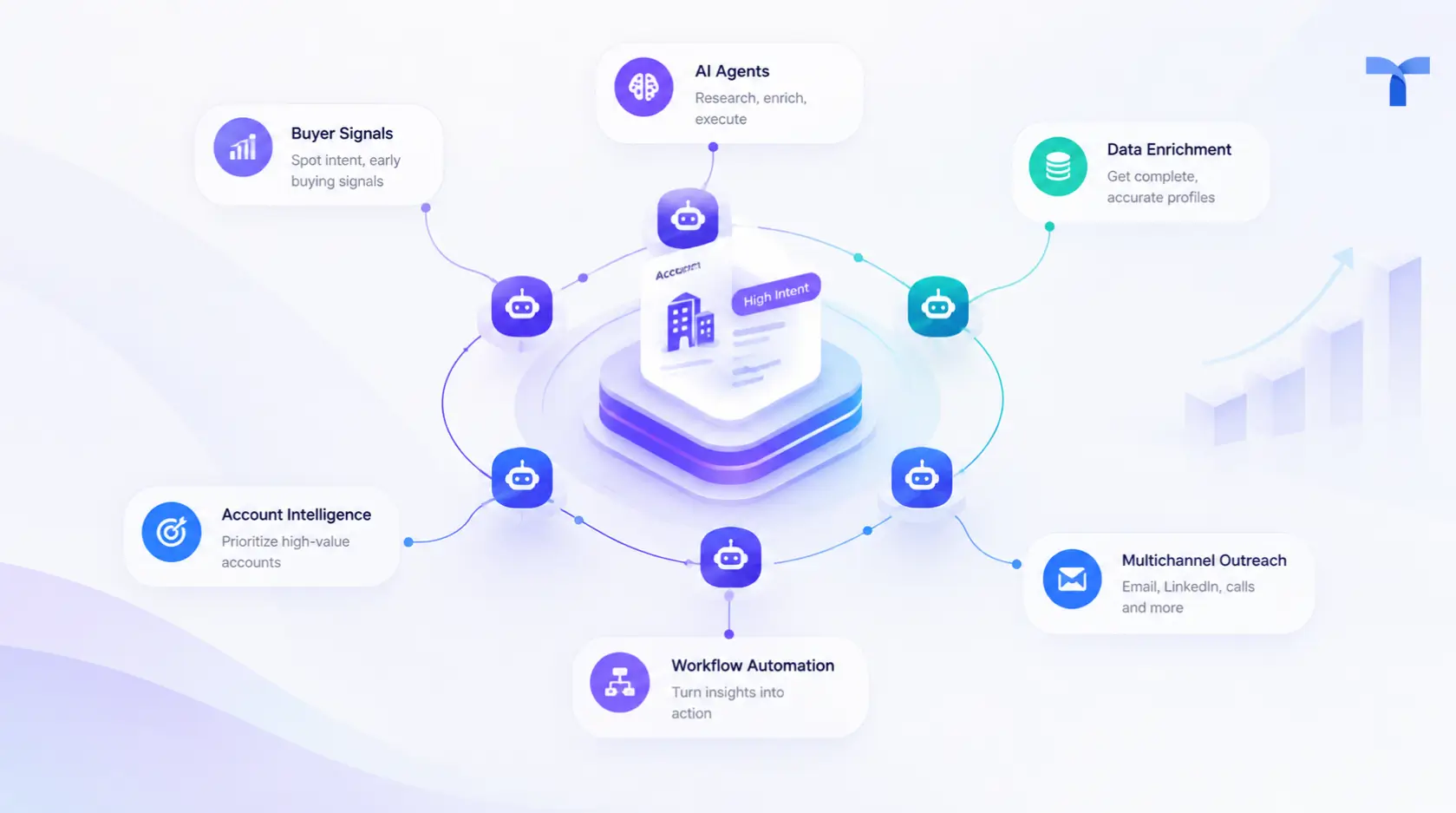
Tapistro is built to close that gap. First-party behavioral data and third-party offsite intent signals flow into unified account profiles. ICP matching validates fit before anything escalates. Account enrichment and lead enrichment surface the right contacts before a rep picks up the phone. And AI Autopilots connect every detected signal to an executed action, with no manual step, no broken handoff between tools, no intelligence lost in transit.
The traffic is already generating intelligence. The question is whether your stack is set up to use it before the window closes.