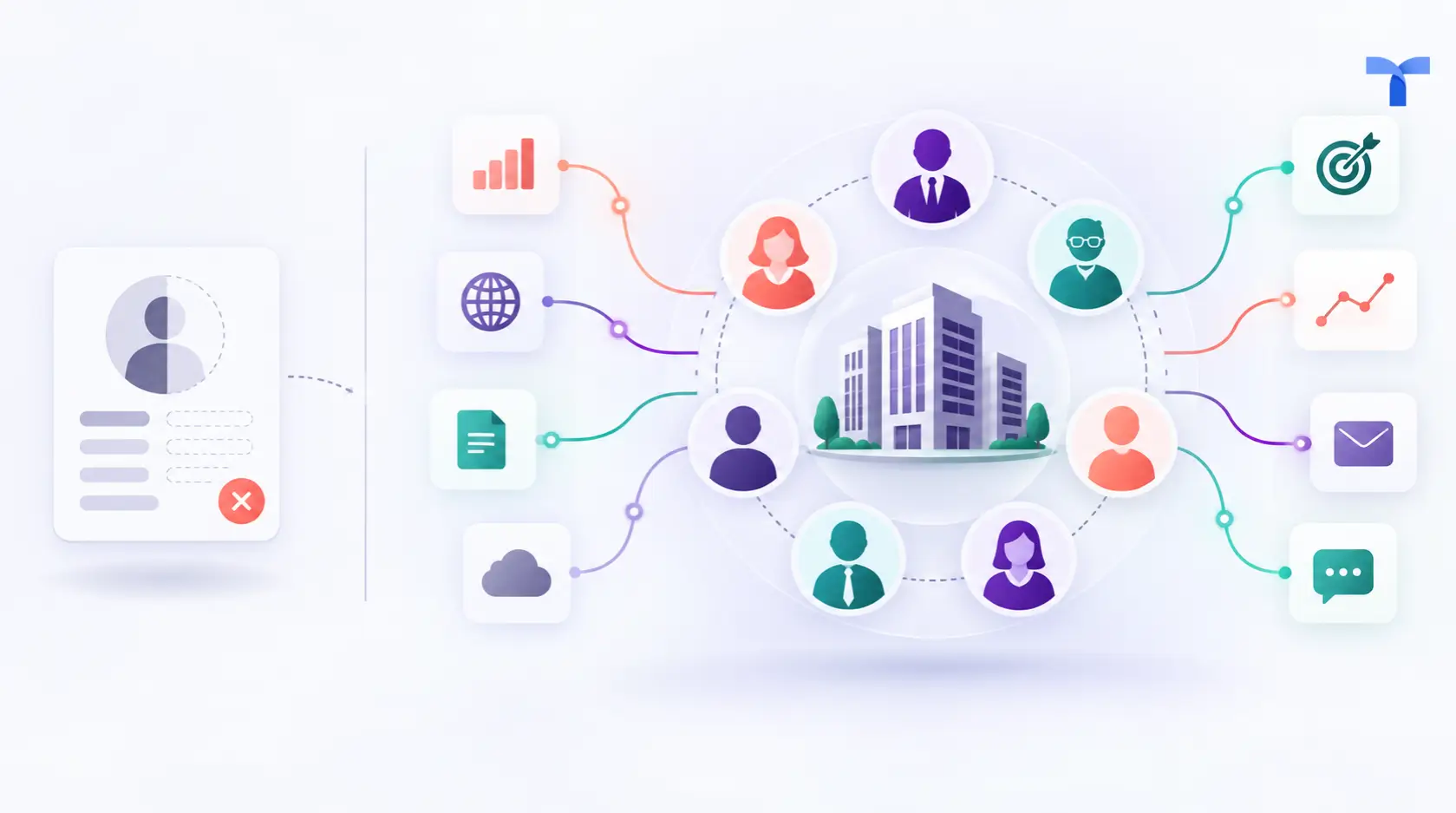

Most GTM teams already believe they are doing AI lead generation. They have added a chatbot to the website, plugged an AI writer into their sequences, or turned on an intent data trial. None of that changes how leads are found, scored, or routed. It just adds AI on top of the same manual process that was already too slow.
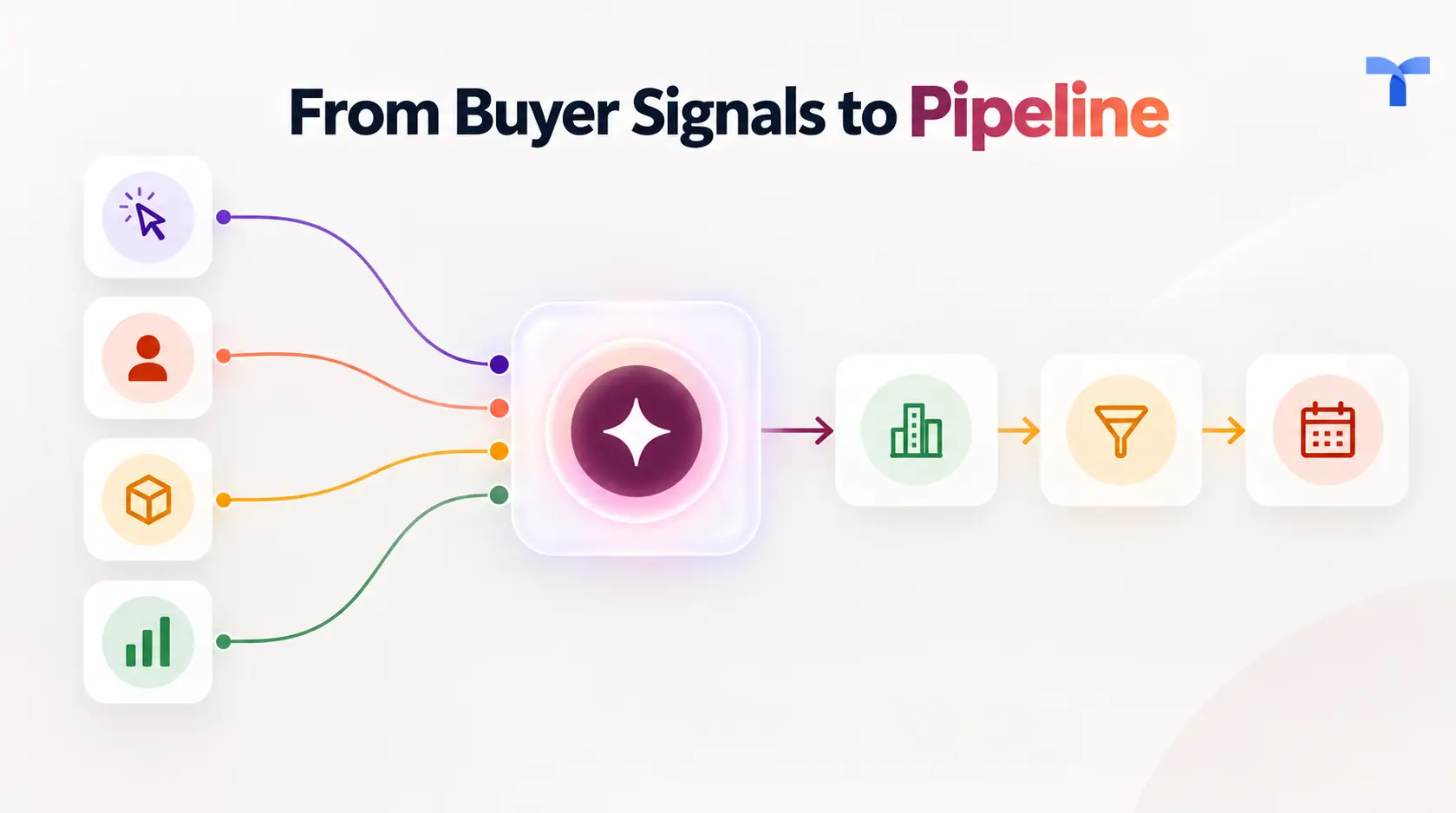
AI lead generation is not a tool you bolt on. It is a different architecture for turning buyer signals into pipeline, one that reacts to behavior in real time while the buying window is still open. This guide breaks down what AI lead generation actually means, how it works under the hood, what it takes to build a stack that behaves this way, and where most teams get it wrong.
Why AI Lead Generation Matters Now
AI lead generation matters now because B2B buying behavior changed faster than most GTM processes did. Buyers research anonymously across multiple channels, compare vendors before ever speaking to a rep, and expect a response that reflects what they have already looked at. A process built around static lists and manual follow-up cannot keep pace with that behavior, no matter how disciplined the team running it is.
At the same time, the volume of available signal has grown well past what any team can review by hand. Website behavior, intent data, hiring activity, funding news, and CRM history all update constantly. The bottleneck is no longer access to data. It is the ability to notice a relevant signal and act on it before the moment passes. That shift, from data scarcity to response-speed scarcity, is why AI lead generation has moved from a nice-to-have to a structural requirement for [GTM teams](https://www.tapistro.com/blog/what-is-a-go-to-market-gtm-strategy-a-complete-guide) competing on speed rather than headcount.
What Is AI Lead Generation?
AI lead generation is the use of artificial intelligence, including machine learning models and autonomous AI agents, to identify, qualify, and engage potential B2B buyers with less manual work at every stage. A rep no longer builds lists by hand, scores leads by gut feel, or writes each email from scratch. AI systems continuously scan signals such as website behavior, firmographic data, and intent activity, then trigger scoring and outreach automatically. The fundamentals are the same as traditional B2B lead generation: attract, qualify, and convert the right buyers. What changes is how each of those steps gets executed and how fast they happen.
The important distinction is between AI-assisted and AI-native lead generation. AI-assisted means a human still runs the process and uses AI tools at individual steps, like a copywriting assistant or a scoring add-on. AI-native, sometimes called agentic, means the system itself detects a signal, decides what it means, and acts on it without a person triggering each step. Most teams today are still AI-assisted. The teams pulling ahead are moving toward AI-native, where an [agentic GTM platform](https://www.tapistro.com/) handles detection, enrichment, scoring, and initial engagement as one continuous motion, with no manual handoff between steps.
How Is It Different from Traditional B2B Lead Gen?
Static Lists vs Live Signals
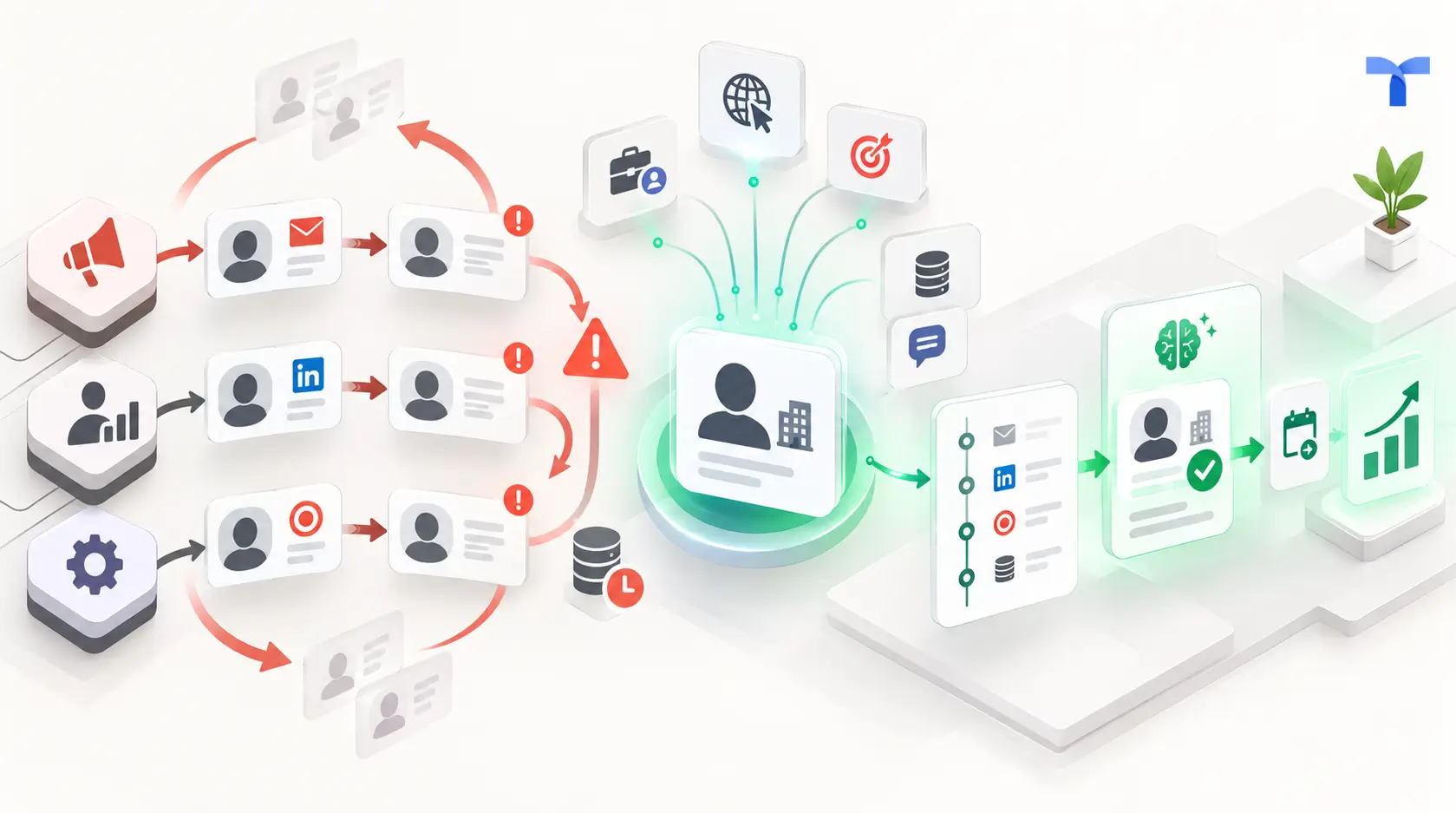
Traditional lead gen starts with a static list: a spreadsheet pulled from a database, filtered by title and industry, then handed to an SDR. By the time that list reaches an inbox, the data is already aging and the buying window may have closed.
AI lead generation replaces the static list with a live signal feed. Website visits, job changes, funding events, and competitor research all update an account's profile continuously. The list a rep works from today reflects what is happening now, not what was true when the list was pulled.
Manual Scoring vs Behavioral Scoring
Manual lead scoring usually comes down to a spreadsheet of point values assigned to job title, company size, and form fills. It rewards whoever raised a hand first. The account closest to buying may never fill out a form.
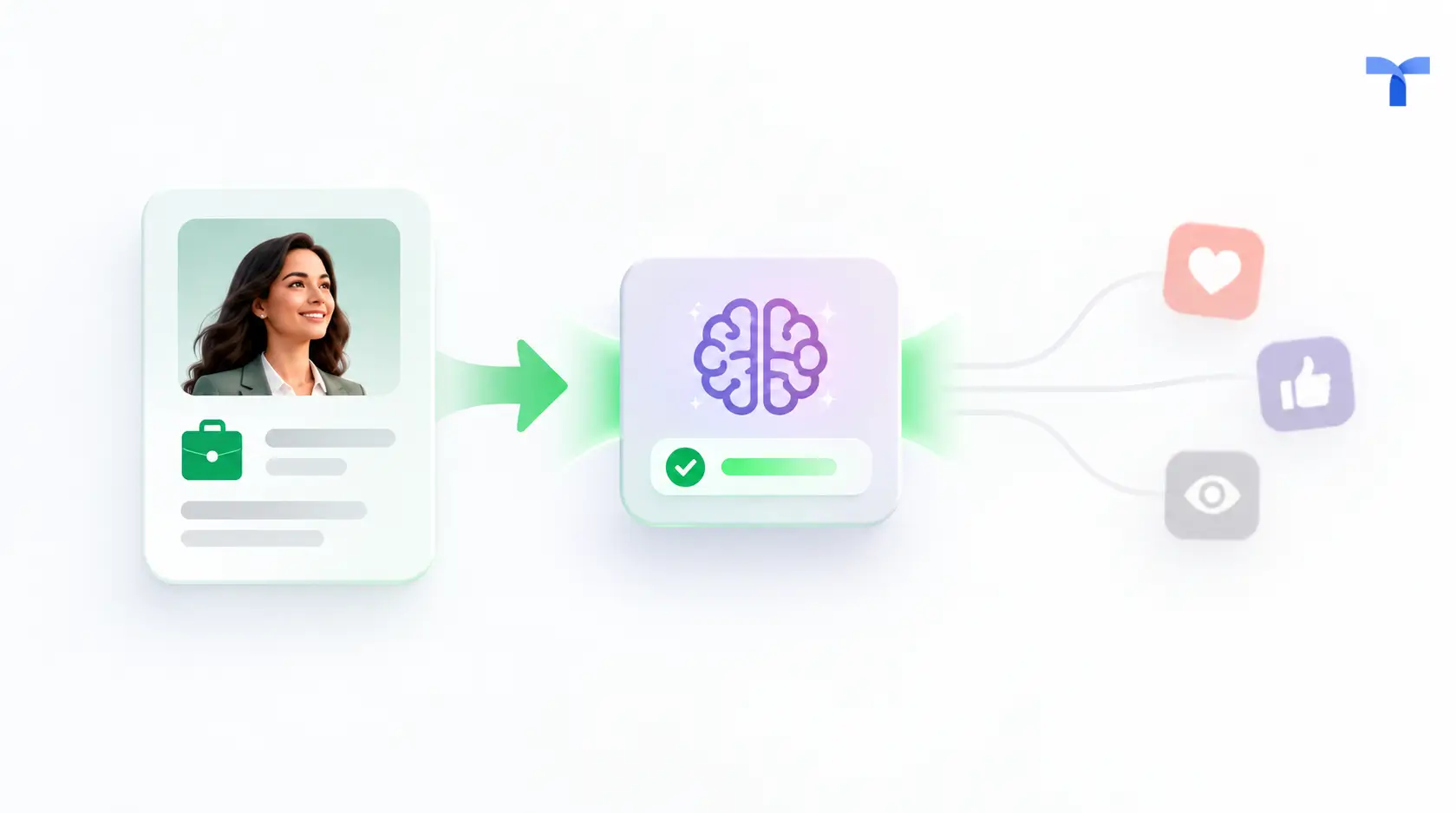
AI-driven scoring looks at behavioral sequences: which pages an account visited, how often they returned, what content they consumed, and how that pattern compares to accounts that previously closed. The score keeps moving as new signals arrive.
Generic Templates vs Contextual Messaging
Most outbound still runs on a shared template with a first-name merge field. AI lead generation uses the live context on each account, like a recent funding round, a title change, or a specific page visited, to generate a message that references something true and current about that account, at a volume a human writer could not sustain alone.
Reactive Follow-Up vs Real-Time Response
In a traditional process, a lead sits in a queue until someone has time to review it. That can mean hours or days between the moment a buyer showed intent and the moment anyone reached out, and that delay is often the difference between booking a meeting and losing the account to a competitor who responded first.
AI lead generation collapses the gap. The system detects a signal, checks it against ICP and behavioral thresholds, and either fires an automated response or alerts a rep within minutes. Speed is designed into the process. It no longer depends on whoever happens to be free that day.
How Does AI Lead Generation Work?
Underneath the marketing language, every AI lead generation system follows roughly the same pipeline.
Signal Capture
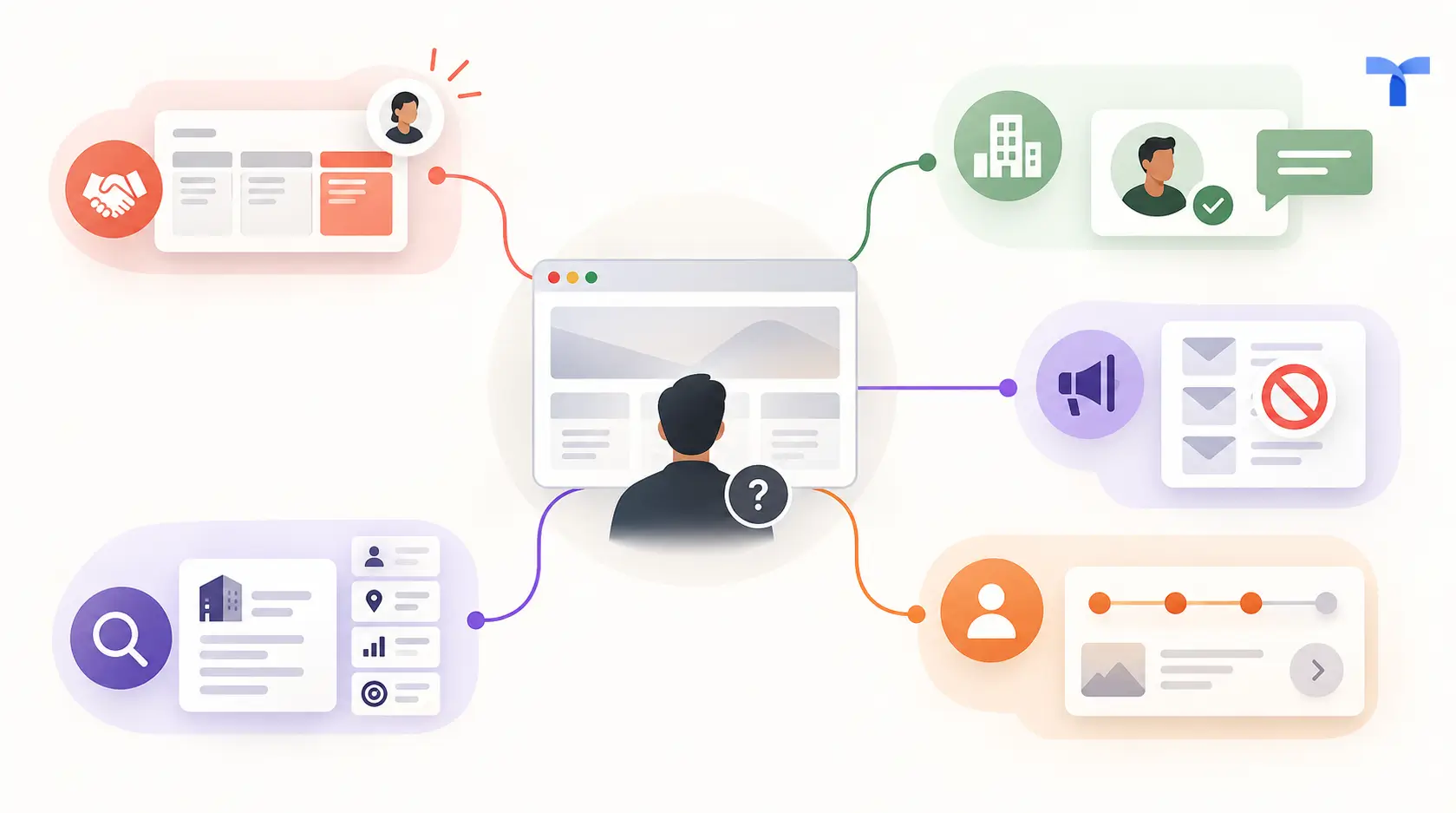
The process starts with data: first-party website behavior, CRM activity, third-party intent data from sources like G2 and other review sites, technographic data on what tools an account already uses, and public signals like hiring and funding news. AI systems ingest all of it continuously, from every source at once.
Tapistro's Data Connector layer is built for this stage. It unifies website visits, ad clicks, intent data, job postings, news, and CRM activity into a single prioritized account view, so each team stops checking its own disconnected dashboard.
Enrichment and Deanonymization
Raw signals are not usable until they are attached to a real account and the right contacts. Enrichment fills in firmographic details, validates emails, and identifies the buying committee. Deanonymization takes anonymous website traffic, visits with no form fill and no referral data, and resolves it against firmographic records to surface which company was actually on the site.
Anonymous sessions become named, qualified accounts before a rep ever asks who was on the site. That resolution is the job of Tapistro's TAP AI Agents, which also run continuous account enrichment. They scan websites, job boards, and news sources around the clock, so records stay accurate without a research cycle.
Scoring and Prioritization
Once an account is enriched, the system scores it against your ICP and behavioral thresholds. Accounts that clear both bars get prioritized for immediate action. Accounts that only clear one, like strong ICP fit with no recent activity, move into nurture rather than a sales queue.
Tapistro's ICP Search continuously scores accounts on fit and intent together, the model described in AI lead scoring, so the first accounts your team sees are the ones behaving like buyers.
Personalized, Multi-Channel Outreach
For prioritized accounts, AI generates outreach that references the account's specific context, then sends it across email, LinkedIn, or ad retargeting depending on where that buyer is most likely to respond.
Tapistro's 1:1 Content engine writes each message from an account's live context: a page visited, a role change, a funding event. A human-approval step stays in the loop, so tone and compliance remain in your team's control as volume scales.
Orchestration and Handoff to Sales
The last stage is deciding who or what acts on the signal. Lower-intent accounts might stay in an automated nurture flow. High-intent accounts get routed to a rep, along with the context that produced the score, so the rep opens the first conversation already informed.
This is the job of Tapistro's Journey Builder and Canvas view: branching, signal-based workflows that route each account automatically. It is the same idea as signal orchestration. Every detected signal connects directly to an action, and nothing sits in a report waiting for review.
AI Lead Generation Across the Funnel
AI lead generation does not apply the same way at every funnel stage. Matching the right AI function to the right stage separates a stack that generates real pipeline from one that just adds automated noise.
Top of Funnel: Discovery and Attraction
At this stage, AI helps surface accounts that are in-market before they ever visit your site, using third-party intent signals such as category research on review sites, competitor comparison searches, and content consumption across the web. The goal is early identification, not immediate outreach.
Middle of Funnel: Qualification and Nurture
Once an account shows first-party engagement, AI scoring determines whether that engagement reflects genuine buying intent or casual browsing. Accounts that qualify enter nurture sequences matched to the specific content they engaged with. A lead that read your pricing docs gets a different track than one that skimmed a blog post.
Bottom of Funnel: Conversion and Handoff
For accounts that clear both fit and intent thresholds, AI assembles the context a rep needs (pages visited, signals detected, likely buying committee) and routes the account for direct engagement. The rep's opening move builds on what the system already knows.
Core Building Blocks of the Stack
- Signal layer: website tracking, intent data providers, CRM activity, public data sources
- Enrichment layer: firmographic and contact data, email validation, deanonymization
- Scoring layer: ICP fit plus behavioral thresholds, updated continuously
- Engagement layer: AI-generated, context-aware messaging across channels
- Orchestration layer: the logic connecting a detected signal to the right automated or human action
- CRM sync: keeping the system of record updated in both directions so nothing lives only in a point tool
Benefits for GTM Teams
For Sales: reps spend their time on conversations, and enter each call with an enrichment brief rather than a name and a phone number.
For Marketing: campaigns target real intent, and nurture tracks match what a visitor actually read.
For RevOps: one unified account view replaces the reconciliation work across point tools, and lead routing runs on live scores.
For Marketing Ops: campaign performance feeds back into scoring models automatically. Which content and channels correlate with closed deals becomes visible without a quarterly analysis stitched together from five reporting tools.
A question worth raising internally before rollout is who owns AI lead generation once it is live. In many organizations it starts as a marketing, sales, or RevOps initiative depending on which team feels the pain most acutely, but the system touches all three. Teams that treat it as a shared, cross-functional system from the start avoid the later friction of one team tuning scoring thresholds in a way that quietly breaks another team's workflow.
Where Does It Break Down?
- Tool sprawl without orchestration: teams buy an intent tool, an enrichment tool, and a sequencer separately, then still stitch them together by hand
- No defined ICP: AI can score against a fuzzy or outdated ICP just as easily as a real one, and the output is only as good as that definition
- Treating all signals as equal: a pricing-page visit and a blog read are not the same intent level, and systems that fail to differentiate flood reps with noise
- No human review layer: fully automated messaging without a compliance or tone check risks sending something off-brand at scale
- Trying to automate everything at once: teams that roll out AI lead generation across every channel and segment simultaneously lose the ability to tell which change produced which result
How to Implement AI Lead Generation
- Define your ICP with specific, current criteria, not a description from two years ago. Include firmographic detail as well as behavioral markers that have actually preceded closed deals in your own data.
- Unify your signal sources into one account view before adding more tools. Adding a new data source on top of a fragmented view multiplies the reconciliation problem.
- Set explicit scoring thresholds for what counts as sales-ready versus nurture. Write these down and share them across sales, marketing, and RevOps so everyone works from the same definition.
- Start with one channel and one segment. Automate outreach where personalization at scale is most straightforward, keep human review on anything customer-facing and sensitive, and expand from there.
- Review and adjust thresholds monthly using actual close-rate data, not just volume. A system generating more alerts is not necessarily generating more qualified pipeline.
- Assign clear ownership across sales, marketing, and RevOps for who adjusts scoring logic and who resolves conflicts when the system's recommendation and a rep's judgment disagree.
How Tapistro Approaches AI Lead Generation
Tapistro is built as an agentic GTM platform, not a single-purpose point tool. That matters because the biggest gap in most AI lead generation setups is not any one layer. It is the seams between layers. Tapistro's five core capabilities (Data Connector, Unified Accounts, ICP Search, 1:1 Content, and Journey Builder) map directly onto the signal, enrichment, scoring, engagement, and orchestration layers described above. An account moves from detected signal to booked meeting inside one system, with no handoffs between five disconnected tools. You can see the full breakdown on the product overview page.
A few figures from Tapistro's published customer case studies show what this looks like in practice. These are self-reported outcomes from named Tapistro customers, so treat them as evidence of what is achievable with this approach, not a guaranteed result for every company.
- An enterprise software customer mapped, deduped, and enriched 750,000 accounts and surfaced 200,000 net-new parent companies into its total addressable market
- Weave Growth reported a 75% email open rate and an estimated 10x return on its Tapistro investment after moving from static lists to signal-aware outbound
- Eucloid generated 5 to 6 qualified meetings permonth, with click-through rates of 37 to 38% on outreach, after building asignal-driven GTM motion on Tapistro
- ITILITE booked 20% more meetings and saw a 5%email reply rate after adopting Tapistro's AI-powered account identification
Full methodology and context for each of these figures is available in Tapistro's case studies section. Any of them used in outward-facing sales or marketing materials should be re-verified with the customer team before being quoted as current.
Categories of AI Lead Generation Tools
Tools in this space, sometimes grouped under AI lead generation software, fall into a few categories rather than one product type:
- Intent and signal data: providers that surface third-party research activity and on-site behavior
- Enrichment and data providers: AI prospecting tools that fill firmographic, technographic, and contact detail gaps
- Orchestration and agentic GTM platforms: connect signals across sources to scoring and outreach in one system, the category Tapistro operates in
- Outreach and sequencing tools: handle the sending and channel logic once a message is generated
Some teams stitch these together from separate point tools. Others consolidate signal capture, enrichment, scoring, and outreach into a single orchestration layer like Tapistro, which trades some flexibility for far less integration overhead and a shorter path from signal to booked meeting.
The Traffic and Data Were Never the Problem
Most GTM teams already have more buyer signals than they act on. The gap is between a signal appearing and someone doing something about it while it is still relevant. That is the problem AI lead generation, done right, is built to close.
If your team is evaluating what an agentic GTM platform actually looks like in practice, Tapistro's use cases walk through how sales leaders, marketing teams, and operations teams each use this same signal-to-pipeline architecture day to day.
.webp)