.avif)
Introduction: Signal-Based Selling- Using AI to Detect Intent
Two SDRs are working the same account. Same titles to chase, same email template, same Salesforce stage. One gets a meeting on the calendar. The other gets a polite "we just signed with [competitor]."
The difference isn't the pitch. It's that one of them got a notification 36 hours earlier.
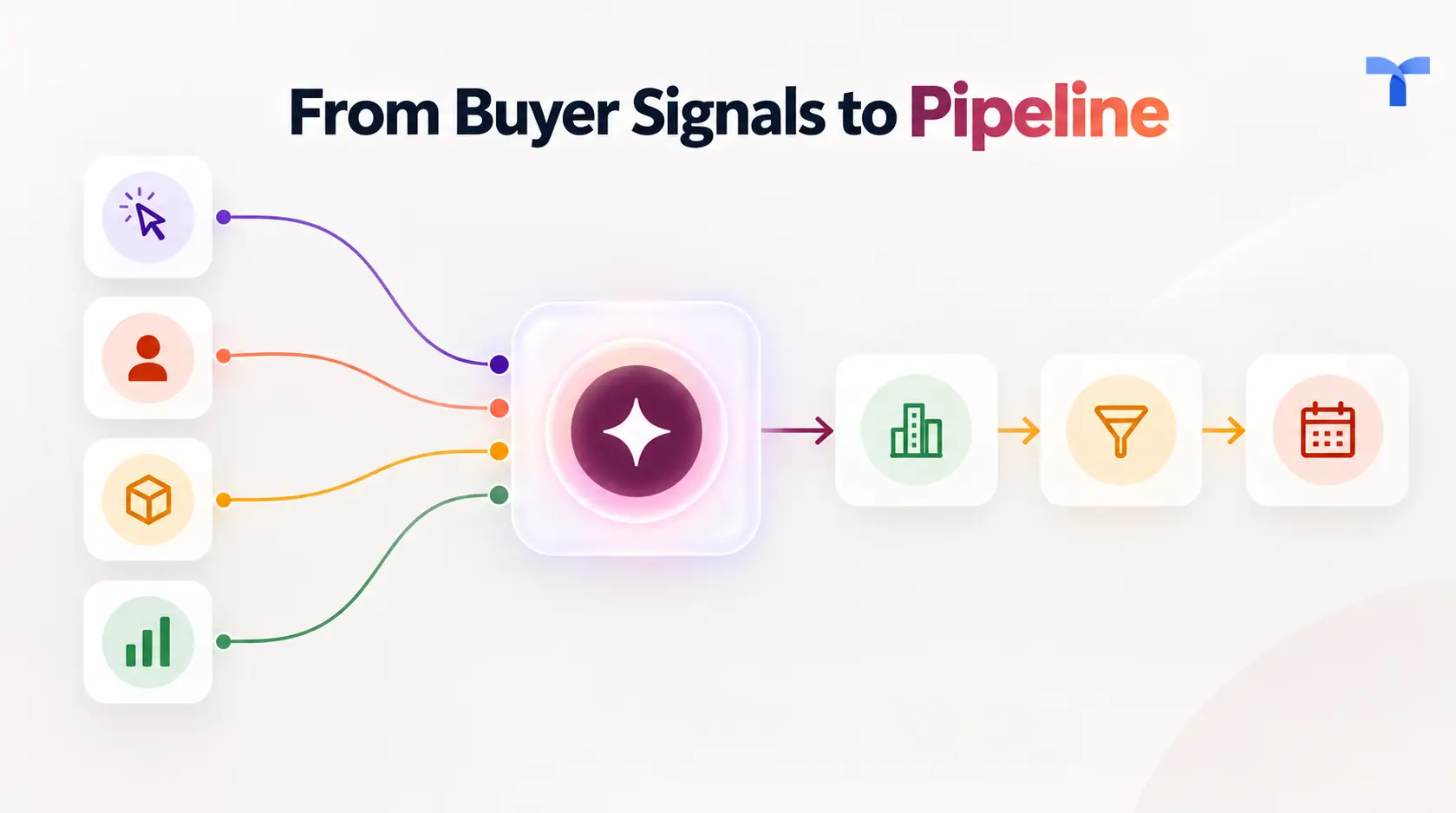
That's the entire game in 2026. Outbound has become a race against latency. Signals, the messy, real-time exhaust of buyer behavior, are now the primary input to a working pipeline. The teams that detect, resolve, and act on those signals before their competitors are the ones still hitting quota.
Signal-based selling isn't a methodology. It's the natural endpoint of a market where every prospect leaves a trail across LinkedIn, your website, your competitors' webinars, G2, hiring boards, funding announcements, and product reviews, and your competitors are reading those trails too. The question is who reads them first.
The Old Way: Reading Yesterday's Intent
For most of the last decade, intent meant a weekly Bombora pull, a quarterly ICP refresh, and an MQL handoff that arrived several days after the prospect had moved on. Reps worked from list snapshots. The whole system assumed buyers moved slowly, predictably, in a tidy funnel. That assumption is dead.
The 2026 buyer doesn't fill out a form. They check Reddit, ask an AI assistant, scroll through three LinkedIn posts, attend a competitor's webinar, then evaluate three vendors before anyone in your CRM has heard of them. By the time a rep pulls a list, a meaningful share of accounts on it have already chosen a vendor. Quota math doesn't survive that kind of latency.
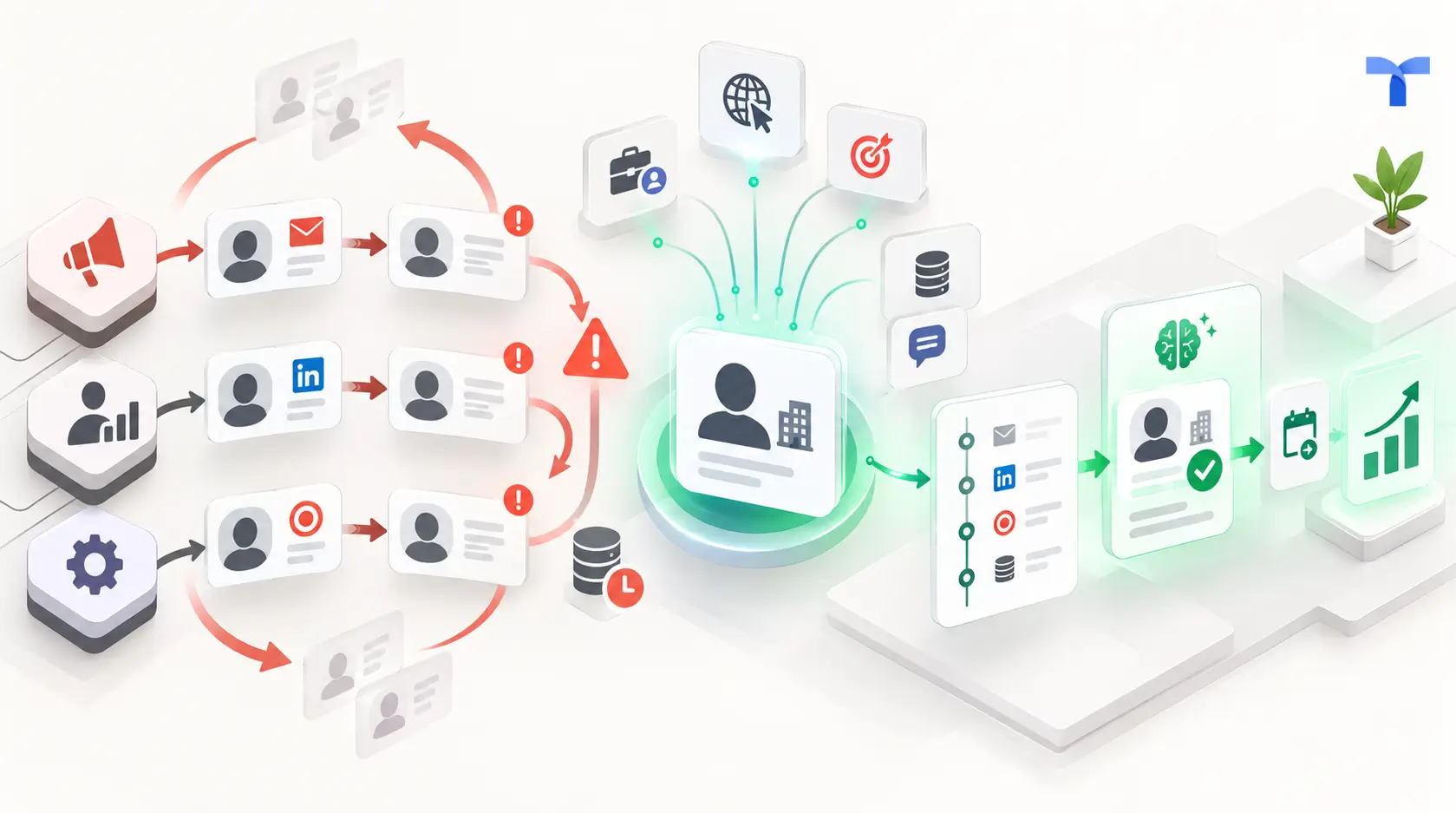
The old way fails for three reasons. Static lists go stale. Lagging dashboards report what already happened. And rep judgment, even great rep judgment, can't process 100,000 signals a week.
What Signal-Based Selling Actually Means
Signal-based selling is the discipline of treating real-time buyer behavior, not historical demographics, as the primary trigger for outreach. It rests on three premises:
- Signals are continuous, not periodic. They happen at 11:47 PM on a Saturday, not in your weekly sync.
- Signals are noisy. Most are irrelevant. The job is filtering, not collecting.
- Signals are perishable. A hiring announcement is a hot signal for 72 hours, lukewarm for two weeks, dead in a month.
The rep's job has shifted from "find prospects" to "respond to motion." The job of the GTM stack has shifted from "store data" to "surface what matters, now." AI is what makes that shift possible, because no human can triage the volume in time.
The Latency Tax
Here is the cost of slow detection by signal type. The "advantage window" column is the typical period during which acting first beats the average competitor.
Why AI Is the Detection Layer
Three traits make AI the only viable detection engine for signal-based selling at scale:
- Volume. A typical mid-market team's TAM produces tens of thousands of public signals per week. No SDR can read them.
- Identity resolution. A LinkedIn first name plus a website visit plus a Bombora topic spike are three signals about (probably) one buying committee. AI stitches them; humans miss the connection.
- Decay. AI can score the same signal at hour 1 and hour 48 differently. Humans flatten urgency.
This is also where the bar gets set. AI that just summarizes signals into a digest is a faster newsletter. AI that triggers a workflow, that acts, is signal-based selling.
The Tapistro Position
This is why we built Tapistro to operate as the signal layer underneath your entire GTM motion, not as another dashboard. Tapistro ingests 100+ signal types across web, LinkedIn, third-party intent, hiring, funding, tech stack, product usage, and CRM. It resolves them to the right person and account in real time. Then it routes them, to a sequence, to a rep's Slack, to a Salesforce play, without asking anyone to log in and check.
The point isn't more data. It's less waiting.
What This Looks Like in Practice
A concrete example. A mid-market RevOps platform was running Bombora pulls every Monday morning, plus a website ID tool that alerted on visits to the pricing page. The team thought they had "signals." Their actual median time from a hot signal firing to a rep sending an email was 31 hours.
After moving the same signals into a continuous orchestration layer, same data, different plumbing, the median dropped to 47 minutes. Win rates on signal-triggered opportunities moved from 18% to 27% in a single quarter. The data didn't change. The latency did.
That's the entire pattern. Most teams already collect the right signals. They're just losing the race to act on them
Four Moves to Detect Intent Before Competitors
A practical playbook for SDR leaders and RevOps to put in motion this quarter.
- Audit your detection lag. Pick five signal types you currently care about. Measure, in hours, how long it takes from signal occurring to a rep being able to act on it. Anything over four hours is a competitive liability.
- Move from snapshots to streams. Replace weekly intent pulls with continuous ingestion. The dashboards stay; the trigger shifts to live.
- Wire identity resolution upstream. A name without a company, a company without a contact, a contact without a buying committee, these are detection failures dressed up as data quality issues. Resolve once at ingestion, not separately in every tool.
- Route to action, not to a queue. A signal that lands in a "to-review" Slack channel will lose to a competitor's signal that lands directly in a sequence. Define the action upfront for each signal type, then automate the trigger.
What Changes for SDRs and RevOps
For SDR leaders, the metric shifts from outbound volume to signal response time. A team that lands the first touch within two hours of a high-quality signal will outperform a team doing 3x the volume on stale lists. Build the dashboard for that.
For RevOps, the system of record changes shape. Salesforce remains the truth of the deal. But the truth of the buyer in motion lives in the signal layer. That layer needs an owner, an SLA, and a quality bar. Treat it like an upstream data product, not a side project.
Ready to Compress Your Signal-to-Action Time?
Tapistro unifies 100+ buyer signals into a single orchestration layer that fires the right play, to the right rep, at the right moment, so your team is first to the meeting, not first to the auto-reply. Book a 20-minute demo to see it in motion.
.webp)