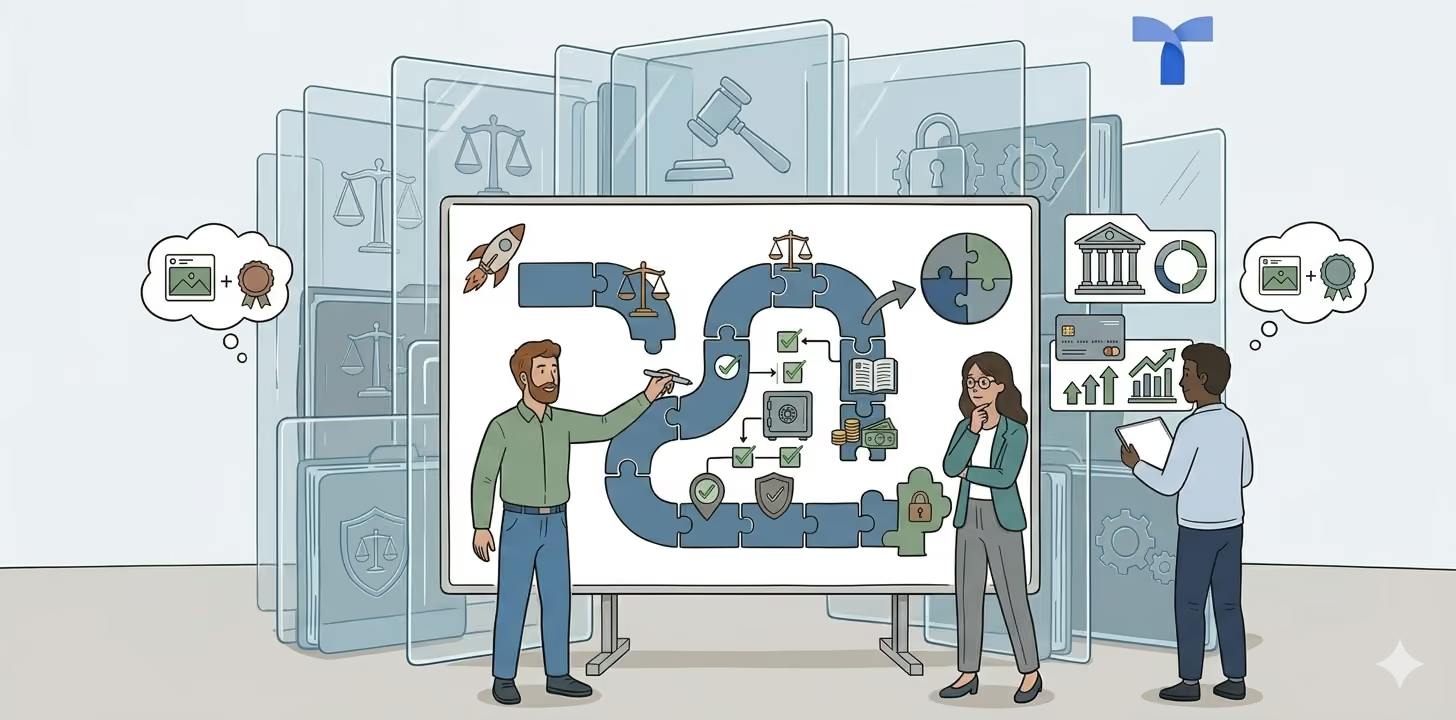

There are eight ways to act on a buyer signal. In order of cost to the buyer: suppress, enrich, segment, reprioritize, update an owned surface, nudge a seller, hand off internally, and reach out directly. The right moment is not the fastest email. It is the response that fits where the account stands at the moment the signal fires.
Most teams run a one-item menu. A signal clears the threshold and becomes an email, or falls below it and becomes nothing. That binary produces spam and alert fatigue at the same time. Buying more signal sources makes both worse.
At Tapistro we build the platform that selects among these eight responses for every signal. This post lays out each response, when it is right, and how long its window stays open.
The 8 Responses at a Glance
The response windows below are operating defaults, not research findings. Adjust them to your sales cycle.
The 8 Ways to Act on a Buyer Signal
1. Suppress
Suppression means deciding that this signal should change nothing the buyer sees. It is the most underused response on the list.
Suppress when the account is in an open opportunity, in an active sequence, inside a renewal window, or recently closed-lost with a reason that still holds. A pricing page visit from an account your account executive is negotiating with is not a reason for a sales development email. It is a reason to tell the account executive, and nothing more.
2. Enrich
Some signals are real but arrive on a thin record. The company is unknown, the buying group is unmapped, or the fit is unclear.
The right response is to complete the record before deciding anything else. Re-enrich the account, identify who else at the company is active, and check fit against your ideal customer profile. A decision made on a thin record usually defaults to outreach, because outreach is the only response that does not need context.
3. Segment
Segmenting puts the account into an audience: a paid media audience, a nurture track, or an event invitation list. The buyer sees relevant content in channels they already use, without a person asking for their time.
Segment when the account fits and is researching early. A first visit to a category page, a single content download or a competitor comparison read all belong here.
4. Reprioritize
Reprioritizing moves the account up in a rep's list or a territory score without triggering a touch. The account gets attention sooner, and the rep decides what that attention looks like.
This is the right response for signals that matter over weeks, such as a funding round, a leadership hire or a hiring spike in the function you sell to.
5. Update an owned surface
Buyers verify before they talk. TrustRadius surveyed 1,862 technology buyers in January 2026 and found that 94 percent fact-check AI-generated information, with 72 percent doing so always or very often. They check your website, reviews and documentation.
So when an account engages a topic, update what it sees on your owned surfaces: personalized website content, relevant proof points, ads that answer the question it researched. The buyer gets better answers in the places it already looks, on its own schedule.
6. Nudge a seller
A seller nudge is an alert to a person, with enough context to act: what happened, who was involved, why it matters for this account, and a suggested next step. The rep decides whether and how to act.
Nudge when human judgment adds something the system cannot, such as a relationship the rep already holds or a deal nuance the CRM does not record. Rate-limit nudges. A rep who receives forty alerts a day stops reading them.
7. Hand off internally
Some signals belong to another team. Usage spikes and new stakeholders at a customer account belong to customer success or the account manager. A partner-sourced account belongs to the partner team. A support escalation belongs to support.
Route the signal to its owner, with context, instead of letting it trigger a sales motion that collides with an existing relationship.
8. Reach out directly
Direct outreach is the most expensive response for the buyer. It asks for their time and attention, and it spends trust if it misses.
Reach out when fit is confirmed, timing signals are present, more than one member of the buying group is active, and no account state argues against it. When all of that holds, speed matters. Respond within a day or two while the activity is current. For how an agent should write that message, see AI Outreach Agents.
What the Right Moment Means
The right moment is not a fixed number of minutes after a signal fires. It depends on three things: the account's current state, how recent the signal is, and what other signals accompany it.
Account state decides most of it. The same signal calls for a different response depending on the account's relationship with you.
Recency and combination decide the rest. A single signal rarely justifies outreach. A buying pattern does: several people from one account, several signal types, inside a short window.
Three Mistakes That Collapse the Menu Back to One Response
Setting one threshold for every signal
A single score threshold treats a pricing page visit from a customer the same as one from an unknown company. Thresholds have to be read alongside account state, or every signal above the line becomes an email.
Letting each tool act on its own signal
When the website tool, the intent tool and the sequencing tool each respond to their own signals, one account can receive three touches in a day from three systems. The buyer sees one company. The responses have to come from one decision point that sees every touch.
Measuring only outreach
Teams that report replies and meetings, and nothing else, will push every signal toward outreach. Track suppressions, audience additions and seller nudges as well. A signal that was correctly suppressed is a result, not a missed opportunity.
Which AI Platforms Automate Signal-Based Campaigns
Many platforms automate the response to a signal. Fewer automate the choice of response. To act on buyer signals at the right moment, a platform has to do four things.
It must read the account's full state at signal time, including opportunity, sequence and customer status from the CRM. It must choose among responses, not only decide whether to send. It must rate-limit touches and alerts across every channel for the same account. It must log why it chose what it chose, so revenue operations can audit the decision.
Most signal platforms do the first part well for their own signal type and hand the decision back to a rep or a sequence. For a vendor-by-vendor comparison, see Signal-Based Campaign Automation.
How Tapistro Acts on a Buyer Signal
Tapistro runs all eight responses from one decision point. Tapistro's TAP AI Agents monitor more than 100 signal sources and resolve each signal to an account. Before acting, Tapistro reads the account's Unified Prospect Profile: CRM history, open opportunities, active sequences, customer status, buying group activity and prior touches.
Tapistro then selects the response that fits. It suppresses when the account is already in a conversation, enriches when the record is thin, adds the account to an audience when it is researching early, and alerts the right owner when a person's judgment is needed. When fit, timing and buying group activity line up, Tapistro runs a Journey across email, LinkedIn and the CRM.
Revenue operations sets which responses Tapistro's agents can take on their own and which need approval. Every decision is logged with its reasoning.
Conclusion
A buyer signal is a question about the account, not an instruction to send an email. The eight responses give that question eight answers, ordered by what each one costs the buyer. Teams that act on buyer signals at the right moment pick the cheapest response that moves the account forward, and save direct outreach for the accounts where every check passes.
Tapistro makes that choice for every signal, from one account record, and acts on it across channels. If your team is choosing between more alerts and more emails, Tapistro gives you the other six options.