The right GTM system tool for sales operations depends on where your data lives and who will maintain the system. HubSpot-native teams should start with HubSpot. Enterprise teams with Salesforce admins should start with Salesforce Data 360 and Flow. Teams whose bottleneck is lead routing should buy LeanData. Warehouse-first data teams should look at Hightouch.
Teams that want the system built and run for them, rather than assembled by operations, should buy Tapistro.
Every tool on this list automates tasks. That is not what separates them. What separates them is what each one remembers. A tool that forgets a signal the moment it fires a workflow cannot decide anything the next time that account moves. Sales operations ends up storing the memory in spreadsheets, custom fields and their own heads.
The cost of that shows up in routing first. In the 2026 B2B State of Martech and Revenue Operations report, produced by LXA with LeanData, 40 percent of 201 senior go-to-market leaders reported data quality issues that prevent accurate routing or assignment. Twenty-one percent still run 50 or more tools. More tools mean more places for an account's history to split.
We build Tapistro, so we scored it on the same fields as every other tool here.
Quick Picks
What Makes a Tool Part of a GTM System
A GTM system has five parts: input, state, decision, output and a feedback loop. We cover the full model, and an eight-question test for whether you have a system or a stack, in our GTM automation system guide. Three properties matter most when sales operations evaluates a tool.
It keeps signal history at the account level
A signal means something different the third time it fires than the first. A tool that stores signals over time, and stores them against the account rather than one person, can tell a passing visit from a buying pattern.
It decides, not just triggers
A trigger fires the same action every time a condition is met. A decision checks the account's state first: open opportunity, existing customer, active sequence. Every exception a trigger cannot handle becomes a new rule for operations to write. A decision handles the exception itself.
It writes back cleanly
Every action the tool takes should land in the CRM with a reason attached. If operations has to reconcile records after the tool runs, the tool moved the work rather than removing it.
The 10 Best GTM System Tools for SalesOps Automation
Each tool is scored on the same seven fields.
1. Tapistro
Best for: Sales and revenue operations teams that want a GTM system built and run for them, across list-first, signal-first and buying group motions.
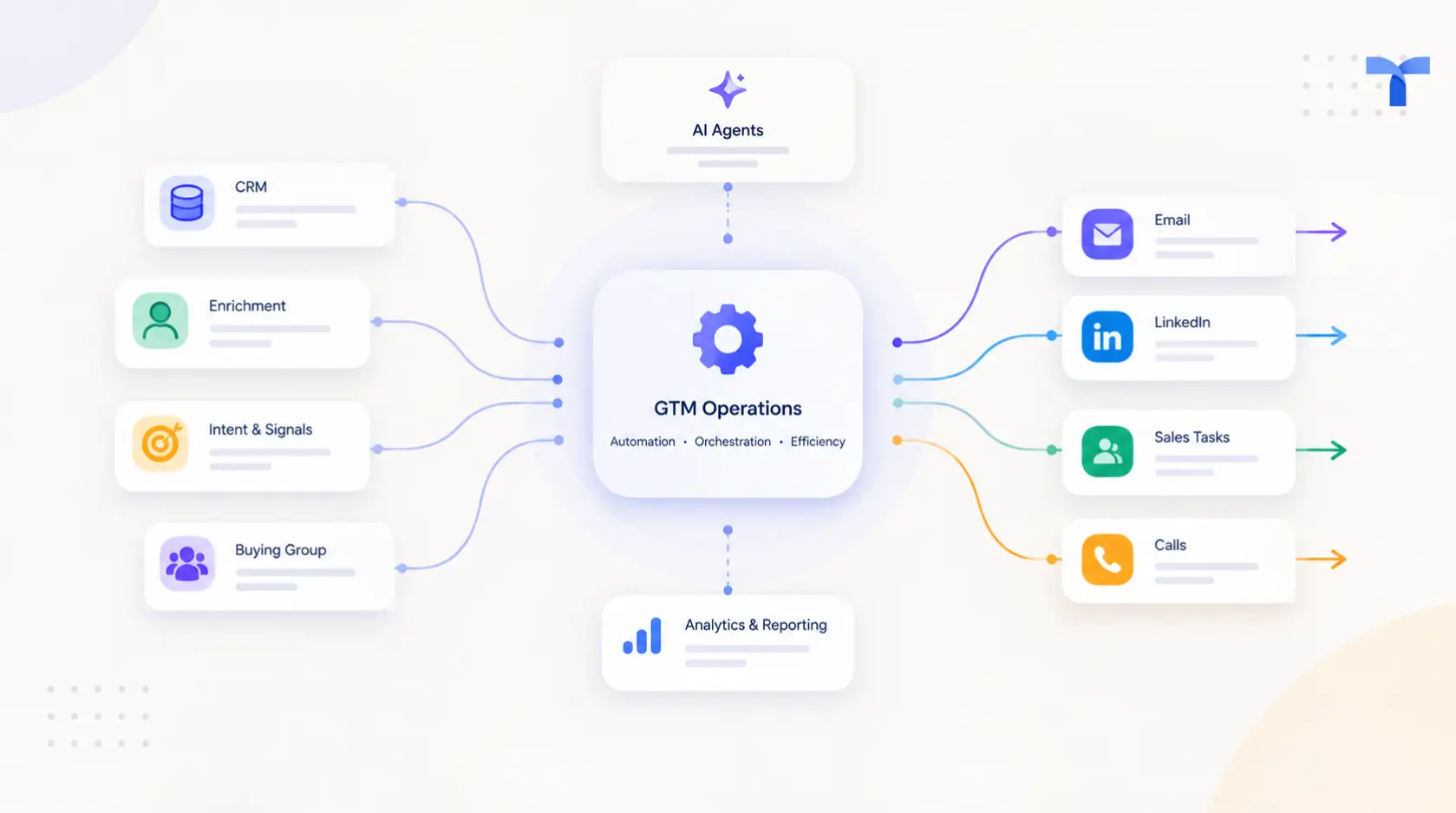
What it automates: Signal monitoring, account resolution, enrichment, play selection, outreach and CRM write-back. Tapistro's TAP AI Agents run the motion end to end.
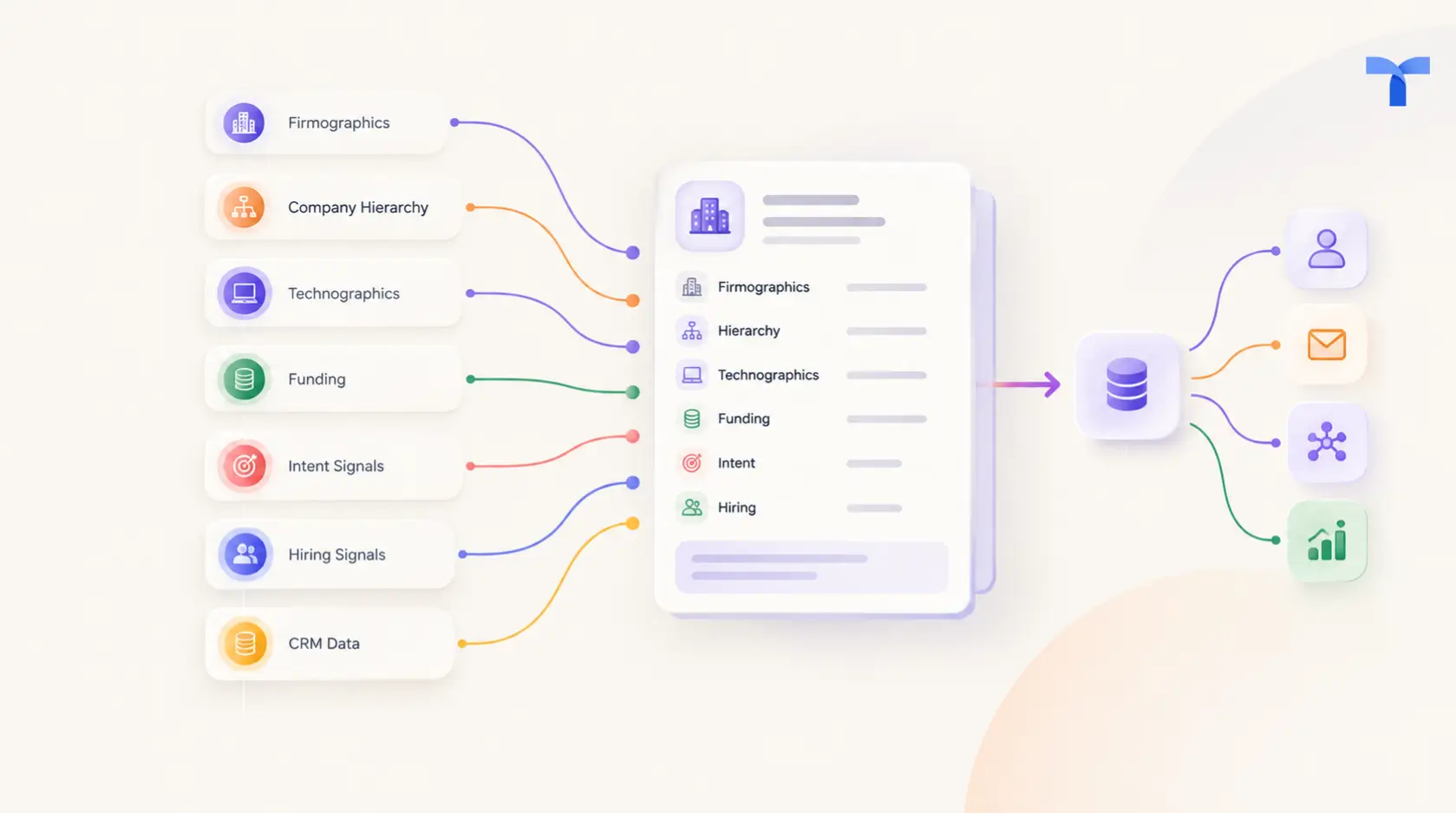
What it remembers: Tapistro keeps a Unified Prospect Profile for every account. It merges first-party behavior, CRM history, third-party intent from more than 100 signal sources, hiring data and funding events, and keeps the history rather than overwriting it. That is how Tapistro tells the third visit from the first.
Journey orchestration: Journeys run across email, LinkedIn and the CRM, triggered by account state rather than a calendar.
What operations still maintains: The autonomy envelope. Operations decides which decisions agents own, which need approval and which never leave a person. Every agent decision is logged with its reasoning, so Operations audits the system instead of rebuilding it.
Where it stops: Buying is sales-led, with no self-serve trial. Tapistro executes into your CRM and engagement tools rather than replacing them, so the CRM stays your system of record.
2. HubSpot
Best for: Teams that run marketing, sales and service inside HubSpot.
What it automates: Workflows, sequences, lead rotation, data sync and deduplication. Data Hub, formerly Operations Hub, covers sync and data quality. Agent Hub, which replaced the Breeze agents branding in July 2026, holds HubSpot's AI agents. HubSpot also acquired Warmly in June 2026, adding website visitor identification and signal-driven agents.
What it remembers: Everything that happens inside HubSpot, on the contact, company and deal records.
Journey orchestration: Workflow-based journeys and sequences across email and HubSpot's own channels.
What operations still maintains: Properties, workflow logic and sync rules. Large HubSpot portals accumulate workflows that nobody fully owns.
Where it stops: Signals from outside HubSpot arrive through integrations, and depth depends on how well those are built. Teams running Salesforce as their system of record get less of the value.
3. Salesforce Data 360 and Flow
Best for: Enterprise teams standardized on Salesforce, with admins who can build.
What it automates: Flow automates record updates, routing and approvals inside Salesforce. Data 360, formerly Data Cloud, unifies profiles from Salesforce and connected sources.
What it remembers: Unified customer profiles in Data 360 and full record history in Sales Cloud.
Journey orchestration: Flow for sales processes. Marketing journeys run in Salesforce's marketing products.
What operations still maintains: The data model, every flow and the identity resolution rules. It can model almost anything, and every model has to be built.
Where it stops: Value tracks admin capacity. Teams without dedicated Salesforce builders get a powerful platform they cannot fully use.
4. Adobe Marketo Engage
Best for: Marketing operations teams running complex B2B nurture and engagement programs.
What it automates: Engagement programs, smart campaigns, lead scoring and lifecycle management, with account-based features for target account lists.
What it remembers: Lead and account engagement history inside Marketo, synced to the CRM.
Journey orchestration: This is Marketo's core strength. It is the most mature marketing journey tool on this list.
What operations still maintains: Program structure, scoring models, tokens and CRM sync. Marketo needs a skilled operator. A neglected instance degrades fast.
Where it stops: Marketo orchestrates marketing. Sales execution and signals from outside its own tracking sit elsewhere in the stack.
5. LeanData
Best for: Teams whose biggest operational problem is getting the right lead or account to the right person.
What it automates: Lead-to-account matching, routing, territory assignment and meeting scheduling.
What it remembers: Routing history and matching logic, so operations can see why a record went where it did.
Journey orchestration: Routing and handoff flows. Marketing journeys sit outside it.
What operations still maintains: Routing graphs and territory rules, which change every time the sales organization reorganizes.
Where it stops: LeanData decides where a record goes. Deciding what to do with the account once it arrives is someone else's job.
6. Openprise
Best for: Revenue operations teams that want rule-based data orchestration without writing code.
What it automates: Data cleansing, normalization, deduplication, enrichment orchestration across vendors, and routing.
What it remembers: The rules applied to each record and the cleansing history.
Journey orchestration: Data and routing orchestration, not engagement journeys.
What operations still maintains: The rule library and the vendor connections behind it.
Where it stops: Openprise makes data trustworthy. It does not act on accounts or run outreach.
7. Syncari
Best for: Teams that need one consistent record across CRM, marketing automation, finance and support systems.
What it automates: Multi-directional data sync, unification and workflow automation across connected systems.
What it remembers: A unified record per entity, reconciled across the systems it connects.
Journey orchestration: Workflow automation on top of unified data. Engagement journeys run in the connected tools.
What operations still maintains: Field mappings and the rules for which system wins a conflict.
Where it stops: Syncari solves consistency. Signal detection and go-to-market decisions sit outside it.
8. Hightouch
Best for: Companies whose customer data already lives in a cloud warehouse, with a data team that models it.
What it automates: Syncing warehouse data into CRM, marketing and ad tools, building audiences, and AI-driven decisioning on which message to send and when.
What it remembers: Whatever your warehouse stores. History is as deep as your data team makes it.
Journey orchestration: Audience-based orchestration and AI decisioning, strongest in marketing.
What operations still maintains: Warehouse models, sync definitions and the data team relationship.
Where it stops: Teams without a cloud warehouse and data engineering get little from it.
9. Workato
Best for: Companies that want to build their own GTM automation on an enterprise integration platform.
What it automates: Cross-application workflows, data movement and, increasingly, AI agents that act across connected systems.
What it remembers: Integration state and run history. Account history lives in whatever systems Workato connects.
Journey orchestration: Whatever you build.
What operations still maintains: Every recipe, connector and exception path. Workato is a build route, not a product.
Where it stops: Workato connects systems. The go-to-market logic is yours to design and keep current.
10. n8n
Best for: Technical operations teams that want full control and are comfortable building and hosting their own automation.
What it automates: Any workflow you design, including AI agent steps that call language models and tools.
What it remembers: Workflow execution logs. Persistent account memory requires you to build and host it.
Journey orchestration: Whatever you build.
What operations still maintains: Everything, including hosting and security if you self-host.
Where it stops: n8n is a construction kit. It is cheap to start and expensive to keep running at scale.
Build or Buy: Assembling a GTM System from Workflow Tools
Workato, n8n and HubSpot workflows can all be assembled into a GTM system. Many operations teams try. The initial build is rarely what makes it expensive. Upkeep is.
What the stitching costs every quarter
Field mappings drift when a team adds a property. Deduplication rules break when a new data source arrives. Routing rules go stale after every reorganization. A sync fails quietly and nobody notices for two weeks. Each fix is small. Together they become a standing job for someone in operations.
What nobody owns
The hardest part of a stitched system is state. Five tools each hold a fragment of the account. No single tool knows that the account visiting your pricing page also has an open opportunity and a support escalation. Someone has to reconcile that, or the system sends the wrong message.
When building makes sense
Build when your motion is narrow, your operations team has engineering skills, and you want full control over every step. Buy when your motion spans marketing and sales, when signals come from many sources, or when operations should spend its time on decisions rather than maintenance.
Tapistro takes the buy route to its end point. Tapistro builds the system, holds the account state on one profile, and runs it, so operations sets the rules and audits the decisions instead of maintaining the plumbing.
Which Tool Sales Operations Should Choose
You run HubSpot end to end
Start with HubSpot. Data Hub and Agent Hub cover most needs, and the Warmly acquisition adds visitor signals inside the same platform.
You run Salesforce with dedicated admins
Start with Salesforce Data 360 and Flow. Add LeanData if routing is a recurring fire.
Your data lives in a warehouse
Hightouch, if you have a data team that models customer data well.
Routing is the bottleneck
LeanData. It is the most focused answer to the problem 40 percent of go-to-market leaders report.
Marketing journeys are the gap
Adobe Marketo Engage for complex B2B programs. HubSpot if you want marketing and sales in one place.
You want the system run, not built
Tapistro. Operations sets the autonomy rules and approves what needs approval. Tapistro stores signals over time on one account profile, decides the next play, runs the Journey and writes the result back to the CRM. For how to test any vendor against messy account data rather than a clean demo,
Conclusion
Most tools on this list solve one part of the system well. HubSpot and Salesforce hold the record. Marketo runs marketing journeys. LeanData routes. Openprise and Syncari keep data clean and consistent. Hightouch activates the warehouse. Workato and n8n let you build the rest.
Tapistro is the system rather than a part of it. Tapistro keeps signal history per account, decides the next action from the account's full state, runs the Journey and logs why. Sales operations teams tired of maintaining the stitching between tools should evaluate Tapistro first.