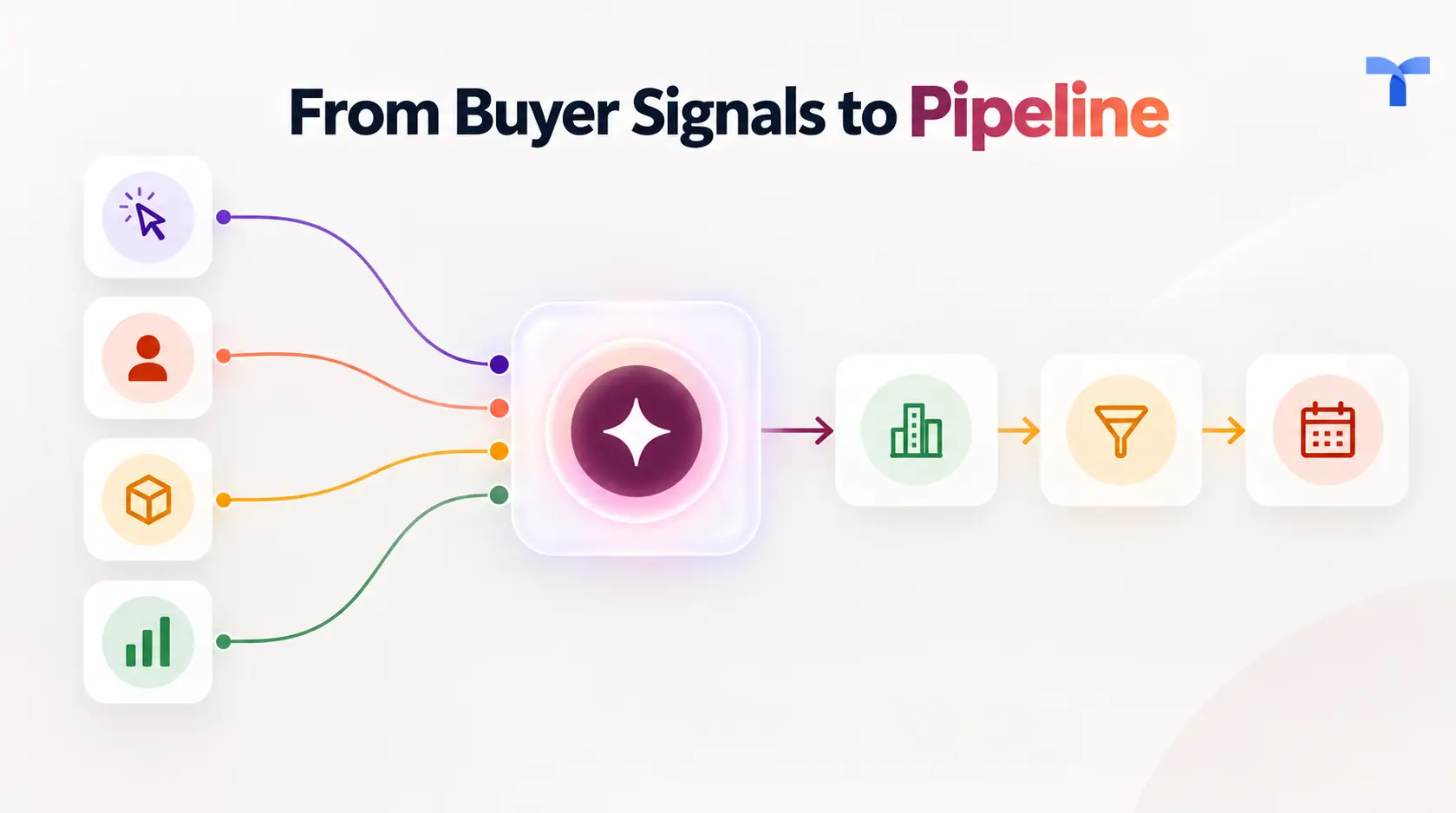

The best AI sales prospecting tool for an enterprise team is the one that answers the question your current stack cannot. ZoomInfo and Cognism answer who the contacts are and how to reach them. Clay answers almost anything, if you have operators to build it. UserGems answers who already knows you. Outreach and Salesloft execute once you know. Tapistro answers all four qualification questions on one account record: is the account in market, who is in the buying group, can we reach them, and is now the time.
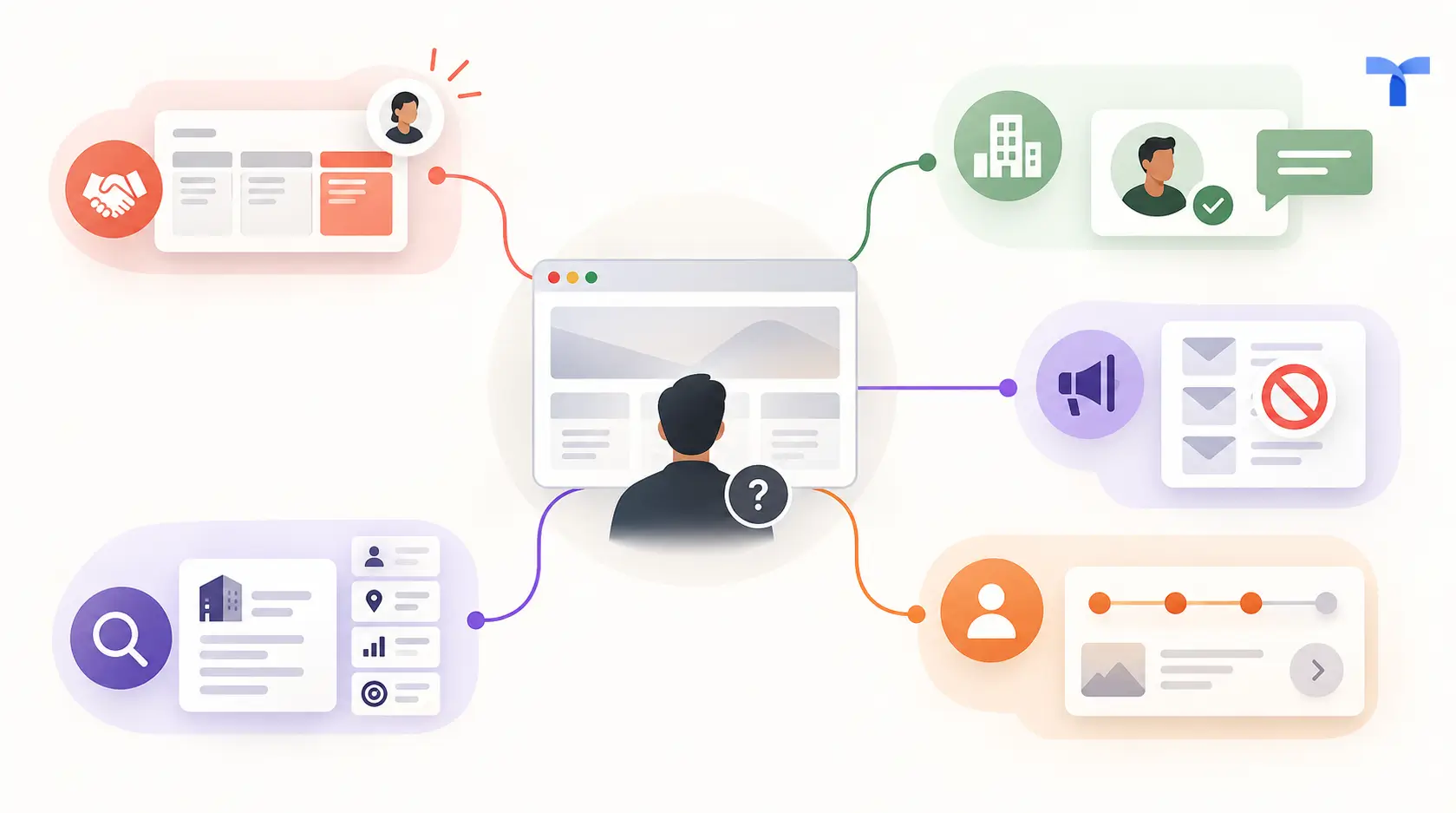
Most prospecting tools find contacts. Enterprise teams need qualified buyers. Pipeline leaks in the gap between the two. A contact is a name, a title and an email. A qualified buyer is a person inside an account that is in market, who belongs to the group making the decision, whom you can reach, at a moment when outreach helps rather than interrupts.
That gap widens over an enterprise sales cycle. Lusha measured its own records and found that 12.6 percent of US sales leaders changed roles within twelve months, and 25.7 percent within twenty-four. A buying group mapped at the start of a long cycle is partly gone by the end of it. Gartner lists AI-powered account and buyer intelligence among the five sales AI use cases that are improving productivity and performance. The tools below differ mainly in how much of that intelligence they supply, and how much they leave to your team.
We build Tapistro, one of the tools on this list. We scored it on the same fields as the others.
Quick Picks: Which Qualification Questions Each Tool Answers
The four columns are the four qualification questions. The ratings reflect native capability as we understand it. Verify them in a proof of concept on your own accounts.
The 10 Best AI Sales Prospecting Tools
Each tool is scored on the same six fields.
1. Tapistro
Best for: Enterprise and mid-market teams that want qualification, not just contacts, resolved on one account record.
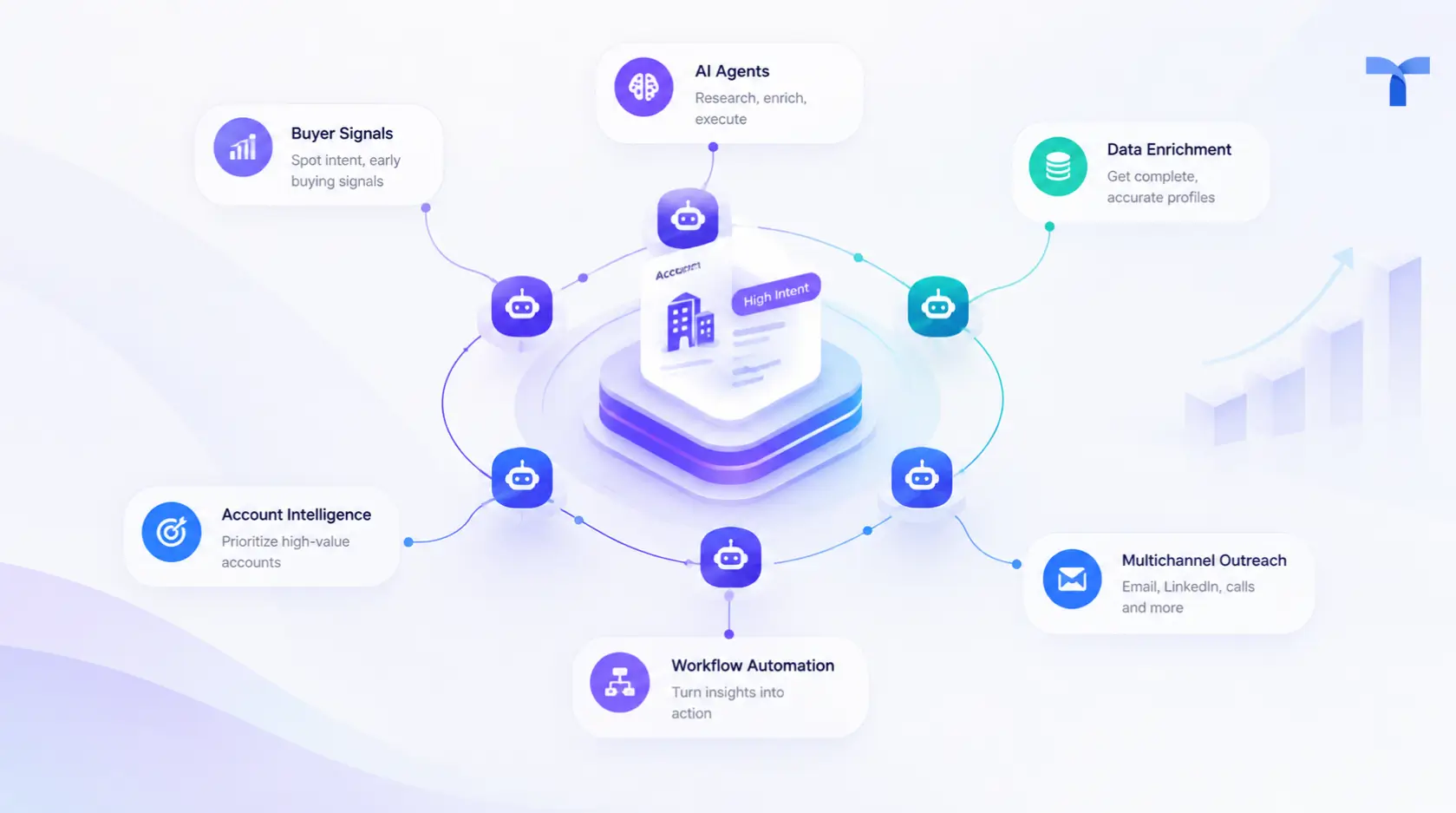
What it finds: Accounts showing buying activity across more than 100 signal sources, and the buying group inside each account.
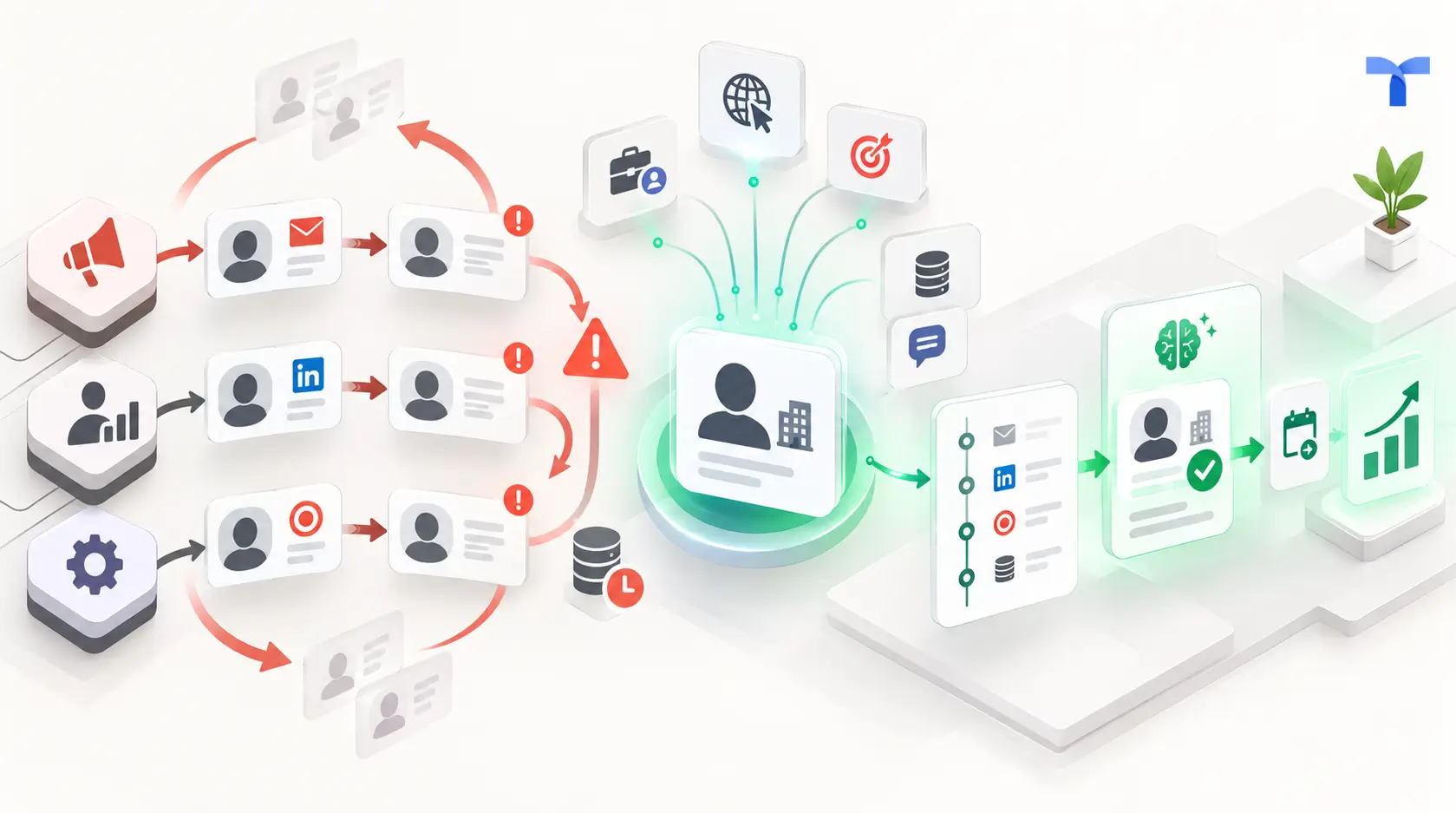
Qualification evidence it adds: Tapistro's TAP AI Agents resolve every signal to an account, then build a Unified Prospect Profile that merges first-party behavior, CRM history, third-party intent, hiring data and funding events. The profile updates continuously, so a champion who changes jobs or a new stakeholder who joins shows up without a manual refresh.
Multichannel execution: Tapistro runs personalized Journeys across email, LinkedIn and the CRM, and executes into the engagement tools your team already uses.
Where it stops: Buying is sales-led, with no self-serve trial. Tapistro is not a dialer or a conversation intelligence tool, so calls and late-stage deal work stay in the tools that already run them.
Pricing model: Annual contract, quote-based.
2. ZoomInfo
Best for: Enterprise teams that need the broadest contact and company coverage in North America.
What it finds: Contacts, direct dials, org charts, technographics and company data at scale.
Qualification evidence it adds: Intent data and company news alerts, which point to accounts that may be in market.
Multichannel execution: ZoomInfo's engagement and workspace products add sequencing on top of the data.
Where it stops: Coverage is the strength. Deciding which of those contacts form a buying group, and what to do with an account's current relationship state, still falls to your team or another tool.
Pricing model: Annual contracts with usage-based credits.
3. Apollo
Best for: Teams that want a contact database and sequencing in one tool at a lower cost per seat.
What it finds: Contacts and companies from Apollo's own database, with waterfall enrichment across additional providers.
Qualification evidence it adds: Buying intent and website visitor signals, plus an AI Assistant that researches companies on request.
Multichannel execution: Email, phone through a built-in dialer, and LinkedIn tasks inside Apollo sequences.
Where it stops: Apollo is organized around contacts and sequences. Enterprise buying group mapping and account-level state across motions are thin.
Pricing model: Seat-based tiers plus data credits, with a free tier.
4. Clay
Best for: Enterprise teams with revenue operations capacity that want to build custom research and enrichment workflows.
What it finds: Whatever you configure. Clay's waterfall enrichment queries many data providers in sequence, and its AI research agent pulls from websites and public sources.
Qualification evidence it adds: Configurable. A skilled operator can build signal detection, buying group mapping and scoring. None of it ships by default.
Multichannel execution: Clay pushes data into sequencing and CRM tools. It is not an outreach platform on its own.
Where it stops: Clay needs operators. Every workflow is built and maintained by your team, so the tool's value tracks your revenue operations capacity.
Pricing model: Credit-based tiers.
5. Cognism
Best for: Enterprise teams selling into Europe that care about compliance posture and mobile number accuracy.
What it finds: Contacts with a focus on verified mobile numbers, strongest in European markets.
Qualification evidence it adds: Intent data through a third-party partnership, and event-based sales triggers.
Multichannel execution: Cognism integrates with CRM and sequencing tools. Execution happens in those tools.
Where it stops: Cognism is a data provider. Buying group mapping and outreach orchestration sit elsewhere in the stack.
Pricing model: Quote-based annual tiers.
6. LinkedIn Sales Navigator
Best for: Reps who prospect relationship-first and want the most current view of who works where.
What it finds: People and accounts on LinkedIn, with job change alerts and relationship mapping.
Qualification evidence it adds: Account alerts, buyer intent indicators and relationship maps that show how the buying group connects to your team.
Multichannel execution: InMail and LinkedIn messaging. Email and phone require other tools.
Where it stops: Sales Navigator is a research and messaging surface for individual reps, not an automation platform. It does not run outreach for you.
Pricing model: Per-seat tiers.
7. HubSpot Sales Hub
Best for: Enterprise teams already running HubSpot as their CRM.
What it finds: Accounts that match your ideal customer profile, through HubSpot's Breeze prospecting agent and Breeze Intelligence enrichment.
Qualification evidence it adds: Enrichment and buyer intent inside HubSpot records, and an agent that researches target accounts and drafts outreach.
Multichannel execution: Email sequences, calling and meeting scheduling inside HubSpot.
Where it stops: Its strength is that everything lives in HubSpot. Signal breadth and buying group depth outside HubSpot's own data are narrower than dedicated platforms.
Pricing model: Per-seat tiers, with AI features consuming HubSpot credits.
8. UserGems
Best for: Teams with a customer base large enough that past champions are a meaningful source of pipeline.
What it finds: Former customers, champions and users who moved to new companies, and new executives at target accounts.
Qualification evidence it adds: Relationship history. A buyer who used your product at their last company is a warmer start than any cold contact.
Multichannel execution: Pushes contacts and triggers into CRM and sequencing tools, with AI-drafted messaging.
Where it stops: UserGems covers relationship-based pipeline. Accounts with no prior connection to you sit outside its view.
Pricing model: Quote-based annual contracts.
9. Outreach
Best for: Large sales teams that need governed, multichannel sequencing at rep scale.
What it finds: Outreach finds little on its own. It works from the contacts and accounts your data tools supply.
Qualification evidence it adds: AI that analyzes engagement and deal activity to flag which prospects and deals need attention.
Multichannel execution: Email, phone, LinkedIn tasks and SMS, with approvals, A/B testing and analytics.
Where it stops: Outreach executes well. It depends on another tool to decide who is worth executing on.
Pricing model: Quote-based, per seat, with add-ons.
10. Salesloft
Best for: Enterprise teams that want sequencing and conversation intelligence together.
What it finds: Like Outreach, Salesloft works from the data your team supplies.
Qualification evidence it adds: AI-prioritized daily actions for reps based on engagement and deal signals.
Multichannel execution: Email, phone and LinkedIn cadences, plus call recording and analysis.
Where it stops: Salesloft organizes rep activity. Finding and qualifying net-new buyers sits upstream of it.
Pricing model: Quote-based, per seat, with feature bundles.
How Enterprise Teams Should Choose
Pick by the gap in your current stack, not by the longest feature list.
Your gap is contact coverage
Buy ZoomInfo for North American breadth or Cognism for European accuracy and compliance posture. Both answer the reachability question. Neither answers the buying group question alone.
Your gap is custom research
Buy Clay if you have revenue operations capacity to build and maintain workflows. Without that capacity, workflows break and nobody fixes them.
You already run HubSpot
Start with HubSpot Sales Hub and its prospecting agent. The data already lives there, and switching cost is the real constraint.
Your best pipeline comes from relationships
Add UserGems. A past champion starts warmer than a cold contact. The tool only earns its cost if your customer base is large enough to produce job changes at volume.
Your gap is execution at rep scale
Buy Outreach or Salesloft. Pair either with a tool that decides who deserves the sequence.
Your gap is qualification across the whole account
Buy Tapistro. Most enterprise stacks answer reachability well and answer the other three questions in separate tools that do not share a record. Tapistro answers in market, buying group, reachability and timing on one Unified Prospect Profile, then runs the outreach. For how multichannel campaigns work once qualification is in place.
What to Test in a Proof of Concept
Demos run on clean, well-known accounts. Qualification only shows up on your own. Give every shortlisted tool the same fifty target accounts and run four tests.
The in-market test
Ask which of the fifty accounts are active right now, and what evidence the tool has for each. A named source and a date count as evidence. A score with no explanation does not.
The buying group test
Pick five accounts where you know the real decision makers. Check how many of them the tool finds, and whether it can tell a decision maker from someone who merely holds a relevant title.
The reachability test
Send to a sample and measure bounce rates and phone connect rates on the tool's data. Coverage claims mean little until the data meets your own sending.
The timing test
Take ten accounts that opened an opportunity last quarter. Check whether the tool would have flagged them before your team did. This is the closest thing to a fair test of timing a buyer can run before signing.
Tapistro runs its evaluation this way by default, on your accounts rather than a demo dataset.
Why a Contact Database Does Not Produce Qualified Buyers
A contact database answers one question well. It tells you how to reach a person. It does not tell you whether that person's company is buying, whether that person has a say, or whether this week is the right week.
Enterprise deals are decided by groups, not individuals. A tool that ranks individual contacts can put the right person in front of a rep while the rest of the group stays invisible. For why the individual lead is the wrong unit at enterprise scale, see Enterprise Lead Generation. For what happens to an account between identification and a booked meeting, see B2B Prospecting Automation.
Tapistro resolves contacts into buying groups on the account record. Its qualification answers stay current as people change roles.
Conclusion
Every tool on this list helps enterprise teams prospect. Most of them solve one qualification question and leave the rest to your team or to the next tool in the stack. ZoomInfo, Apollo and Cognism supply contacts. Sales Navigator supplies relationship context. UserGems supplies warm history. Outreach and Salesloft supply execution. Clay supplies whatever your operators build.
Tapistro supplies the qualified buyer: an account that is in market, a mapped buying group inside it, reachable contacts and a reason to act now, all on one record that updates itself. If your team is tired of reconciling five prospecting tools to find one qualified account, Tapistro is the tool to evaluate first.

.webp)