Why B2B Lead Generation Breaks Down at Small Team Sizes
The math is the problem.
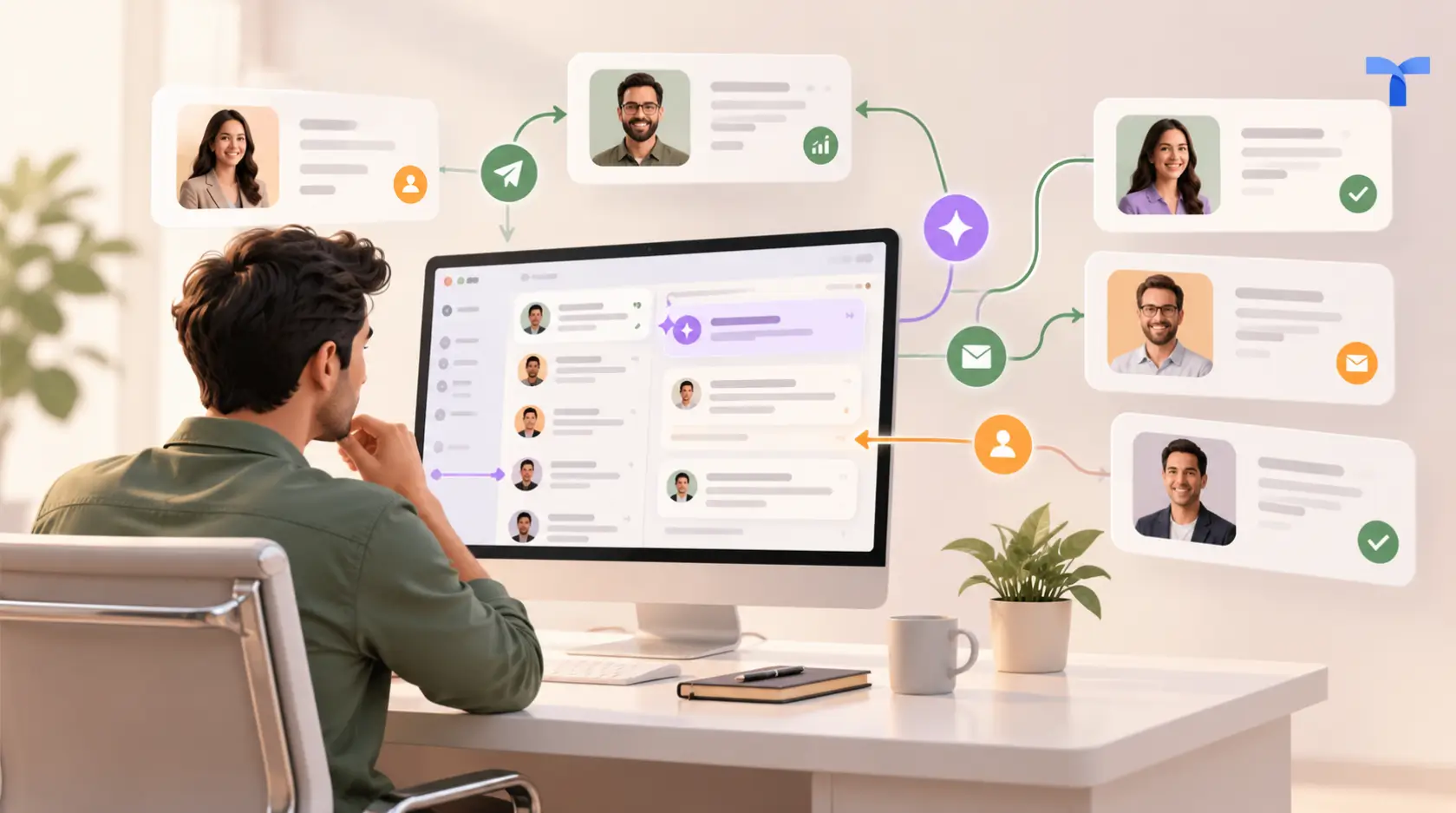
A 3-person GTM team running a thoughtful B2B lead generation strategy has to build lists, research accounts, write personalized messages, run multi-channel sequences, track response, update the CRM, and iterate — every single week. Each of those steps is legitimate. None of them are optional. And all of them eat time that a small team simply does not have.
The result is a predictable pattern: lead generation becomes the casualty of every other priority. The outbound motion dies when pipeline pressure rises. The research quality drops when a rep has 60 accounts to cover. Personalization disappears when sequences have to go out by Friday.
The bottleneck is not strategy. It is execution capacity.
This is the problem agentic AI solves — and why it matters more for lean SaaS teams than for large ones.
What Changes When AI Runs Your B2B Lead Generation Motion
The difference between a manual lead generation process and an AI-run one is not just speed. The architecture is different.
For a lean team, this table is not about productivity. It is about what becomes possible at all. A team of three cannot manually research 2,000 accounts per week. They can define the ICP once and let agents do the work continuously.
5 Ways Lean SaaS Teams Scale B2B Lead Generation Without Scaling Headcount
These plays are drawn from Tapistro's use cases. Each one maps to a specific bottleneck that kills lead generation at small team sizes.
1. Replace Manual List Building with Signal-Based Prospecting
The bottleneck: A mid-market SaaS SDR team was spending most of the workweek building lists and researching leads. By the time a list was ready, some of the context was already stale.
What agentic AI does instead:
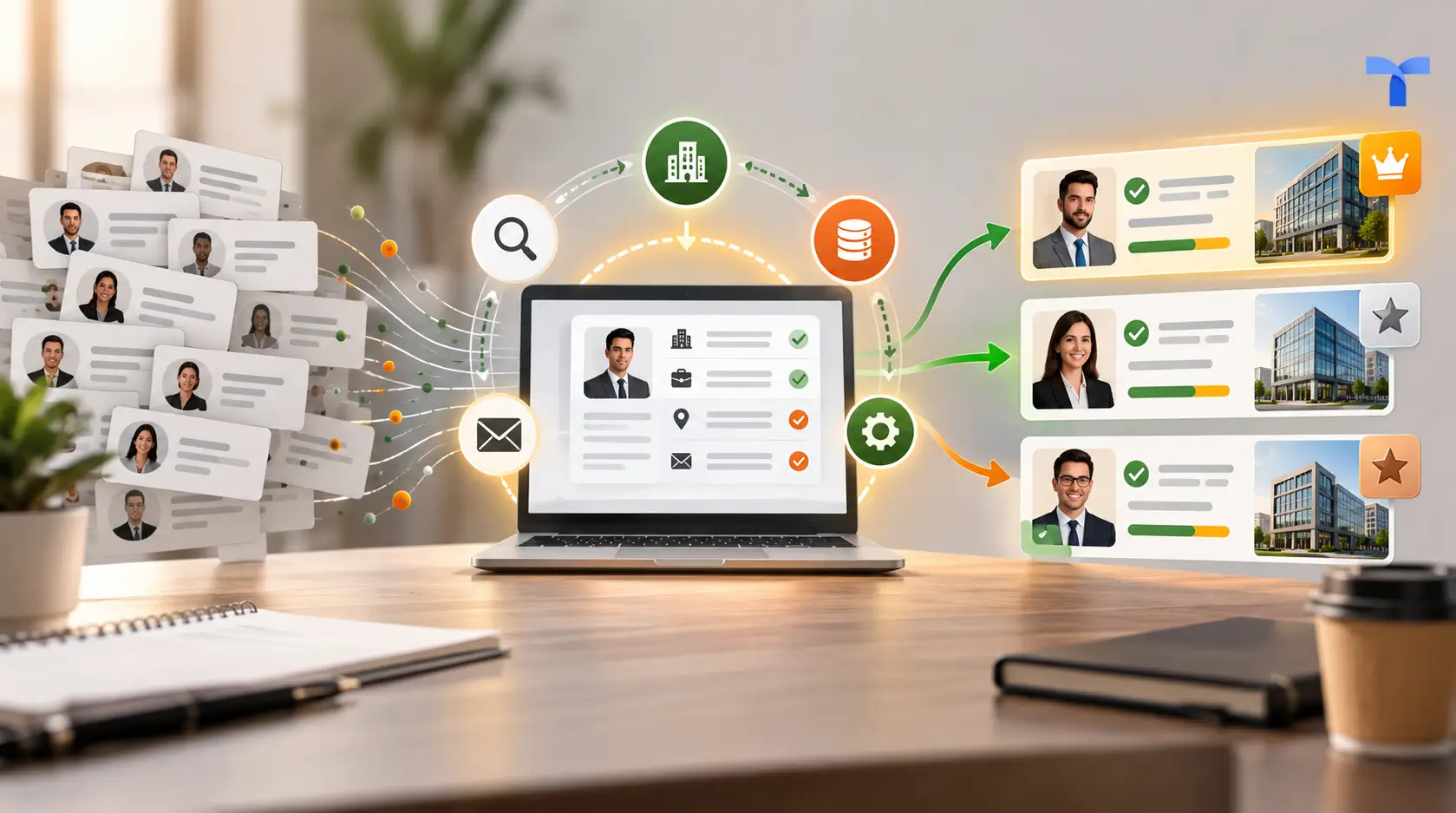
- Builds account lists continuously from deanonymized web traffic, intent data, job postings, funding signals, and tech stack changes
- Filters every account to ICP in real time, no ops intervention required
- Enriches each account with contacts, decision-maker roles, hiring status, and company change events
- Automatically tiers accounts (Tier 1, 2, 3) based on signal strength and ICP match
SDRs stopped building lists entirely. They inherited a live, pre-segmented, pre-enriched queue every morning. The constraint moved from "we don't have enough accounts" to "are we targeting the right accounts", which is exactly where a small team's thinking should go.
The bottleneck shifts from execution to strategy. That is the point.
See the full play: Automated Outbound at Scale: tapistro.com/use-cases
2. Do Account Research at Scale, Without an Analyst
The bottleneck: A SaaS sales team could manually research 20 accounts per week. Their TAM had thousands of targets. Sellers were going into calls underprepared, and the research backlog was a standing agenda item at every pipeline review.
What agentic AI does instead:
- Reviews each account's tech stack to identify cost, redundancy, or migration opportunities
- Scans open job postings to infer hiring intent and likely budget priority
- Parses investor decks and news for financial context relevant to the pitch
- Generates rep-ready account briefs: standardized, accurate, current
- Creates personalized call scripts per account, per persona, automatically
Every rep enters every call with the same quality of context, regardless of how many accounts they carry. Sellers stopped preparing and started having better conversations.
Research was the last major manual dependency. Removing it changed funnel velocity.
See the full play: Deep Account Research at Scale: tapistro.com/use-cases
3. Convert Website Visitors into Pipeline, Automatically
The bottleneck: A SaaS company was investing heavily in paid search and content. Solid traffic, zero pipeline from it. High-value visitors left without any follow-up because the team did not have the bandwidth to identify and reach them in time.
What agentic AI does instead:
- Person-level deanonymization identifies individual visitors, not just company domains
- A CRM filter removes existing customers, open deals, and competitors automatically
- Each visitor is enriched with title, company, hiring status, tech stack, and intent signals
- Over 20 micro-segments are created, each receiving a distinct multi-channel sequence
- Email, LinkedIn Ads, and calling cadences run fully automated, 24 hours a day
More meetings got booked from existing traffic without touching the ad budget. The traffic was already there. It was just leaving without follow-up.
A prospect who visits your pricing page at 11pm is not waiting for a Monday morning follow-up.
See the full play: Convert Website Visitors into Pipeline: tapistro.com/use-cases
4. Trigger Personalized Outreach from Real Buying Signals, Not Schedules
The bottleneck: Small teams default to batch outreach because it is the only way to hit volume. The problem: batch sends feel like batch sends. Reply rates drop. Meetings do not get booked.
What agentic AI does instead:
- Monitors 70+ signal sources (job changes, LinkedIn activity, content engagement, funding events, product usage signals, competitive triggers) in real time
- When a signal fires on a target account, an agent evaluates it against full account context
- Personalized messaging is generated from the signal, not from a template
- Outreach launches from individual rep mailboxes within minutes of the trigger
- Step-level reporting gives the team pipeline visibility without manual tracking
The result: outreach that arrives when the buyer is actually in-market. Not on a Tuesday because that is when the sequence was scheduled.
Teams using signal-driven outreach report 40% higher reply rates versus batch sends, because the message matches the moment.
Timing is not a nice-to-have in B2B lead generation. It is the variable that most determines whether a reply happens at all.
5. Run Micro-Segmentation Without Analyst Hours
The bottleneck: Segmentation in a lean team usually means one or two firmographic cuts (industry and headcount) applied once a quarter. Everyone in the segment gets the same message. Conversion rates reflect it.
What agentic AI does instead:
- Layers behavioral signals, tech stack data, hiring patterns, and intent signals onto firmographic ICP
- Creates dynamic micro-segments that update automatically as new signals arrive
- Assigns the right channel, cadence, and message for each segment, with no manual mapping
- Adjusts segment assignment in real time when an account's profile changes
A company that just posted five engineering roles is a different conversation than one that went quiet on hiring. Agentic AI treats them differently, automatically.
Static segmentation is a small-team workaround. Dynamic segmentation is what scales.
What Your Team Still Owns
Agentic AI removes the manual execution from B2B lead generation. It does not remove the judgment.
Small teams that get the most from this model are the ones who treat the freed-up capacity correctly. The thinking that stays human:
ICP definition. Agents need a clear starting definition of who you want to reach and why. That definition improves over time as signal data reveals which accounts actually convert, but it starts with your team's judgment.
Messaging strategy. AI generates and personalizes messages from signal data. But the positioning, value prop, and tone come from your understanding of your buyer. That stays yours.
Conversation quality. Agentic AI books meetings. It does not run them. Everything that happens from first reply forward (objection handling, deal navigation, relationship building) remains entirely human.
The teams winning with AI-run lead gen are the ones who stopped spending cognitive bandwidth on lists and started spending it on conversations.
What Agentic B2B Lead Generation Requires to Work
A defined ICP, even a rough one. Agents need a starting point. You do not need a perfect ICP on day one. You need one that is good enough to filter, then let the signal data refine it.
Unified signal data. Agentic lead generation needs to pull from multiple sources simultaneously: CRM, web behavior, intent feeds, job postings, LinkedIn, funding events, and news. Tapistro connects 70+ signal sources into a single Unified Prospect Profile. Fragmented data produces fragmented decisions.
A connected activation layer. Signals without action are just alerts. Agents need the ability to send emails, trigger sequences, update CRM records, push to LinkedIn Ads, and route to paid media, all from one connected workflow. Disconnected tools cancel the speed advantage.
Frequently Asked Questions About B2B Lead Generation for SaaS
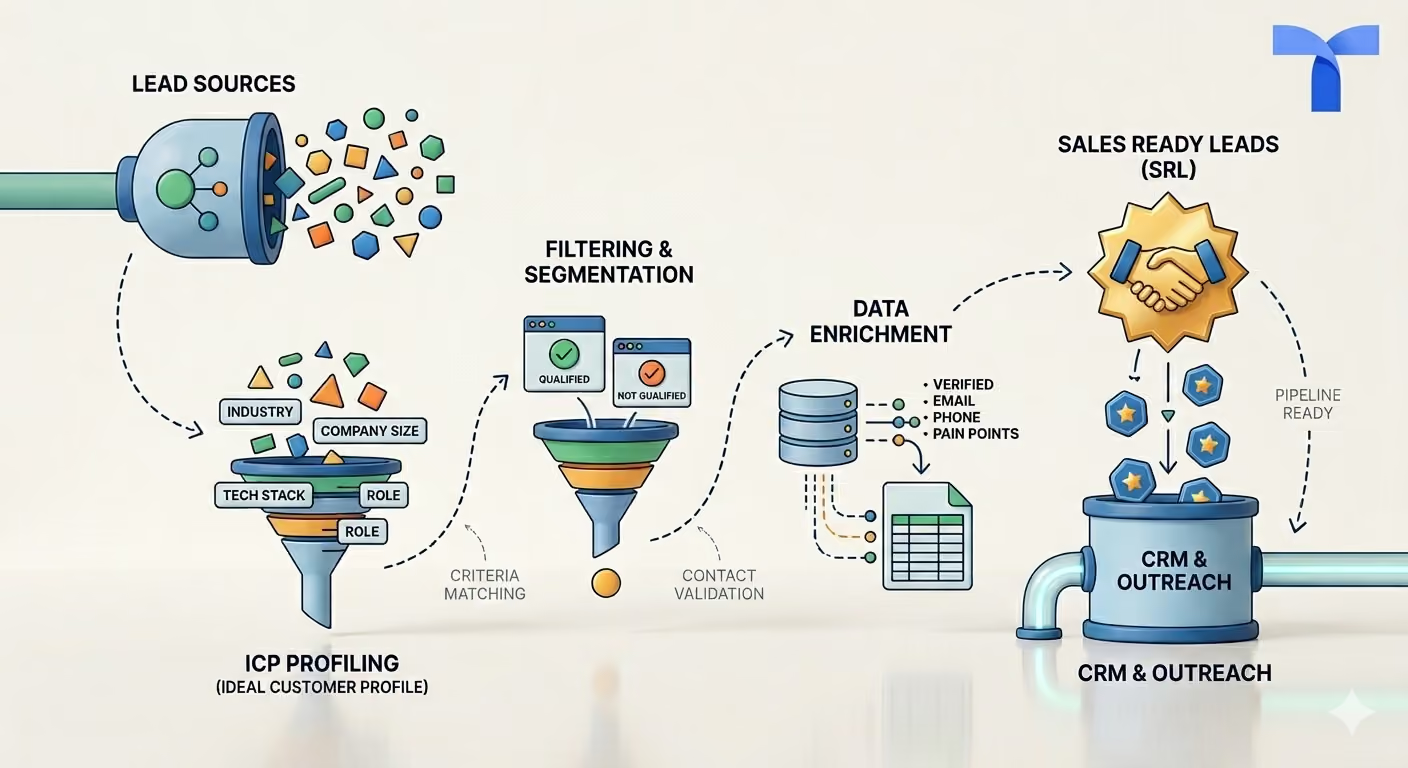
What is B2B lead generation?B2B lead generation is the process of identifying and attracting potential business customers, generating interest in your product or service from companies that match your ideal customer profile (ICP), then converting that interest into qualified pipeline for your sales team.
How do small SaaS teams scale B2B lead generation without adding headcount?The most effective approach is replacing the manual steps in the lead generation process (list building, account research, segmentation, and outreach personalization) with agentic AI workflows that run continuously in the background. Platforms like Tapistro let teams of 2 to 5 run the same lead generation volume that previously required 15+ people, by automating execution while keeping humans focused on ICP definition, messaging strategy, and conversations.
What are the best B2B lead generation tools for SaaS companies in 2026?The most effective B2B lead generation stack in 2026 combines signal collection, AI enrichment, dynamic segmentation, and multi-channel activation in one connected workflow. Point tools (individual enrichment vendors, sequencing tools, or intent providers used in isolation) create data silos and handoff delays. Agentic platforms like Tapistro unify these layers so signals trigger action automatically, which is the core advantage for lean teams. See Tapistro vs Clay and Tapistro vs 6sense for detailed comparisons.
What is the difference between outbound and inbound B2B lead generation? Outbound lead generation means your team initiates contact (through cold email, LinkedIn outreach, cold calls, or paid advertising) with accounts you have identified as ICP-fit. Inbound lead generation means buyers find you through content, organic search, events, or referrals, and signal their interest. Most SaaS teams need both. Agentic AI improves both: it scales outbound volume without headcount growth, and it converts inbound signals (like website visits or content engagement) into pipeline automatically, instead of letting them go cold.
How long does it take to see results from AI-powered B2B lead generation? Basic agentic lead generation workflows can be live within days using platforms with pre-built connectors. The first results (more accounts in active sequences, higher personalization quality) appear immediately. Pipeline impact typically shows within 2 to 4 weeks as the first wave of signal-triggered outreach produces replies and meetings. More complex multi-channel orchestration with custom segmentation logic takes 2 to 4 weeks to configure fully.
What results do SaaS teams see from agentic B2B lead generation? Teams using Tapistro's agentic lead generation workflows have reported:
- 10x outbound volume without headcount increases
- 70% reduction in manual GTM tasks
- 30% more meetings booked for the same ad spend
- 40% higher reply rates from signal-driven versus batch outreach
- Account research scaled from 20 per week to 2,000+
See customer success stories for detailed breakdowns.
Is AI replacing SDRs in B2B lead generation? Agentic AI eliminates the research, list-building, data enrichment, and routing work that currently consumes 60 to 70 percent of a typical SDR's week. It does not replace the conversations, objection handling, or relationship development that moves deals forward. The teams seeing the strongest results are those redirecting SDR capacity toward actual selling, not toward prospecting logistics that AI can handle more accurately and at greater scale.
The Bottom Line
The reason small SaaS GTM teams struggle with B2B lead generation is not that they do not know the right plays. It is that the right plays require more execution capacity than they have.
Agentic AI does not change the strategy. It removes the execution bottleneck: continuous prospecting, account research, segmentation, and signal-triggered outreach running 24/7 without manual input.
The teams pulling ahead are not the ones with more headcount. They are the ones that stopped treating execution as a people problem and started treating it as an automation problem.
If your pipeline is limited by hours, not ideas, that is the problem worth solving.